Wahhabalinese Adventures 1: Singapore

Unusually enough, I was looking forward to the airport more than the flight itself: this marked my first visit to the spanking new Singapore Changi Terminal 3, officially opened just a week earlier. Aviation geek that I am, I’d already had a sneak peek in the pre-opening “open house”, but this was my first time venturing into airside.

Flights to Dubai actually leave from T2, not T3, but the automated check-in kiosk had no complaints and soon enough I was through the space-age Departures portal. And wow: it’s really airy and spacious inside. The greenery isn’t quite as evident as landside though, with glass, steel and duty-free shopping dominating the show. I beelined for the “Krisflyer Gold Lounge” on the second level, where the poor guardian lady puzzled for a few minutes over my SAS gold card and admittedly rather lengthitudinous full name, painstakingly scribbling them out with pencil on paper and triple-checking the result.

On first sight, the lounge looks small, but actually it’s not: the seating area behind the entry desk is only about a fifth or less of the entire lounge. Soup, salad, rice, a main course, and a selection of desserts were available, along with a small self-serve bar and Tiger beer on tap. Most of the lounge is (how to describe this?) “almost-outside”, with no roof other than the top canopy and partial views of the tarmac due to the shades in the way. Comfy chairs, free wifi, a somewhat less than generous distribution of power points, a couple of PCs and a respectable selection of newspapers completed the offerings, and it’s fair to say that this will be my lounge of choice at SIN as long as I have some time to spare.

And how much time to spare, you say? Well, I experimentally determined that you need at least 10-15 minutes extra to get to T2. There are actually two separate Skytrain routes connecting the two, one at the north end (B-E) and one at the south (A-F), with the lounges are closer to the south end (A gates). However, my gate today was E28, literally at the last extremity of T2 right before T1 starts, and in retrospect it would have been faster to go to T1 and cross it on foot! But no, I ended up taking the longest possible way: walk to the A gate, Skytrain across to T2 F gates, walk across from F to the E area, and then the interminable walk from E20 all the way to E28.

A few more T3 pictures for those interested, mostly taken at the open house: http://jpatokal.iki.fi/photo/travel/Singapore/Changi-T3/

Wahhabalinese Adventures 1: Singapore, Riyadh and Bali

At a squeak over 10,000 miles, this trip is no great shakes when it comes to distance, but there can’t be too many places on Earth with a greater level of contrast than its endpoints.

In the left corner, we have the virtually untouristed capital of a filthy rich, rigidly conservative, strictly Islamic absolute monarchy in one of the world’s most arid countries:


RUH DAFIF Riyadh [King Khalid Airport], SA

And in the right corner, we have the rather less wealthy yet famously liberal, only notionally Hindu and immensely tourism-friendly tropical paradise of Bali:


DPS DAFIF Denpasar [Ngurah Rai – Bali Intl], Bali, ID

I’m going to one of these for work, and the other for play, so my esteemed readers are invited to guess which one is which. Here’s the exact routing courtesy of the Great Circle Mapper:

SIN-DXB-RUH-DXB-SIN-DPS-SIN

That’s SIN-DXB on Singapore Airlines (SQ) Y, DXB-RUH on Saudi Arabian (SV) Y, and SIN-DPS on SQ C.

Index


Jakarrrta: Vierailulla Isossa Durianissa

Vietin 2005-2007 yli vuoden työmatkoilla Jakartassa. Seuraava tarina on pohjimmiltaan totuudenmukainen (nimiä on vaihdettu, paikkoja tai tapahtumia ei) joskin tiivistetty tarina tyypillisestä loppupuolen keikasta Kaakkois-Aasian vähiten tunnetussa suurkaupungissa.

“Welcome to Jakarrrrrrta”, hehkuttaa singaporelaisen lentoyhtiön nukenkasvoiseksi meikattu ja kehoa hyväilevään kebayaan valettu lentoemo.  Koneen ovella ilma iskee kasvoihin kuin märkä rätti: kuumaa kosteutta, neilikkatupakkaa, palavia riisipeltoja, avoviemäreitä.  Harpon kireäkasvoisten salkkumiesten kanssa kohti Imigrasin tiskejä, sillä ehtimällä perille ennen muita voi leikata odotusajastaan tunnin ellei kaksikin.  Passintarkastajien yllä lediskrolleri välkyttää “DEMO” ja juoksuttaa Pacmania kummitusten perässä tai toistepäin.  Tympääntynyt tullimies likaisten hampaiden värisessä paidassaan löytää passistani vuoden business-viisumin (400 plus lahjukset) ja päättelee pettyneenä, ettei kannata ryhtyä hankalaksi.  Vieressä istuva viiksivallu taasen hymyilee leveästi kiinalaiselle, joka erehtyi ruksaamaan väärän boksin hakemuksessaan, ja selittää etteihän ASEAN-viisumivapaus suinkaan koske liikematkoja.  Mr. Tan huokaisee ja kaivaa lompakkoa kuvestaan, itse saan leiman passiini ja pusken tieni taksihäslääjien ja Rolex-kauppiaiden ryppään läpi terminaalista ulos.

“Welcome to Indonesia.  Enjoy it with No Drugs!”, ehdottaa plakaatti taksijonon edessä.  Nousen Silver Birdin limusiiniin — pikimustaksi tummennetuilla ikkunoilla varustettu vanha Nissan Cedric — ja kurvaan kohti kaupunkia.  On jo ilta ja halpojen natrium-katuvalojen oranssi hohde peilautuu rosoisen asvaltin lätäköistä.  Matkan puolivälissä Ciputran ostos- ja asuinkeskus nousee näkyviin, vihreällä neon-piikillä ja Pizza Hutilla varustettu betonilinnake keskellä loputonta tiilikattoisten kampong-slummien merta.

Lähellä hotellia kuski kääntyy pois kuusikaistaiselta moottoritieltä ja jää odottamaan valoihin sillan alla.  Päivällä sen kupeeseen maalattu muraali julistaa “AKU CINTA KOTA JAKARTA” (Rakastan Jakartaa) ja katukojut kokkaavat nasi gorengia kerosiiniliesillä, mutta öisin takaa paljastuvat kodittomien pahvihökkelit ja spiidihuorat kauppaavat kahden euron pillua, sukupuolitaudit ja puukko kylkiluiden väliin kaupan päälle.  Bongatessaan limon ryhmä katulapsia rynnää pesusienen kanssa jynssäämään ikkunoita.  Yksi nappisilmä liimaa räkäisen nenänsä ikkunaan kiinni, huomaa valkonaaman takapenkillä ja vaatii hämmentävän hyvällä englannilla: “Hello Mister Scorpion, give me one hundred dollar.”  Hyvästä yrityksestä huolimatta kuskini Helmi arvioi palveluksen hinnan realistisemmin ja sujauttaa ikkunanraosta pesijänulikalle alumiinisen viidensadan rupian kolikon (vajaa 0,05).  Lapsi kopauttaa sillä ilmeettömästi päätään ja jatkaa kohti seuraavaa uhriaan.

Kultaisen kolmion pilvenpiirtäjät ja neonvalot — Chase, Blowfish, Panin Bank, Sampoerna, Ritz-Carlton, Toyota, Jamsostek — kajastavat kuulaana ja siistit palmurivit vartioivat Mega Kuninganin finanssikeskuksen autioita katuja.  Marriottin portilla nelihenkinen aseistettu kommandojoukko tutkii auton räjähdehaistelijalla konepeltiä ja hansikaslokeroa myöten, sillä autopommi samaisen hotellin pihassa vuonna 2003 tappoi 12 ja moni henkilökunnasta piilottelee edelleen vammojaan ihonväristen hanskojen alla.  Portsari tervehtii nimeltä ja kantaa laukkuni huoneeseen, lyöttäydyn aulassa intialaisen insinööri-playboy Rajeshin ja korealaisen muovipuristamon suurisilmäisen toimistosihteeri Kikin seuraan ja suuntaamme Jakartan yöhön.

Illan ensimmäinen etappi on pienimuotoinen roomalainen palatsi kulman takana.  Umpipimeän talon autotallista ilmestyy taskulampun valokeila ja sen takana Rita, joka kapuaa autoon ja ensi töikseen sokaisee autossa istujat.  Huolellisen meikin ympäröimät siniset piilolinssit, raidoittain ruskeaksi värjätty tukka, löysästä topista pilkottavat pienet silikonit, gasellin jalat ja hillitty mutta erittäin kallis käsilaukku vihjaavat heti, että Rita on rikkaan perheen lapsi, joka bailaa työkseen.  Tähän asti iloisesti jutellut Kiki hiljenee ja mulkoilee kateellisena.

Rita opastaa kuskin juuri avattuun ravintolaan keskellä Mentengin omakotitaloaluetta, jossa Indonesian monikymmenvuotinen päämies Suhartokin nykyään viettää dementoituneita kotiarestieläkepäiviään.  Lara Djongrang osoittautuu vanhaksi siirtomaa-aikaiseksi taloksi, jonka sisälle on roudattu puolet vanhasta hindutemppelistä, kärsätöntä Ganesh-elefanttijumalaa ja 300 vuotta vanhaa kattoa myöten.  Asiakkaita ei ole juuri yhtään, mutta loosissa meitä odottaa kaksi pulloa Absolut-vodkaa, mansikkaminttutupakkatäytteinen vesipiippu sekä Hupu, Tupu ja Lupu.  Puolijemeniläinen suupaltti Hupu näyttää hupparissa ja pääkallolippiksessään ylensyövältä wannabe-gangsterilta, kun taas ihraisen pyramidin muotoinen Tupu säästää energiansa lasin kallisteluun.  Langanlaiha arpinaama Lupu siemailee konjakkia hiljaa ja käärii marihuanasätkän, mutta keskustelun aihepiirin kääntyessä Hupun Ferrarista Jakartan menomestoihin alkaa innostua.  Hupu vannottaa, että legendaariseen kuusikerroksiseen Stadiumiin ei “never never, never never” saa mennä ja nappaa jointin Lupulta.  Hän laittaa sen suuhunsa väärinpäin, imaisee henkoset pilveä ja kipinöitä, ja puhaltaa imelän valkoisen savun Ritan vieressä odottavaan sieraimeen.  Levymikko soittaa Abbaa.

Toisenkin vodkapullon tyhjennyttyä ympärillä parveileva henkilökunta alkaa osoittaa hermostumisen merkkejä.  Hupu kuittaa laskun, hoipertelee pihalle ja vaatii ehdottomasti kunnian kyyditä meidät takaisin hotellille.  Rita katoaa poskisuudelman ja hajuvesituulahduksen kera, kiitämme veljenpoikia vuolaasti ja nappaamme ohimenevän taksin.  Paluumatkalla Rajesh kertoo, että Rita on 11-vuotiaan lapsen yh-äiti, joka suorittaa parhaillaan kolmatta yliopistotutkintoaan ja sekä Hupu että Tupu ovat päiväisin liituraitapukuisia lakimiehiä.  Hotellilla turvamiehet toivottavat iloisesti meille hyvää huomenta.  Pesen hampaani pullovedellä ja sukellan king-size sänkyni uumeniin.

Kuuden aikaan moskeija kutsuu uskovaiset rukoilemaan, aurinko nousee yhtä keltaisena kuin taivas ja sinihaalariset työmiehet tanssittavat punaista pölyä kaduilla.  Lappaan riisipuuroa kulhoon, kaadan päälle kanalientä, purjosilppua ja chilikastiketta, mussutan tyytyväisenä ja lähden töihin.  Liikenneruuhkat ovat jo alkaneet ja kolmen kilometrin matka hotellilta Itsenäisyyden aukiolle kestää tunnin.  Jockeyt seisovat kadun laidassa etusormi pystyssä, eurolla voi napata yhden kyytiin ja päästä siten laillisesti ydinkeskustan carpool-vyöhykkeelle.  Aikoinaan slummien keskelle raivatun neliökilometrin kokoisen kulahtaneen puiston keskellä sojottaa tanakkana itsenäisyyssankari-naistenmies-diktaattori Sukarnon viimeisenä erektiona tunnettu Kansallismonumentti, jonka huipulta ejakuloi 35 kilon purske puhdasta kultaa.

Jokaviikkoiseen palaveriin valuu hiljalleen jokaviikkoiset naamat paikalle.  Wayan, irstas balilainen hindu, joka imuroi lahjuksia ja imututtaa ne pois hierontalaitoksissa; Tommy, aina kaikesta kaikkien kanssa samaa mieltä oleva vaaleanpunainen eminenssi; Carlos, hermostuneesti hihittävä kiinalainen häslääjä; Romano, nahkatakkeja harrastava kristitty kaljasieppo Sulawesilta; Mandala, joka korjailee bugeja Oraclen tietokannoissa iltapuhteinaan; Megawati, nimensä mukaisesti topakka täti; ja Kanako, Borneon viidakoista paenneen kallonkutistaja-dayakin ja sodan jälkeen Indonesiaan jääneen japanilaisen sotilaan epätodennäköinen jälkikasvu, joka piirtelee manga-hahmoja kokousmuistiinpanojensa laidoille ja haaveilee taitelijaelämästä Sydneyssä.  Wayan ja Romano röhöttävät ja hakkaavat toisiaan selkään, Tommy hymyilee ja sukii pieniä viiksiään, Mandala tuijottaa läppärinsä ruutua, huulet raollaan mutta hampaat tiiviisti yhdessä.  Susilo Bambang Yudhoyonon ja Jusuf Kallan potretit mulkoilevat meitä seinältä, Indonesian garuda-kotkan jalkovälissä lukee “BHINNEKA TUNGGAL IKA” (Erilaisuudesta yhtenäisyys) ja tarjoilija turkoosinvihreässä univormussa tuo kupit pikimustaa makeaa jaavalaista kahvia.  Toteamme kaikki yhtämielisesti, että eihän tässä oikein mitään olla saatu aikaiseksi, mutta ensi viikolla kaikki hoidetaan ja aikataulu pitää siis edelleen.

Nuijan kopautus ja syömään.  Kanttiinissa tarjoillaan tänään jakartalaista erikoisuutta soto betawia eli kookoskeittoa, jossa uiskentelee suolenpätkiä, laikukasta lehmännahkaa ja joko mahalaukun tai juomukondomin paloja.  Lapioin lientä riisini päälle, ongin soppaan eksyneitä perunanpaloja ja Kanakon ihmetellessä ruokahalun puutetta selittelen, että tuli jo syötyä paljon aamiaisella.

Toimisto tyhjenee neljän jälkeen ja suuntaan Rajeshin kanssa Blok M:ään.  Jakartan pahamaineisin yöelämäkortteli näyttää illan hämärtäessä Patpongilta sisällissodan jälkeen, talokanta koostuu yksinomaan räjähtäneistä murjuista ja ikkunattomista hierontaluolista.  Joka kulmassa maleksii toimettoman näköisiä nuoria kloppeja ja heti autosta noustessamme yksi tulee vetelemään hihasta, kysellen toiveikkaasti “Pussy, pussy?”, mutta livahdamme pakoon oviaukosta sisään.  Kolmen aseistetun vartijan takaa paljastuu täydellinen pieni pala Tokiota, izakaya-baari Ajihara, jonka seinillä japaninkieliset lappuset mainostavat päivän erikoisia: grillattua valasta, paistettua katkeramelonia Okinawan tapaan, raakaa mustekalaa wasabilla.  Muut asiakkaat, salarymaneja ja firman puolesta toimitettuja kontrahti-karaoketyttöjä viimeistä myöten, katsovat meitä hetken ihmetellen mutta palaavat pian sake-pullojensa ääreen.  Tilaan sapuskat kimonopukeiselta tarjoilijalta sekoituksella indonesiaa ja japania, skoolaamme kylmillä Bintangeilla ja pureudumme annoksiimme samuraisaippuaoopperan raikuessa taustalla.

Ritalta saapuu tekstari ja matka jatkuu päivän vinkin opastamana Plaza Indonesiaan.  Kellarissa kuskit nuokkuvat koomaisena bemareiden pakokaasujen keskellä, yksi nurkassa sanomalehden päällä, toinen epämukavan näköisesti kyykyssä betonikaiteen päällä, kolmas SUV:n aukinaisessa takaluukussa.  Ostarin puolella kenraalien ja teollisuuspomojen vaimot yrittävät valita Louis Vuittonin laukkojen ja Pradan kenkien välillä, päätyen ostamaan kummatkin.  Käyn nostamassa automaatista miljoonan (vajaat 100 euroa).  Lävähtäneen Rubikin kuution näkoisen eX-keskuksen yhdessä kulmassa on mustalla ja violetilla kyllästetty F Bar ja siellä istuvat Kiki ja kolmekymppisenä eläkkeelle jäänyt kreikkalainen pörssimeklari/mafioso Dimitrios eli Dimi.  Seinän peittävä plasma-TV näyttää muotinäytöksiä Shanghaista, menu tarjoilee norjalaista lohta pestokuorrutuksella ja keskivertococktail on Suomen hinnoissa, eli samaa luokkaa kuin jaavalaisen maajussin viikon palkka, mutta ämpäri Coronaa lähtee sadalla tonnilla.  Torstai-iltanakin paikka kuhisee pintaliitäjiä ja naapuripöydässä tummahipiäinen neitonen korkokengissä, pikkutopissa ja minihameessa sivelee valkoisen isoisänsä kaljamahaa.  Baarimikot tuikkaavat bensaan kastetut rätit tyhjiin vodkapulloihin, sytyttävät ne tuleen ja alkavat jonglööraamaan.

Lavalle nousee kolme kurvikasta tanssijaa mustissa pikkuhousuissa, push-up liiveissä ja polvenkorkuisissa saappaissa.  Kiemurtelu teknojumputuksen tahtiin yltyy pian niin kiimaiseksi, että priimapaikalta tilannetta seuraavalla DJ:llä menee vaihdossa pasmat sekaisin.  Arsenaaliin lisätään shottilasi täynnä keltaisesta nestettä ja Dimitrios kiskotaan ylös lavalle ja polvilleen.  Yksi naisista asettaa drinkin runsaiden rintojensa väliin ja painaa povensa Dimin naamaan, toinen vetää kokenein ottein vyön irti Dimin housuista ja alkaa piiskaamaan sillä tahtia.  Dimi paneutuu puuhaansa asiaankuuluvalla asenteella ja ryystää, nuolee ja käpälöi minkä kerkiää.  Toimituksen jälkeen toppaus laajenee 50.000 rupialla ja bileet jatkuvat.  Lentoemon urasta haaveileva Kiki huokaa ja räpyttelee minulle silmiään: “Jakartassa on niin tylsää.  Pääsisipä joskus taas Singaporeen…”

Aamulla lähden takaisin lentokentälle.  Liikennevaloissa katusoittaja rämpyttää hajoamispisteessä olevan kitaraa ja laulaa haikeasti.  Ensi viikolla uudestaan.

Indolaporan Dua: Bandung di mana?

I’d been planning to visit Bandung for quite a while now, but never seemed to have an opportunity — until, on this trip, opportunity presented itself in the way of a training session being held there. With only two days midweek, most of them spent at work, it would be a short visit, but who was I to complain?

The trip didn’t start particularly well: after some confusion with the driver who showed up, who was evidently expecting an entirely different job, our project manager (fresh off the plane from Singapore) and I bundled into the car and hit the road. On the way out, the driver asked the garage security guard for directions towards the tollway, and headed out from the hotel, lazily looping first west and then north up Jl. Satrio. Not having been to Bandung before, I initially figured he was heading for some tollpike stretching east from Jak, but as he steadily drove north with occasional stops for directions from entirely random people (eg. beggar women living under a bridge), it slows dawned on us that he had absolutely no clue. I wasn’t much better equipped, and the boss’s nifty in-phone GPS map conveniently omitted Jakarta, but I did know that heading west to Slipi would take us to the highway, so that’s where we steered him. Not much later, I realized that he couldn’t read either, so we had to yell out “left!” or “right!” at each intersection… but we finally got onto the highway and, a little over an hour later, passed by the hotel we started from. Grumble.

By now it was pitch dark outside, so there wasn’t much in the way of the promised hilly scenery. The highway, though, made up for it in part. For a developing country, the roads on Java are really pretty extraordinary: the initial stretch of turnpike down from Jakarta towards Bandung is four-laned in both directions, and the newest bit, while “only” two-laned, swooped gracefully up and around the foothills as we climbed our way onto the plains. We stopped halfway through at the self-proclaimed Best Rest Area in Indonesia to stock up on chips and a worrisomely named bag of “Oops! Fugu” snacks (do they kill you if you peel them wrong?), and then hit the road again.

Another miniadventure awaited on arrival in Bandung, where I had to play charades until the driver understood that my incomprehensible request for an aye-tee-em meant that I wanted an ah-teh-em. Next, the driver wanted to know which bank’s ATM I wanted, because surely I could use only the right one? Both my meager Indonesian and charades skills failed at explaining the concept of “any ATM”, so I said BCA (Indonesia’s largest bank), and we then drove around in circles (and past not a few other ATMs) until he found one.

Two million rupiah richer, we finally pulled into our digs for the night, the Savoy Homann, which has a respectable claim to being Bandung’s grand old hotel: their website proudly boasts of eminent guests like Charlie Chaplin and Yasser Arafat. On check-in, the bossman asked if there was Internet in the room, and were told no. We protested, they checked again, and said no again. We protested louder yet, one guy scurried into the back room, and a smiling manager came to greet us. Only one available room had Net access, he said, so how about a complimentary upgrade to the Presidential Suite? Well, yes, we could live with that.

We were led to our room via an elevator apparently dating from Chaplin’s days, but the suite itself was rather more modern. As promised, it was a two-bedroom affair, with my “little” bedroom being the size of your average hotel room, while the “master” bedroom was equipped with a bed and a jacuzzi large enough to accommodate all four wives of a local potentate, and the two were connected with a corridor/living room that stretched a good 25 meters.

The next day’s training was finished by 4 PM and we set out to explore. In pre-colonial days, Bandung was the home of the local sultan, whose alun-alun (ceremonial grouds) and pendopo (pavilion) are still at the center of the city. In its Dutch colonial days, Parijs van Java was known for its art-deco architecture, a few examples of which can still be found in, for example, our hotel and the Gedung Merdeka building opposite. But today, Bandung is best known for one thing: factory outlet shopping. Much of Indonesia’s massive textile industry is concentrated nearby, and lot overflows and quality control rejects all end up on the shelves in Bandung, and with a large population of students there’s a thriving local designer scene as well, mostly aimed at the young and the hip. Just behind the alun-alun are streets crammed full of clothing shops, clothing shops and more clothing shops.

And, like any other self-respecting Indonesian city, Bandung has its own array of local specialities. Top of the charts is batagor, which combines the three lodestones of Indonesian cuisine, peanuts, chilli and tofu, in a mildly novel way: the tofu (or fish paste) is battered and deepfried, then drizzled with generous lashings of peanut sauce, hot chilli oil and kecap (yes, ketchup, but the original Indonesian version is black, thin and sweet). I also managed to try out soto bandung, a basic but tasty beef broth with chunks of radish; laksa bandung, unrecognizably distant from its Malay/Peranakan counterparts with just a hint of coconut milk in chickeny soup; and, last and least, mie kocok, which turned out to be instant noodles served with translucent cubes of something gelatinous, fatty and not particularly tasty, revealed on later googling to be cow skin. Mmm.  Fortunately, I finished off with something rather more tasty — Bandung’s modern-day speciality, the alliterative Bandung brownie, sold even by streetside stalls.   I’m not sure what’s so Bandung-y about it, but if you slather a brownie with enough chocolate, you can’t go too far wrong.

The return journey in the late afternoon was rather more scenic, with countless terraced rice paddies reminescent of Bali. I took a shared minibus service back to Jakarta, but the highway paralleled the train line for much of the way, the Dutch-built railway punching its way through the hills with tunnels and gliding across valleys on narrow steel viaducts. Next time, I’ll take the train.

Indolaporan Satu: Selamat di Jakarta

Back in the warm, humid, clove-scented embrace of the Daerah Khusus Ibukota (Region Special Mothercity), Jakarta. The first time I came here back in 2003, I thought it was a terrible hellhole, but after sticking around for the better part of a year in 2005-2006 I’ve ferreted out enough of its well-hidden charms and learned to avoid most of its pitfalls well enough that I was actually somewhat looking forward to this job, which will see me spend most of Nov-Dec in Indonesia.

Not that much has changed while I was away, although they’ve completed a few new shopping malls and a lot more busway lines. Pac-Man no longer runs above the desks of Imigrasi at the airport, alas, as they’ve finally replaced the LCD scrollers with flat-panel TVs, but the bloated bureaucracy of arrival processing hasn’t changed at all — the on-arrival visas of a 777-load of foreigners were being processed by one (1) Imigrasi guy, with four (4) police officers quite literally standing behind his shoulder in the booth. Next to him, a handy sign informed that certain ranges of US$100 bills would not be accepted for visa payments until, and I quote, “we have notifiaction from our head”, which I think just encapsulates the experience perfectly: one single word, and they’ve managed to squeeze “notification”, “fiction” and “biatch” in there.

The ride from the airport is a bit more pleasant now that most of the boxy old Nissan Cedrics used by hotel taxi monopolist Silver Bird have now been replaced with plush pitch black Mercedeses. Oddly, though, the price hasn’t gone up at all, so the Gini coefficient strikes you harder than ever when slums and beggars glide past your tinted window as you recline on a leather seat that smells of money and ponder whether to tip your driver 5 or 10 cents for your $3 ride.

Getting used to Indonesian money again is taking a while. At 9400 rupiah to the US dollar, the rupiah being one of the few currencies that has managed to depreciate faster than the greenback, it takes tens of thousands to buy lunch and millions for a hotel room. (I still remember my surprise the first time I went to an Indonesian ATM and was informed that my remaining account balance was north of 100 billion, and even now I feel like a snob when I ask the foreign exchange counter at the airport for a million rupes — just over $100, that is.) I picked up a prepaid SIM card and figured that the Rp.12000 preloaded onto it ought to last a while, but a few international SMS later that was down to half and I realized that I had started off with the grand total of $1.25.

A short break always helps you spot new things even in places you thought you knew well. I’ve always associated the smell of Jakarta with the funky mix of low-octane exhaust, burning garbage and sewage outside, but this time, I realized that for us white-collar guys, the real smell of the Jakarta is aerosol air purifier. Every single elevator and meeting room in the city appears to have a little box mounted on the wall, practically always the same model made by Initial, whose job is to squirt a dash of scent every few minutes. It’s a fairly audible squirt too, seemingly always perfectly timed to punctuate awkward silences in conversation, like little sweet-smelling farts.

Another of Jakarta’s many little weirdnesses is how many women (and the occasional guy) are coiffed out with elaborate hairstyles that, in the rest of the world, went out of style in the 1920s: one of the lounge ladies at the hotel has a bob of such surreally symmetric perfection that a friend of mine suspects it’s a wig. With service industry wages averaging around US$60 a month, department stores are so terminally overstaffed that any customer (particularly a two-meter blonde alien) draws a crowd of half a dozen curious, perfectly made up and more often than not stunningly attractive saleswomen staring at every move you make.  Not that I’d usually complain, mind you, but it’s a little distracting if you’re in the market for a new pair of underwear.

On the second day back at work, one of the client’s guys came up and told me there was a fire drill. There was no alarm, I protested, but I’d forgotten this was Indonesia — he’d been tipped off by the security guys that there would be a fire drill. So we moseyed down with our laptops and were already outside in a good position to watch the show by the time the bells started ringing, a window on the 8th floor opened, and and an orange smoke flare was set off. On the balcony of the neighboring building, somebody tried to aim a jet of water at it, only to discover that streams of water aren’t very good at going around corners. A few minutes later, a fire truck showed up, raised up its crane and to loud cheers started spraying towards the smoke — only problem was, the water pressure wasn’t even close to enough to reach it. After another ten minutes of fiddling, they managed to up the pressure and finally hit the smoke, and rescue squad commandos started rappeling down from the 23rd floor, hoisting down either brave volunteers or customers who hadn’t paid the bills. The final cherry on the cake was extinguisher practice, with office ladies in tudung veils charging at flaming barrels of oil. All in a day’s work…  but I’ll keep a closer eye on the emergency exit routes in Indonesian buildings from now on.

Unexpectedly Arabic: al-Episode ﺏ

This was my first trip to the Gulf in living memory, and Abu Dhabi turned out to be even weirder than I expected.

Let’s start with the obvious: the city is filthy rich. Not as in “prosperous” rich, but as “ridiculously loaded” rich — a while back, CNN figured that, on average, the net worth of any citizen of Abu Dhabi (who only make under 20% of the resident population, mind you) is a cool US$15 million. This is a city of nearly two million people and vast five-lane boulevards, without even the faintest attempt at a public transport system: the rich are chaffeured around in their Mercedeses, the middle class drive their own humongous SUVs, and the poor like me commute by taxi, which are ubiquitous and ridiculously cheap (metered fares right across the city won’t climb above Dhs 10, or US$2).

The Hilton Abu Dhabi is a bit awkwardly located at the edge of town, but it does have a marvelous sweep of the Gulf right next to it, complete with free (for guests) “Hiltonia” spa/gym/pool/beach complex right across the street. The shallow lagoon between the city and the Marina district’s shopping malls was the temperature and texture of warm spit, but there were enough hot Arabic babes in bikinis (yes, seriously — probably mostly Lebanese/Egyptian Christians) to make up for it.

Causeway to Marina Mall Arabian mixed grill at the Hilton

An interesting twist to the experience was added by Ramadan, the Muslim fasting month. Work thus started at 8 (notionally — few bothered to show up at the office before 9), ran straight through what would normally have been lunch, and ended by 2 PM, when everybody headed home to sleep the last hours of the fast. Abu Dhabi, being rather less uptight than some countries in the region, allows restaurants to keep operating for us kaffirs through the fast (as long as they do so behind closed curtains), but as everybody else was also fasting I went with the flow and opted for “Ramadan lite”: a (big) breakfast around 8 AM before work, and then fasting — no food, no drink, no nothing — until evening. And I have to say, I have a newfound respect for people who stick to the regimen for an entire month, especially those who manage it while working outside in the sweltering heat instead of just sitting out in an air-conditioned office.

But the fun began after the sun went down at 6 PM the first strains of the call to prayer wafted in from the mosque to announce that the fast was over. After nibbling on dates and drinking a glass of ridiculously sweet (but energy-packed and quickly absorbed) juices, everybody tucked into giant iftar feasts. Our spot of choice with my colleague Firas was the unassuming little joint behind the Hilton Baynunah, which had unremarkable if decent food, and truly remarkable shisha (water pipe) that makes your eyes roll around in their sockets as you sink into the cushion with a stupid grin on your face after each puff. (All hail Al Fakher!) So after eating, everybody just sat around, digesting their meals, puffing on shisha and occasionally sipping away at the vast variety of bizarre (and often tasty) juices the Arabs have come up with to replace alcohol. (Tip: lemon with mint; not a few sprigs, but a whole load of leaves blended in. Da-yamn.) For the locals, this continued on all the way to the suhur morning meal before sunrise around 5 AM, after which everybody slept a little more again, and then the cycle repeated.

Inside the Emirates Palace Model of Guggenheim Museum

On my last night, I wheedled my colleagues into paying a visit to the Emirates Palace, Abu Dhabi’s attempt at surpassing Dubai’s iconic Burj al-Arab (the sail-shaped “7-star” hotel). Dubai forked out $1 billion to build theirs, so Abu Dhabi tripled the budget and spent $3 billion. Here’s a math problem for you: if you spend $3 billion on a hotel with 300 rooms and assume full occupancy at $1000 a night with no running costs, how long will it take you to recoup your original investment?

At any rate, the hotel was (seemingly) right next to the Hilton, and I even considered walking there on the weekend, but in the end we went by car and it’s a good thing we did. Security stopped us at the gate:

“Have you been to the Emirates Palace before?”

“No, we haven’t. We’re just going for a drink.”

“OK. Drive straight ahead, take the second right at the fountain, go around the palm trees, then take the second left at the traffic circle, go up the ramp and you’ll get to the main lobby.”

Yessir. We navigated our way through the maze, deposited the car with a valet and walked in. And walked, and walked, and walked some more. Ever been to one of those 10,000-room hotels in Vegas? That’s precisely what the Emirates Palace feels like, only minus the crowds and the slot machines, and the gold is mostly real. We enquired about places for a drink, and the concierge helpfully suggested the Caviar Bar for champagne or the Havana Club from a cigar and cognacs. We opted for the cafe instead, where tasty Turkish (not even Arabic!) coffees served by an army of pretty Filipinas cost around US$10 a pop, and then set off to explore some more. Tucked away in a corner was a fascinating expo on Saadiyat Island, Abu Dhabi’s shot at buying itself onto the world map — with a budget of roughly $27 billion, they’re going to transform a barren desert island into a cultural oasis, and they’ve b(r)ought in branches of the Guggenheim and the Louvre to make sure it blooms, with the first buildings scheduled to be ready by 2011. Your oil money at work!

And then it was time to head to Abu Dhabi airport, a surprisingly un-spiffy structure (under renovation/expansion, of course), for my flight back home. I’d blown a few miles for a bump up to business class, which allowed me to breeze through the premium security queue (muahaha) and check in in no time. The smoky contract lounge was pretty crappy, but I managed to spend my last dirhams on some superluxury dates and then sat around in one of the tentacles of this recursive cephalopod while an insanely confusing boarding procedure took place. Passengers were bused to the plane, but us biz/first pax were not allowed to board the buses for ordinary plebs: instead, we had to wait for our very own bus, which meant sitting around on plastic bucket seats long enough to miss the pre-flight champers on board. Yay.

The bird was coming in from Jeddah and, despite thus having a good 10 hours flight time, was one of Singapore Airlines’s regional models without lie-flat seats. I’d figured this out ahead of time (although, it must be said, only after booking my upgrade), but in the end I was very happy I splurged: two hours into the flight, we were diverted to Mumbai for a medical emergency, where we were treated to three hours cooped up in a plane, watching slumdwellers in Dharavi poop next to the runway. Not too bad in a business seat, probably rather less pleasant back in steerage next to the babies screaming their heads off.

Eventually, though, the flight did take off again and we landed in sunny Singapore. And that was the end of this company-paid adventure: up next, Saudi Arabia or maybe even Iran?

Erratically Hellenic: Epeisodion δ

Alas, my time in Greece was cut short, so instead of a full-fledged epeisodion this will only be a capsule summary of the two places I had time to visit.

Detail of the Parthenon Restaurants in the Plaka

In the end, I quite liked Athens. It’s a bustling Mediterranean city, not quite as terminally hip as Barcelona but definitely getting there, and the contrasts kept things interesting: the modern technoparks of the northern suburbs where the office was, the gritty port town of Piraeus, the restored neoclassical buildings of Plaka and their smoky tavernas and the ultrahip bars of Thissio just a short stroll away… and towering above it all the 2500-year ruins atop the Acropolis. I’d been there as a kid, and I remembered precisely two things: it was bloody hot, and it was a long hike to the top. Some twenty-odd years later, both statements remained true, and even in notionally off-season September the place was packed with tourists (and scaffolding).

Full picture set: http://jpatokal.iki.fi/photo/travel/Greece/Athens/

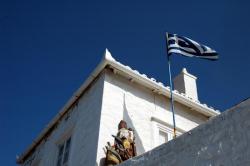
Aegean Sea off Spilia, Hydra Patriotic house in Hydra

On my solitary Sunday, I took the advice of a local colleague and headed off by ferry to Hydra, the third-closest Saronic Gulf island to Athens. My pictures do it no justice: on this sunny, breezy late summer day, it was gorgeous. Blue sky, clear waters, blindingly white houses, cobble-stoned streets with no cars, seaside cafes serving up frappes, topless women suntanning on the rocks… I spent half a day just walking around, and loved it.

Full picture set: http://jpatokal.iki.fi/photo/travel/Greece/Hydra/

Erratically Hellenic: Epeisodion γ

The Greek language or, more specifically, its script fascinates me. Membership of the club of scripts that remain in use and essentially unchanged for 3000 years is pretty exclusive: off the top of my head, I could only think of Chinese, Greek, Tamil and Amharic (Ge’ez), and checking with Wikipedia shows that Ge’ez and Tamil actually only barely scrape past the 2000-year mark. (Hebrew, that resuscitated zombie, doesn’t count in my book.)

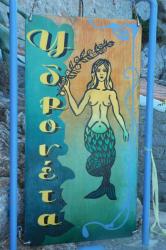
Hydroneta restaurant

The fun thing about Greek is that it’s an alphabet, so once you learn to map your math and physics classes to those initially bizarre sigmas and chis, you can puzzle out what things say pretty fast: in under a week, I was reasonably fluent in all-caps, tolerably reading lowercase script (not a feature of Ancient Greek, mind you, but a Carolingian perversion regrettably transmitted to Greece in the Middle Ages) and still totally flummoxed by handwriting.

What surprised me, though, was the extent of divergence between the letters as imported into English (via Latin) and their modern-day pronounciations. Beta isn’t beta anymore, it’s “veta”; gamma is sometimes gamma but more commonly “yiamma”; and delta isn’t a hard D but a soft “dh” akin to “then”. Instead, Greek has a whole host of unintuitive consonant clusters, so “MP” is read “b” (as in eggs and MPEIKON for breakfast), while “NK” and “NT” are “ng” and “d” respectively (as in the aerial porpoises of ferry operator “PHLAIINK NTOLPHIN”). Vowel clusters are even stranger, with “OU” for “U”, “AI” for “E” and lots more, and one phrasebook (correctly) bemoans that there are six ways of spelling “I” in Greek. Here’s a test: where is “NTOUMPAI” (Ντουμπάι)? Why, “Dubai”, of course.

Exodus to the exit

Similar shifts can be found in the way the meaning of entire words have changed on their way to English. Every highway interchange and emergency exit is an exodus, any picture is an eikon, and a polemika is not a war of words but a war of blood and steel. A trapeza is neither geometric shape nor circus act, but a bank; an organismos is not a living thing, but an organization; and the many Ethnika Somethings of Athens are not narrowly racist, but broadly national. Conversely, some words you’d expect to know aren’t what you’d think: a polis is a city, but the police are astinomia, and a car isn’t an automobile (fie, hybrid Latin bastard!) but an avtokinito (as in “kinetic”).

Erratically Hellenic: Epeisodion β

My first night in Athens, I set off on a quixotic quest for a quintessentially Greek food: souvlaki. I do this more often than I should, fixating on something that I think should be representative of local cuisine and usually finding out after hours of searching that, in fact, it’s out of season or, worse yet, totally out of fashion. My hotel was on the edge of Exarcheia, the district best known as the home of the Athens Polytechnion, a famous hotbed of student anarchism and, indeed, riot police and communist graffiti are still to this day a major feature — so you’d think cheap, greasy fare like souvlaki should sell well. But as I walked around and around, I found little ouzeris, English pubs, not a few pizza places, a large number of cafes, countless pastry shops and even a lost-looking organic juice stall — but absolutely zero souvlatzidikos. Eventually, I conceded defeat and had my dinner at Goody’s, an ubiquitous (and pretty tasty) Greek fast food chain that at least offered a decent horiatiki salata and a “Pita Pita” sandwich, which, as it turns out, was souvlaki in all but name.

So what is souvlaki, anyway? It’s a word of confused meaning, as even in Greece, it can mean either lamb meat grilled on a skewer, or grilled pork wrapped in pita bread (aka gyros, and almost but not quite the same as doner kebab). “Pita”, incidentally, is another of those words that means something entirely different in Greek than in the rest of the world. Quite frankly, I’m still not sure what it means, except that it seems to cover everything except those flat pocket things. The “pita” used to wrap a souvlaki is indeed flat, but a bit puffy and entirely unpocketed; the “pita” of a spanakopita (spinach and cheese pastry) is deep-fried and flaky; and the “pita” of a milopita at McDonalds is exactly identical to McD’s apple pies, a mysterious combination of starch, grease and scalding innards.

A few days later, having gathered some souvlaki scuttlebutt, I ventured down to Monastiraki and its famous trio of souvlaki joints: Thanasis, Savvas and Bairaktaris. A mecca of pork they may be, but these days Mitropoleos street is smack dab in the heart of tourist central, and the evil threesome have figured out how to maximize their profits: if you sit down and take a look at the menu, souvlaki portions start at an outrageous 9 euros, and they all involve platters with salad and french fries. Not listed on the menu, but needless to say far more popular among the Greeks, is the real souvlaki which has to be ordered as a “souvlaki sandwich”: they’re made on the fly, served in a greasy wrap of paper for take away only, and cost a far more reasonable 1,70 euros a shot. Tzatzikilicious!

One thing that really surprised me was the pastry shop phenomenon. Every day on my way from work, I walked south one block and east two blocks from the Metro station to my hotel. Within these six city blocks of possible routes there were, without exaggeration, at least 20 places to load up on pastries: at least a dozen cafes with big pastry shelves, half a dozen dedicated pastry shops with just a little heated-up counter, and few old guys sitting on the street with tables piled high with sesame rings. I sampled one almost every day, never choosing the same place or same thing twice, and while they all pretty much looked the same from the outside the variation in tastes and textures was astounding. I even found out that it’s possible to screw up spanakopita: one chain cafe offered terrible triangles with sour, vinegary mash inside, while the independent little shop that made its own used precisely the same ingredients and managed to make the feta, spinach and crumbly crust dance in perfect harmony.

Greek salad (horiatiki) Moussaka

Probably the best meal of my trip, though, was at a little restaurant on Hydra. The island is inundated by tourists and all the restaurants there cater squarely to them — for example, nearly all the much-advertised seafood is in fact imported frozen from far away — so, not being in the mood to chew on defrosted kalamari, I picked a small joint that had Greek diners and reasonably priced non-fish meals, and opted for a moussaka and Greek salad. And, well, damn. Half an egglant reduced to a pulpy mess on the inside, a layer of mince and tomato, a drizzle of cheese… I’m drooling as I write this! And the salad, too, was simplicity itself: a bed of cucumber, tomato, bell pepper, onion and kalamata olives, a single big chunk of feta, a sprinkle of oregano and (very) generous slathering of olive oil on top. No wonder every Greek seems to walk around with a spare tire…

Erratically Hellenic: Epeisodion α

Unfortunately, my flight landed half an hour too early. Dawn was breaking as we descended, but the islands of the Aegean were only visible as dark blobs speckled with the occasional lighthouse, and before I knew it we had touched down at Eleftherios Venizelos International, Athens.

Investments in airports are often justified by the importance of making a good impression on visitors, and no expense had been spared in constructing this modern edifice in time for the Olympics, which explains why lots of expenses were in the process of being spared afterwards. On this Monday morning, bright and early at 6:30 AM, my Singapore Airlines 777, a Thai 777 and an Air Canada 767 had landed near-simultaneously, disgorging in the region of eight hundred (800) passengers into passport control, which was staffed by two (2) people. As the hall filled with a random jostle of people, the queue soon backed up the escalator from the gate area, without so much as a line divider or any indication of which of the four lit-up booths were actually staffed. Did I mention that there were no toilets in the entire area? Nearly two hours of waiting later I had my passport cursorily glanced at and thrown back to me, and I dashed for the toilets, sadistically positioned right behind the passport control booths. I picked up a local SIM card plus the first of many deep-fried feta-laden pastries to come, and then emerged into the cool morning air, blinking in the strong Aegean sun, and proceeded to queue a little more for a taxi. Welcome to Greece!

It’s been well over 20 years since I last set foot in the country (although surely a visit to Cyprus some five years back almost counts?) and I wasn’t really sure what to expect. I suspect most Europeans harbor the same somewhat paradoxical (παράδοξος paradoxos, “aside thought”) attitude to Greece that I did. On one hand, nobody can dispute the country’s role as the cradle of European civilization, and anybody who’s had an even remotely technical education already has a grasp on the intricacies of the Greek alphabet (αλφάβητος alfabetos) and a fairly firm grounding on Greek etymology (ἐτυμολογία etymologia, “true word”). On the other hand, it’s been several thousand years since those glory days, and Greece was until recently the poorest country in the EU, best known for goat cheese, women with luxuriant moustaches and a vast capacity for absorbing EU money.

Needless to say, reality was somewhere between those two extremes. For one thing, all the women in Greece seem to have blonde hair these days, and instead of moustaches I couldn’t help noticing that “callipygian” is still a Greek word. (Living for five years in Flatland will do that to you.) Most taxi drivers still looked like they pulled double shifts as sheep herders or seamen, with stubble, ratty sweaters and cigarettes permanently suspended from their mouths, but the taxis themselves would have qualified as “limousines” in Singapore and came equipped with GPS pathfinders that the cabbies deftly operated with one hand while swerving through Athens traffic. The Athens metro is also positively spiffy-keen, although the Proastiakos suburban trains, which I’ve been taking every day to get to work, seem to exhibit a disturbing tendency of arriving at any time except that specified in the schedule and always departing to Athens from the platform marked “To Airport” or vica versa.

Early fall, though, is a great time to be in Greece. The air is dry and breezy, nights are cool, days are warm, making both mornings and evenings just perfect. On a balmy Tuesday evening, I headed to Monastiraki with two colleagues, opted for an outdoor seat at a taverna without views of the floodlit Parthenon (this instantly halves the price) and dug into a gigantic (Γίγαντες gigantes) platter of meze, complete with some of the best octopus I’ve had anywhere, with a bottle of ouzo to lubricate it all. Total price here in the heart of the tourist zone? €30 for three. I could get used to this.