Erratically Hellenic, yet Unexpectedly Arabic: Index

An index of a miniature odyssey through Greece (Athens, Hydra) and the United Arab Emirates (Dubai, Abu Dhabi).

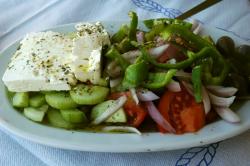
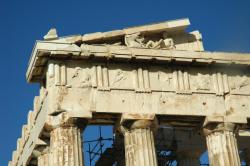
Detail of the Parthenon Greek salad (horiatiki)

Erratically Hellenic: Epeisodion α

Arrival in Athens

Erratically Hellenic: Epeisodion β

The quixotic quest for souvlaki

Erratically Hellenic: Epeisodion γ

It’s all Greek to me

Erratically Hellenic: Epeisodion δ

Capsules of Athens and Hydra

Causeway to Marina Mall Inside the Emirates Palace

Unexpectedly Arabic: al-Episode أ

Emirates to Dubai and onward to Abu Dhabi

Unexpectedly Arabic: al-Episode ﺏ

Abu Dhabi in general and during Ramadan in particular

Tall Taiwan Tales: Wikimaniacs in Taipei

The next morning we repeated most of our route in reverse: bus to Chiayi, BRT to the THSR station, and then aboard the bullet train again — this time all the way to Taipei Main Station. We’d grabbed some quick convenience store snacks for lunch when Z realized that we had a bottle of oolong tea and half a bottle of Kaoliang, the local 53-degree firewater, and the combination tasted good enough that by the time we arrived in Taiwan it was all gone and we were, as they say in Finland, slightly tilting to the starboard.

We commandeered a taxi and set off to Taipei 101, perhaps no longer the world’s tallest building (Burj Dubai having passed it a few weeks prior), but at least the tallest completed one. I have to say, though, that it’s pretty anticlimactic. Being in an earthquake zone and all, Taipei’s skyline is generally so lowrise that the tower has no points of reference and, while certainly “tall”, doesn’t give much of a feeling of being “the tallest in the world”. We did the tourist thing and headed up on the elevator, which was genuinely impressive — at 1,000 meters per minute, or a total ride time of 40 seconds, the operator girl was hard pressed to complete her spiel in Chinese, English and Japanese — but once up there, Taipei was just a hazy mess fading off into random mountains. Sunsets up there are supposed to be nice, and in better weather it might have been worthwhile to fork out an extra NT$100 to check out the outdoor observation deck, but as it was, it was just a slightly disappointing thing ticked off the to-do list.

Taipei 101 Every wikigeek's wet dream, Wikipe-tan Shilin river and the Grand Hotel

Z headed off to the airport and I headed off to the notional reason I was in Taiwan in the first place, the Wikimania 2007 conference. I’d been to hacker conferences before, and I’d been to academic conferences, but this was my first Wiki conference and it was a strange combination of both (lots of geeks, lots of impenetrably technical presentations) plus hippy-ideological messianic Communist-Christian revival (“Have you accepted Jimbo into your heart? All praise the wiki!”). It was all good fun though, with some fascinating presentations (Joichi Ito, Jack Herrick), a dozen Wikitravellers showing up for the Eat-Together at Shilin Night Market, free speech ”and” free beer at the Wikimania Party, and life-sized cartoon cutouts of every geek’s dream come true, Wikipe-tan. And, of course, Wikitravel head honcho Evan and I got to announce Wikitravel Press and even got a mention in the China Times for our pains. Spiffy-keen.

Food court at Shilin Night Market Taiwanese beef noodles at Shilin Night Market

On the last day, I left the conference at around 3:30, figuring that three hours would be plenty of time to get to the airport. Lug bag to Jiantan MRT, hop down one stop to Yuenshan MRT, spot the incoming airport bus dropping off pax by the side of the road… but where, oh where, was the stop for going to the airport? After running around in circles and murdering my severely overworked deodorant, I collared an incoming bus driver, who told me there is no stop and that I’d have to head to Taipei Main Stn. D’oh!  I grabbed a taxi; the cabbie of course spoke no English, but pointing at my (Japanese) Chiyu no Arukikata Taiwan’s diagram of buses around Main Stn saved the day and he dropped me off at the bus terminal, which should have had buses to the airport… but didn’t? The Kuo-Kuang desk pointed me over to the competition, Airbus, who had a bus leaving in 25 min. Seeing no choice, I bought a seat (surprisingly cheap at NT$90) and settled down for a wait.

Even by low Taiwanese standards the bus was a total wreck: stuffing was squirting out of those seats that weren’t falling off, half the windows were shattered and the bus set off with a groaning motor that made me seriously doubt it would make it all the way to the airport. The bus sailed off past another bus terminal with a huge sign — Kuo-Kuang to Taoyuan Airport — and I realized that the cabbie had dropped me off at the ”West” terminal, not the ”East” terminal, and this was a “stop at every betel nut stand” local service. It was 35 min before we’d puttered out to the expressway, and with a bit of a slowdown there too (the bus couldn’t do more than 30 km/h or so uphill), an hour had elapsed before we pulled off the expressway and into Taoyuan… the city, not the airport. Endless traffic lights, endless stops, grannies helping kids disembark, 5 km to go and 15 min until checkin closed… after a miniature eternity, we reached the airport and did a couple of scenic loops through the cargo area before the day’s solitary stroke of luck: we first pulled in at Terminal 1, not 2.  I ran off into the Departures hall and made it to the by now deserted counter at Row 7A at 17:44 — under minute before the 40 minute (17:45) cutoff. Phew.

Exit immigration took its own sweet time and I had to pretty much head straight to the gate to be herded onto the plane. Takeoff was on time, and with Jori Hulkkonen on the iPod and a gorgeous haze-diffracted sunset over Taipei I could finally relax. Well, almost. I gathered a little good karma on the plane by helping out two young Vietnamese monks with their immigration forms, using our sole common language — Mandarin. (Pointing with fingers was generally rather more effective.) For dinner, I’d planned to use up my last NT$250 on chicken rice, but Jetstar wouldn’t take my coins — so the monks attempted to pay for me! I found a S$2 note and rescued myself, but they then upped the ante by handing over one of their 7-Ups and refusing to take it back.

Monks: “Mei guanxi! Mei guanxi!

Me: “Bu dui a, you guanxi! Wo bu keyi!

Monks: “Mei guanxi! Bu keqi!

Me: “Aa… xiexie…

I sipped my sickly sweet carbonated nectar and ruminated on the impermanence of worldly things. This was the end of another adventure: up next, a sliver over 12 hours in Singapore, and tomorrow off to India again.

Tall Taiwan Tales: Wallowing in Mud in Guanzihling

After breakfast we took a rather less spectacular if twice as fast, twice as comfortable and comparatively half-priced bus back to Chiayi, passing through countless tea plantations and road construction sites. Once there, we hauled our bags through the sweltering streets (oh, how I missed the cool weather already) to the little local bus terminal which had buses to Guanzihling, our next destination, with just enough time to grab a final turkey rice and some bubble/pearl/boba tea — milky tea with chewy tapioca balls, a Taiwanese invention that was a huge Asia-wide boom a while back and is even starting to make headway in the Americas.

The bus eventually did show up, and having been pre-baked in the sun it was hot as a sauna inside. Being a local service, it took over an hour to crawl through suburban Chiayi, past the indistinguishable neighboring town of Baihe, just a little way back up the mountain, through a twisty valley, and into a parking lot which turned out to be the line’s terminus. Our hotel wasn’t in sight, the solitary map plonked on the parking lot was useless, there was no signage in any language, the people at the hotel didn’t appear to be capable of explaining where on earth they were and I didn’t have the Chinese characters of the hotel’s name anywhere. Arrgh. Stretching our combined Mandarin skills to the max, we managed to convey to the bus driver that we wanted to go to “Toong Mao”, and he waved us uphill — where, after a 5-minute trodge, we did find our hotel. Not much English (or Japanese) was spoken there either, but they did manage to get us checked in and we crashed into our first bed in four nights that didn’t feel like it had the sheets nailed to plywood. Unlike at Alishan, where our room had scenic views of the parking lot, the Toong Mao is built atop a hill and has great views down into the valley where “old” Guanzihling lies, a steep 300-step staircase away.

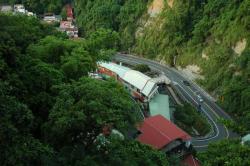
Hot spring source Guanzihling valley seen from Toong Mao Resort

Guanziling has an unusual claim to fame: it’s one of only three places on earth (the others being Kagoshima in Kyushu, Japan and Vulcano in Sicily, Italy) that features muddy hot springs, meaning that the hot spring water coming out the ground is already premixed with fine grey silt as it comes out. Not too exciting if you’re a guy, perhaps, but Z — whose delicate skin doesn’t always share our mutual conviction that a perpetually hot and humid tropical climate is greatest thing since sliced bread — was very keen on trying it out.

So here’s how you do it. Strip to your swimsuit, take a shower, put on a shower cap to protect your hair, maybe even goggles if you’re hardcore, and then start slathering on the mud, great big buckets of which are provided. Cover every inch of your body with gray goop — the Toong Mao resort even provides sex-segregated spaces if you want to take that literally and dispose of the swimsuit — then take a seat and wait for a few minutes until it starts to dry and the surface takes on a light gray sheen. Then go sit in a warm pool of the stuff, rinse it off, and repeat as often as you’d like. Regrettably (if unsurprisingly), no cameras are allowed, but here’s a blog by somebody whose resort did allow it:

4travel.jp/traveler/eijiiigle/album/10053442/

And does it work? I can’t voucher for the male of the species, but for the ladies, the answer is an unqualified “yes”. I have no idea why or how that mud works — it’s really, really, really fine, so maybe it’s actually sinking into your pores and clogging them up? — but it certainly feels mm-mm-smooth.

Dinner at a nearby restaurant was simple but excellent: amazing river shrimp deep-fried whole, cold bamboo shoots in sesame oil, tofu with bean sauce and a complimentary dish of steamed mountain veggies. The day’s “you know you’ve been in Asia too long” moment came when Z said “oh look, protein”, plucked out a stiff inch-long caterpillar from her veggies, deposited it on the side of the plate and continued eating. And so did I.

Up next: Taipei

Tall Taiwan Tales: Mountains of Mist at Alishan

The next morning, we woke up bright and early so we could catch the reason we’d come to Chiayi in the first place, namely the Alishan Forest Railway. The name doesn’t sound like much, and indeed, it was built by the Japanese for the rather un-noble purpose of stripping their island colony of its prized giant cypresses. (Obscure trivia: the massive torii gate of Tokyo’s famous Meiji Jingu Shrine is built from Taiwanese cypress, because none large enough could be found in Japan.) Today, though, it’s considered one of the engineering marvels of the world: in 3.5 hours, narrow-gauge engines putter and wheeze their way up from 30m to 2450m, with countless tunnels, bridges and scary dropoffs along the way.

Train pulling into Alishan station Alishan Forestry Railway track near Jhushan

On weekdays, there’s only one afternoon train a day, but on weekends (like this Sunday) they put on an extra morning train and today it was packed — it was standing room only even at Chiayi, and somewhat to our surprise more people just kept piling in at each stop. (We thanked our lucky stars for having the foresight to book ahead; not an easy task, as bookings are only accepted in Taiwan, but fortunately Z’s Taiwanese colleague had arranged it for us.) The initial stretch through rice paddies and people’s backyards, often at little more than walking pace (at 3.5 hours for 71 km, the average speed works to around 20 km/h), wasn’t too exciting, but soon enough the climb started. While coastal Taiwan sweltered in tropical heat, with banana trees and pineapple orchards, as we went uphill the vegetation started to change: less palm trees, more bamboo forests, more cypresses (still with the occasional creeper vine!). The toy train’s pitiful air-con had been stretched to its limits earlier, but the air started to cool down despite the ever-increasing masses.

At Fencihu, most passengers got off and we picked up the famous Fencihu biendang (a uniquely Taiwanese Mandarin import of bentou, Japanese word for lunch box), and it was tasty indeed. Suddenly the train felt very quiet, the previously bright blue sky had clouded over, and by the time we reached Shermuh station, the penultimate stop, there were wisps of mist flitting among the cedars. We reached our terminus, Alishan, at noon and the first drops of rain fell at the same time.

Staircase in the cedar forest Tree Spirit Pagoda in the swirling mists

Alishan (“Mount Ali”) isn’t the highest mountain in Taipei or even particularly close — that honor goes to Yushan, a ridge down and over 1 km higher — but it’s Taiwan’s top tourist spot and it was soon obvious why. We headed out for a walk in the woods, and the alternating drizzle and swirling mist made it all seem scarily hallucinatory: the Tree Spirit Pagoda, rising out of the mist like the monolith of 2001 and surrounded by gigantic 2000-year-old red cypresses tens of meters tall, was downright awe-inspiring. But as we pottered around, the rain started to increase, with accompanying cracks of thunder, and we took refuge in the amazing Jhaoshen temple, whose second story hides an altar so golden it hurts the eyes to look at it and an eerie dark room with countless Buddhas in niches, each lit by a single LED.

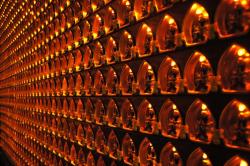
Golden altar at Jhoushen temple Miniature Buddhas at Shoujhen Temple

The rain didn’t let up, but the lightning moved further away, so we sloshed back to the hotel and warmed our bones (the temperature had fallen from Chiayi’s 35 C to just 10 C) with some pretty tasty hotpot, a firm favorite in these parts. We set our alarms for 3:30 AM, in time to catch the sunrise… but at 3:30, the pitter-patter of rain continued, so we decided to sleep in.

Once roused, it was a beautiful sunny morning without a cloud in the sky, yet the pitter-patter continued — there was a pipe leaking onto our roof. D’oh. In the sunshine, yesterday’s eerie scenery had become unrecognizable, with the ghosts gone and lofty Swiss-style mountain peaks and stately trees in their place. By noon, though, the clouds had rolled back and will-o’-wisps were again flitting through the forest, which was wrapped in impossibly dense blankets of moss due to the constant moisture. (As Z discovered the hard way, drying your laundry in Alishan isn’t very easy.) This time, we hotfooted out before the downpour started, and sampled some stinky tofu for lunch. I, for one, think the English translation is misguided and they should use the literal meaning of the character 臭 instead, namely “shitty”. While I have, to the best of my knowledge, never consumed feces, I have no doubt that the aftertaste would be exactly the same as that of stinky tofu. Bleargh.

Just before dawn on Jhushan Misty dawn at Jhushan

The next morning, we did manage to get up at 3:30 AM, and in slightly less frigid conditions than I’d expected we made our way by the special sunrise train service to Jhushan to share a romantic mountaintop sunset with approximately 1000 other Taiwanese, one of whom was equipped with a megaphone and was kind enough to provided running commentary in Chinese at very loud volumes, non-stop, laced with plugs for his brand of plum candy. Alas, we didn’t get the famous “sun rising over sea of clouds” effect, but it was a clear morning with a few wisps of fog in the valley below, so it was pretty cool. (And we didn’t buy any candied plums.)

Up next: Guanzihling

Tall Taiwan Tales: Fast Trains, Ugly Towns and Turkey Rice

The plane landed into a hazy dusk and rolled up to Taipei Taoyuan Airport Terminal 1, a building sufficiently old and moldy that Chiang Kai-Shek’s ghost was probably happy to get his name off the thing. After a lenghty wait at immigration that caused us to just miss our bus, we chowed down on the first of many bowls of beef noodles to come (damn, this stuff is good) and hopped on the next bus to the day’s first destination — Taiwan High Speed Rail‘s Taoyuan station.

THSR Taoyuan station Taiwan High Speed 700T train pulling into Taoyuan station

The station is a space-age structure of glass and steel, set squarely in the middle of nothing much at all, 15 min away from the airport. Luckily enough, THSR had just doubled the number of trains per hour one day before we arrived, and getting seats for the next one was no problem at all. I’ve ridden a fair few high-speed trains in my time (Shinkansen, KTX, Thalys, TGV, ICE, Shanghai Maglev…) and I can without hesitation say that the THSR 700T is the slickest-looking train I’ve ever been on. It’s huge, airy, whisper-quiet and so smooth that (especially at night) you need to look up at the speed gauge to remember that, yes, you are hurtling on an elevated track at 300 km/h through the Taiwanese countryside.

We arrived at THSR Chiayi station just over an hour later, and hopped on the remarkably anti-climactic Chiayi “Bus Rapid Transit”, which seems to mean old, clapped out buses running on perfectly ordinary road at perfectly ordinary speeds, the only sign of modernity being an LED displays crudely hacked above the entrance with epoxy squirting out the seams. We hopped off at Chiayi Rear Station (as they termed the entrance on the “wrong” side of the tracks), crossed a footbridge, forded our way through an army of taxi touts, dumped out bags in the first tolerable motel we came across (NT$600/night, or slightly under US$20) and set off to explore a bit.

299 km/h in the THS700T Chiayi by night

I’ll give a handy hint to any prospective Taiwan travellers: if you want a positive first impression of the island, don’t spend your first night in Chiayi. At the risk of understatement, Chiayi is not an attractive city, especially in the heat of summer, when the Bangkok-y stench of untreated sewage wafts up from the open sewers, old guys sit around in their underpants scratching their balls at betel nut stands and cockroaches skitter in the shadows. Zhongshan Rd, Chiayi’s main drag, is a hotch-potch assemblage of ugly lowrise houses with the most ludicrous attempt at a pedestrian walkway I’ve ever seen — every shop has built its own, so they’re all at wildly varying heights. I pity the drunk and the disabled in this town. (And everybody else, for that matter.)

On the admittedly limited upside, Chiayi is full of shops selling the local speciality, turkey rice. The name is accurate: you get a bowl of rice (Japanese-style short-grain), a few shreds of steamed turkey, a spoonful of translucent, garlicky gravy and a token half-slice of pickle that tries to brighten it up and fails. It doesn’t taste half-bad though, it’s just a little… boring. Nightlife in Chiayi follows much the same pattern: try as we might, we couldn’t find any place that would sell us beer without subjecting us to karaoke at the same time, so we had to settle for a mango ice and call it a night.

Up next: Alishan

RTW2007: Bangkok part 2, wherein our juggling journalist is hard at work enjoying free spa treatments, finding out how Thai millionaires live and gorging himself with four Italian meals in one weekend.

I was supposed to arrive at Bangkok about an hour before my friend Z, but due to the take-off delay got there only 15 minutes before, and as the plane parkedwaaaaaaaaay at the other end (why does TG discriminate against itself like this? they did the same in Don Muang too!) I ended up catching her — literally — just before Immigration.

This visit, though, was work. I was on assignment, or more specifically three of them: review the Amari Watergate hotel, with a focus on its new spa; write an article about Ari, my favorite neighborhood, and eat at as many Italian restaurants as possible in Soi Langsuan. (I know, it’s a tough job, but someone’s gotta do it.) I’d actually spent the better part of three months at the Amari a few years ago, and it was still a very good hotel, albeit in a mildly awkward location. Recently renovated, the Executive Lounge continues to have the best breakfast views in town, and I’m reliably informed that the spa was pretty good too. As for Ari and Italian chow, I’ll let my stories speak for themselves:

And that, as they say, was that: another 30251 miles in economy class notched on my belt, with surprisingly little pain at that. Picking your long flights carefully helps, and having a laptop with insane battery performance helps even more. Next time, it might be time to up the tempo a little and try flying around the world on low-cost carriers.

RTW2007: Barcelona, wherein our anchovy-eating adventurer goggles at Gaudi, tucks into tapas and clumsily clobbers Catalan.

I’ll start with a confession: before this trip, I had never visited Barcelona before, and in fact the entirety of my Spanish experience was limited to a visit to Madrid almost 20 years ago. Plan A was Dubai, cancelled on account of intolerably hot weather this time of year, but despite everybody I talked to urging me to visit Barcelona my impression prior to visiting had, somehow, been largely negative: dirty, crumbling, expensive, full of scams and ripoffs, and above all filled with ravenous pickpockets. A friend of mine had originally been so taken with the city than he moved there for a year, only to come back halfway through cursing at perfidious locals who robbed him and his apartment on countless occasions. What terrors awaited this blond boy?

Touchdown at the delightfully named El Prat was uneventful, with the plane rolling past the ghostly construction site of the enormous new south wing before parking at a bus bay next to lots of other bizarro low-cost carriers. Bags took over half an hour to show up, but there was still half an hour to midnight left when they did and I grabbed the Aerobus to the city.

Barcelona’s hotels seemed packed the week I was there (only much later did I realize that it was the week before the F1 race) and the place I picked after extensive deliberation, Hotel del Comte, seemed to get top marks for everything except one: everybody who had 3rd-party booking there had problems. Alas, their own website was saying full, so I secured some cheap rooms at lastminute.com… and arrived at the lobby just after midnight to find that they had no record of my reservation. Fortunately, they did had a room available after all, and when I got in my jaw dropped. I’d paid barely 70 euros a night, which got me a just-renovated room with flat panel LCD, spotless glass and marble bathroom, free wifi and views out onto a trendy bit of L’Eixample, 50 meters from the Metro stop and a 10-minute stroll to Placa Catalunya.

Dragon opposite la Boqueria Facade of Casa Batllo House on la Rambla

The next morning was a perfect day, around 25 deg C and sunny, and as I went out on a stroll I fell in love. A bocadillo de tortilla de patatas (potato omelette sandwich: sounds weird, tastes great) for breakfast, some juice from the absurdly cheap grocery to wash it down and then a ramble down La Rambla, which is quite possibly the prettiest pedestrian boulevard I’ve ever seen anywhere. The architecture in Barcelona is gorgeous, but it’s not pompously overboard in parts or incredibly grimy in parts like Paris, and the whole Modernist Gaudi-Miro aesthetic gives it all a delightfully whimsical feel. Add in some fresh sea breezes, the crazy array of street performers and that carefree Hispanic spirit where everybody jaywalks when there are no cars coming, and you’ve got a city that’s a pleasure to explore.

Sagrada Familia, perennially under construction Gracies at the Sagrada Familia

I spent my first day on the Gaudi trail, starting with the mildly anticlimactic Sagrada Familia, which is surely the world’s most popular and expensive construction site. It’s been going on for 125 years now and projections are saying it’ll take another 20 years at least, which just seems kind of ridiculous: it’s big, but it’s not that big, and Vegas casinos ten times the size are thrown up every few years. Then again, Vegas casinos aren’t working based on the reconstructed scribbles of a famously loopy architect who died 80 years ago and whose drawings were more visions than architecturally tested computer models…

More to my liking was Casa Batllo, which would surely be one of the world’s more interesting apartments to live in, but the 16.50e they wanted for a peek inside was a bit too steep for my taste. La Pedrera (aka Casa Mila), on the other hand, was hosting a free exhibition on music in the Third Reich, which made a good excuse to take a quick look inside and confirm that Gaudi knew how to design interiors as well. And finally, the next morning, I made a sweaty hike up to Parc Guell, which I shared with half the tourists in Barcelona. This theme seemed to continue at the Miro museum, where over half the visitors seemed to be elementary school kids running around — enough to ruin a better museum, and Miro, never one of my favorite artists, wasn’t much improved by it.
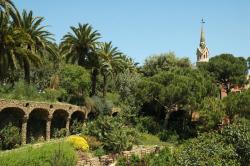
Parc Guell Spiral at Casa Gaudi

One of the more depressing findings of the Spanish-speaking portions of this trip is that my command of the language is far rustier than I’d thought. Written Spanish I’m more or less OK with, although reading Cervantes in the original like I used to would be pushing it, but understanding spoken Spanish is more of a challenge, especially when lisped with a Castellano accent, and speaking it back an even tougher proposition.

In Barcelona, of course, things are made a bit more interesting yet by the local language being not Spanish, but Catalan, a mutant offshoot that sounds very much like Spanish and French mixed together. For example, “departure” is Salida in Spanish and Sortie in French, but Sortida in Catalan. The obvious Romance-ness of Catalan does make it fairly comprehensible (“processant nova informacio”, announced the Metro when trains were delayed by a few minutes), especially once you work out the weird Esperanto-ey spelling where x is “sh” and tg is “kh”, and ad slogans like “sempre fais el que sento” are perfectly comprehensible when you pretend it’s mostly mispelled Spanish (sempre siempre = always, el que = lo que = that which, sento = siento = feels) with the odd French word thrown in (fais = does). And there are great place names too: Prat! Dot! Gorg!

Being the linguistics nut I am, I find the present European trend to promote previously suppressed dialects in official contexts an endless fount of amusement, but from a more practical point of view it all seems like a terrible waste of time and energy. As you can easily verify by consulting the usage instructions or disclaimers for any pan-European product, Europe’s already got more than enough languages, without people attempting to revive ones like Gaelic and Breton that already had one foot in the grave. Speak whatever kind of gobbledegook you like at home, but learn English, mmmkay?

Idle bitching aside, English worked pretty well most of the time (usually better than my attempts at Spanish, which were taken in good humor), and the food was great, at least if you can deal with Iberian scheduling (good luck finding a restaurant open for dinner before 9 PM). I steered well clear of tourist haunts and instead fed myself at the markets and the daily under-10-euro sets of cheap little neighborhood restaurants, which netted me sublime jamon serrano (air-dried ham) sandwiches, big boxes of macedonia (fruit salad) for a few euros a throw, some mighty good cheap paella, stupendous freshly grilled anchovies and a couple of mediocre gazpachos. At La Perinaca, purveyor of stupendous anchovies right across the street from my hotel, the 9-euro dinner menu even included half a liter of rather drinkable Catalan wine. Leave the tapas for the tourists!

Next
RTW2007: Helsinki, wherein our carnivorous crusader wrassles with smoky elk, bear balls and Ukrainian transvestites.

A week full of bear meatballs, smoked elk, blood sausage, juniper schnapps and a solitary surprisingly decent veggie tortilla later it was time to escape the Eurovision 2007 hype building to a fever pitch — the semifinals would be held the day after I left, and you couldn’t swing a sequined tutu in central Helsinki without hitting three people, at least one of whom would be a Ukrainian crossdresser, showing off their Eurovision tags.

(Yeah, that’s it. If you want to actually read about Helsinki, you could do worse than check out a previous visit.)

RTW2007: Saint-Malo, Mont Saint Michel, Lille, wherein our oysterous organizer racks up TGV miles to brave the piratical prices and rampaging hordes of Brittany and Normandy.

If there’s one thing the French do well, it’s trains. I boarded my TGV straight at CDG Terminal 2, met up with my friend N (of previous trip fame) onboard and, without even stopping in Paris, chugged directly to Rennes, the springboard into Brittany. A quick change there, one more hour on a regional train that was, if anything, more space-age than the TGV, and we landed in Saint-Malo, famed former corsair (that’s French for pirate, arr) hub and today one of Brittany’s top tourist draws. The walled city, or Intramuros, hosts what is almost certainly France’s highest concentration of creperies per square inch, with the little remaining space being taken up by expensive seafood restaurants and hotels, all of them overflowing with blue and white nautical kitsch.

Boats in the harbour Thoroughly awe-inspiring oysters

After a perfunctory tour of the city wall, with the collusion of my friend we set about on the main theme of the trip, that is, eating. On the menu were galettes (savoury crepes), scallops, cider and, above all, oysters. The coast of Carcale is one of France’s if not the world’s top oyster regions, and even fancy restaurants were selling them fresh for under a euro a piece. But N pulled off the culinary coup of the trip by spying a take-out window, offering big, chunky size #2 oysters for a scarcely credible 6 euros a dozen. On request, the shop even shelled them, laid them on an iced tray, threw in a sliced lemon and wrapped the whole thing in crinkly gift wrap plastic, without charging a cent extra. Until this day, I hadn’t been much of an oyster fan, but these, indeed, were something else.

The next day’s agenda was a day trip to Mont Saint Michel, a remarkable demonstration of what the French could come up with when threatened by something scary enough, like my forbears the Vikings. As a set of models inside the complex demonstrated, the Mont was once just a pyramidal pile of rock, which over the centuries was carved and constructed into a pyramidal fortress-cum-abbey. Surround it by some of the world’s most formidable tidal flats, replete with quicksand, and even the most determined berserker will opt for an easier target instead.

Mont Saint Michel and a parking lot Queue for l'Abbaye

Today, though, Mont Saint Michel’s defenses are wide open and the island is thus rampaged by ravenous hordes of tourists on a daily basis. The rather inaptly named Grande Rue, in particular, was so crowded you had to squeeze past all the Japanese tour groups snapping away at chefs in pseudo-medieval costumes whipping up omelettes, sold at 30 euros a piece (if you could manage to get a reservation). We then had to queue some more for the privilege of paying 10 euros to get into the Abbey, which was worth the visit though — after the Revolution, it was turned into a prison, and the cargo elevator operated by prisoners trudging inside a giant human hamster wheel could have been straight out of Sade’s demented fantasies. For lunch, we picked one of the less popular restaurants on the ramparts (which, on the eve of May Day, meant one which actually had two seats free) and tested the famed Mont Saint Michel omelette (fluffy but bland), the famed local sheep (near-inedibly stringy) and some more oysters (excellent).

The next morning we climbed back on the train and zipped through Rennes, Paris and past CDG another hour north to Lille, at the fulcrum of the Paris-London-Brussels train lines, where N is finishing up her studies. I was expecting a grimy industrial town filled with car factories and workers in overalls, a sort of proletarian Brussels, but nope, Lille’s cupcake-pretty central square wouldn’t look out of place in the 1st arrondissement of Paris and there were a lot of fancy boutiques, chic cafes, hip bars and fancy restaurants selling the same Carcale Bay oysters for five times the price. Unfortunately, it being May Day, almost all of them were closed and it took some serious legwork to find a place to eat dinner. It was packed to the rafters, of course, and we waited among an hour before we finally got a distinctly mediocre meal redolent of Belgian blandness wafting over the border. (There was one reminder of France though: the beer was tasteless.)

Lille Europe TGV station Coq Hardi at Grand Place Flowers and lovers

My last day in France dawned to warm and cloudless. Just for yucks, I tried Lille’s cute little toy metro for the few stops to the Lille Europe TGV station, surely one of the more striking modern train stations out there. A lunch of a stuffed baguette and Orangina, a few pictures of the French couple canoodling inside the modern sculpture outside (my kingdom for a telephoto lens!), and then it was time to wave buh-bye and hop on the TGV again.