Weird Food Compendium

Octopi hors d'oeuvre, Sendai, JapanPolitically correct note: “weirdness” is in the eye of the beholder, and I’m obviously writing this from a Western perspective. It’s instructive to remember that a Chinese colleague of mine still finds cheese of any type to be tough going, and considers the very idea of intentionally moldy (blue) cheese to be utterly disgusting. Without further ado…

The Raw, the Bleeding and the Squirming

Eating sushi was the first step in my transformation from a teenage picky eater to an obsessive gourmand. I fell in love with the stuff in Japan and have since eaten countless kinds of raw fish, shellfish (shrimp, lobster, crab), molluscs (oysters, cockles), etc. Some more interesting highlights, all in Japan unless otherwise noted:

  • Raw beef. Like carpaccio, only without the lime juice and spices. It’s alright, but I prefer my steaks medium rare.
  • Raw whale. Actually look and tastes quite similar to raw beef, but the texture is a bit fishier. Not bad.
  • Raw horse. Often known as sakuraniku (cherry blossom meat) or umeniku (plum meat), but in Tokyo it’s just basashi, sliced horse. Very thinly sliced and served on a bed of ice, with minced garlic as a dipping sauce. When still frozen, the taste is very mild and the texture melts in your mouth; when it melts, it becomes a stringy mess of horse.
  • Raw goat, in Abu Dhabi. Known as kibbeh nayyeh, this is a Syrian speciality that consists of finely minced goat meat, bulghur wheat and a bit of olive oil, all blended together into a big bowl o’ meat. Eaten with pita bread, it’s considered a very manly breakfast, and it tastes, well, meaty and goaty. I think trying it once was enough.
  • Raw chicken. At a specialty chicken restaurant in Japan that breeds their own. Tasted like, well, chicken. Not particularly enjoyable, but not particularly disgusting either.
  • Live octopus (sannakji), Korea. It’s not really live, as the tentacles are hacked off before serving, but they do keep moving for a good half hour afterwards. The weird bit is that they’re still conscious on some level: if you try to pick them up with chopsticks, they start wriggling furiously and/or attach their suction cups to the plate. Dousing in soy and wasabi helps calm them down, and they actually taste quite nice. Just don’t bite off more than you can chew, as these suckers can and do choke people to death every year.


320px-sea_pineapple_sashimiSpare Parts (Fish, Amphibian and Reptile Edition)

  • Anglerfish milt (shirako), Singapore. “Milt”, or the even more euphemistic “soft roe”, is actually the fish equivalent of sperm. The Japanese consider it a delicacy and serve it chilled with a light ponzu sauce and some scallions, and to my surprise, it was actually rather tasty: it’s firmer than you’d think, the texture is smooth (not gooey at all), the taste is milky (and not fishy or, uhh, genital-y).
  • Crocodile kebabs, Australia. Dry but surprisingly meaty and un-stringy, would pass for a lean cut of pork.
  • Eel liver soup (kimosui), Japan. Eel livers look like something out of Alien, but they taste like any other liver.
  • Fish head curry, Singapore. This is a Singaporean classic, and with reason. The heads used are gigantic and, while the bones are not eaten, there’s plenty of succulent meat lurking in the crevices.
  • Frog legs, Singapore. The notionally weird but actually very bland food that the phrase “tastes like chicken” was invented for.
  • Geoduck siphon, USA.  A geoduck is a type of a mollusk, whose siphon is rather rude-looking and consequently an expensive delicacy that can be eaten cooked or raw.  I tried it as sushi, and it doesn’t really taste much different from any other clam.
  • Giant shrimp heads, Japan. After eating the innards as sashimi, an izakaya pub I used to frequent would deep-fry the heads and serve them up. They look pretty creepy, but you can eat the whole thing like a potato chip: remember to take a look inside the head to see the multiple rows of little teeth. Mmm!
  • Jellyfish, Singapore. Very popular Chinese appetizer occasionally eaten in Japan as well, prepared with a complicated process that makes them a little crunchy and entirely tasteless.
  • Miniature octopi, Japan. Served whole, coated with a sesame-oil-based sauce. Oddly enough, these are called chuka tako (Chinese octopus) in Japan, but I’ve never seen them in China (or Singapore) outside Japanese sushi restaurants.
  • Miniature squid, Japan. An essential topping for Nagasaki chanpon seafood noodles. Even my otherwise tentacle-phobic Pakistani colleague in Tokyo liked these.
  • Monkfish liver (ankimo), Indonesia. Monkfish are nasty-looking creatures, which is why it’s rather amazing that their (natural) livers taste almost exactly like French force-fed goose foie gras. Very much a favorite of mine.
  • Sea pineapple (hoya), Japan.  I wrote the Wikipedia entry for this back in 2007, but it took almost 10 years for me to have a chance to try it out.  Even most Japanese will tell you it’s horrible, but the one I had fresh, crunchy (not rubbery) and rather pleasant at first bite, especially with vinegared soy sauce to dip it into.  However, the ammonia/iodine aftertaste is lingering and rather unpleasant.
  • Sea urchin gonads (uni), Japan. Most sushi menus will tell you this is roe, but nope, it’s the closest thing a sea urchin has to a sex organ. The sweet, greasy taste is difficult to describe and, in my book, tolerable but not entirely pleasant, especially if you get some past its prime. However, Italians can make this into a very decent creamy pasta.
  • Shark’s fin soup, Singapore. Cruel, insanely expensive and completely tasteless. The bane of Chinese weddings everywhere.
  • Snow frog fallopian tubes (hasma), Singapore. Yes, this is painstakingly prepared by extracting, drying and then reconstituting amphibian ovaries. The end result is a completely flavorless white jelly occasionally used in expensive Chinese desserts, useful for feeding to people you don’t particularly like. “I ate WHAT?”
  • Squid ink, Japan. Often found in Italian pastas and risottos. Tastes creamy, but best avoided on dates as it dyes your mouth black.
  • Turtle soup, Singapore. Surprisingly meaty but unsurprisingly chewy. I also tried the skin (fatty) and the intestines (chewy), but alas, they were out of eggs.

Spare Parts (Mammal & Poultry Edition)
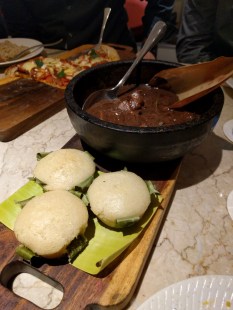
  • IMG_20160118_214744.jpgBear meatballs, Finland. At close to $5 a pop, they ain’t cheap, but they sure are tasty.
  • Bird’s nest soup, Singapore. Made from the congealed, regurgigated spit of a certain species of Borneo swallow. No distinguishable taste, as it’s always served in syrup.
  • Blood sausage & blood pancakes, Finland. I vant to suck your blood. Especially if you’re a pig, since then I can whip it up into a batter, fry it until it’s crispy and serve with lingonberry jam. Slurp.
  • Blood soup, Thailand. An essential ingredient of kuaytiow hang reua (boat noodles), used both as the base of the dark broth and in boiled, tofulike chunks of congealed blood floating in the soup.
  • Chicken breast cartilage (nankotsu), Japan. You know that weird Y-shaped chunk of cartilage in chicken breasts? It’s a favorite Japanese snack. Excessively crunchy and thoroughly tasteless.
  • Chicken gizzards, Indonesia. When chickens swallow small rocks, they enter this organ, which uses them to grind seeds into flour. Describing gizzards as “tough” would thus be a bit of an understatement.
  • Chicken feet, Malaysia. These look a bit creepy, but the problem with eating them is not so much the taste as the fact that they’re full of tiny little bones. But they’re fairly popular over here, and I’ve now learned to nibble away at the skin and fat without getting too many toe bones in my mouth.
  • Chicken ovaries (kinkan), Japan. Served skewered and grilled, two to a stick. Once again, tastes like chicken, and to my surprise not at all stringy or chewy.
  • Dog meat soup (boshintang), Korea. Theoretically illegal, so finding it took a little legwork, but the taste was a positive surprise: it tasted like well-stewed beef or veal. Recommended.
  • Fertilized duck eggs (balut), Philippines.  Yes, these are unborn duck chicks complete with feathers, bones, beak etc, cooked in the shell and eaten with beer.  Despite the remarkably gnarly appearance, they taste just like eggs yolks, and I’m actually kinda craving one as I type this.  Yum!
  • Kangaroo steak, Australia. Tastes like somewhat gamey, somewhat chewy meat. But nobody would notice if you used this in a doner kebab (a method by which I have probably eaten camel in the Middle East).
  • Lamb brains, Australia.  Magaj, spicy curried lamb brains, is actually a classic Pakistani dish, I just happened to find it on the menu at a restaurant in Sydney.  Very tasty too, with a smooth texture, although any taste is largely overpowered by the chilli and spices.
  • Pig face and lungs (sisig), Philippines.  Chopped up finely, spiced up and grilled on a hot plate.  Crunchy, greasy and, to be quite honest, not that great.
  • Pig intestines, Thailand and elsewhere. I keep running into these things, and sticking them into a good bowl of boat noodle soup (see Blood above) makes ’em pretty palatable. The French style of turning them into andouillette sausages also works, although the smell is… distinct.  Singaporean kway chap, with a clear, tasteless broth, doesn’t do much for me.
  • Pork blood stew (dinuguan), Philippines.  Probably my favorite Pinoy dish when done right, with a complex spicy chilli and vinegar kick.  Goes great with puto rice cakes.
  • Pork trotters, Singapore. The Chinese go gaga over this stuff, especially when slow-cooked in black vinegar. To me it just tastes like fat and mysterious gummy bits holding together nails and bones.
  • Sheep testicles, Egypt. Spiced, grilled and served sliced up so that you could still see the original shape. Slightly gritty texture, but overall not bad at all and I’d happily eat them again.
  • Smoked elk steak, Finland. This was genuinely good, without the smell of horse or the taste of venison.
  • Tripe goulash, Hungary. A cautionary tale of what can happen if you only think you understand what the daily special in the Hungarian-only menu is.
  • Yak meat, Tibet.  Ubiquitous in Tibet, since cows can’t really hack 4,000 meters of altitude.  Served up as dumplings, soups, steaks, jerky and more, but always tastes like beef, only a touch gamier.

Dairy, Dairy, Quite Contrary
  • MVIMG_20180707_165534.jpgDried yak cheese (aaruul), Mongolia.  Looks like pasta, but tastes like dried-up, moldy Parmesan rind.
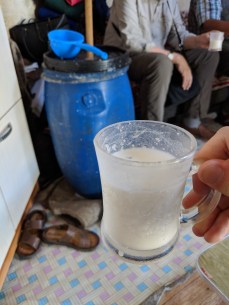
  • Fermented mare’s milk (airag), Mongolia.  Brewed in a blue plastic barrel in a random dude’s yurt, served out of unwashed cups and flecked with appetizing bits of mold.  This stuff is famed for causing explosive diarrhea even when done right, so I chickened out and only downed half a cup.
  • Stretchy yogurt (viili), Finland.  The mutant offspring of chewing gum and yogurt.  Looks weird, acts weird, tastes like yogurt.
  • Yak butter tea, Tibet.  Take strong black tea, add a big pinch of salt, a large chunk of rancid cultured yak butter, and blend.  Looks like chai, tastes like drinking salty butter.  Quite edible when eaten mixed with tsampa barley flour.
  • Yak milk vodka (arkhi), Mongolia.  Clear and smooth, with a 20%-ish hit and a mild yogurt aftertaste.  Surprisingly pleasant!

Weird Veggies

  • Bracken flour balls (warabimochi), Japan. Translucent balls cooked in boiling water, slathered with syrup and soy bean flour, then poked with toothpicks and eaten. Yum!
  • Maheu, Zambia. It’s maize! It’s porridge! It’s yogurt! It tastes like a mix of all three! For extra credit, you can let it ferment for a while and you’ll have masese/ucwala/chibuku, the East African version of beer.
  • Mofongo, Puerto Rico. Mash plantains. Deep-fry them. Mash them again. Deep-fry them again. Repeat this for a while, then add in bacon bits and serve. Now we know where J-Lo got her callipygean curves.
  • Mämmi, Finland. A traditional Easter dish, this is barley porridge cooked slowly in an oven until it looks like a vat of steaming poop. Fortunately it tastes much better than it looks.

Creepy-Crawlies

1280px-ile_des_pins_snails_cookedI used to draw the line at insects, but of course I had to cross the line once to see what I was missing out on. (Not much, it seems.)

  • Snails (escargot), Belgium. Fine, they’re not insects, but they’re honorary cardholders. Chewy, practically no taste.
  • Giant land snails (bulime), New Caledonia.  Same as above, only much larger.  Also technically an endangered species, although they’re farmed locally.
  • Steamed silkworms (beondegi), Korea. They look like the disgusting little grubs they are and are filled with musty but flavorless gray mush.

Spoiled Rotten and Fermented

Radium eggs, Naruko Onsen, JapanEverything up to here is still more or less OK in my book, but some of this stuff is just foul. There’s a reason spoiled things are programmed to make us gag, dammit!

  • Blue cheese, France. Ferment the squeezings from cow mammaries and inject spores with a syringe until it’s riddled with mold and stinks to high heaven. I can tolerate it in small quantities in soups, pastas and such, but gobbling on it au naturel is too much.
  • Ika no shiokara, Japan. Fermented and pickled squid guts. This stuff made it onto Fear Factor for a reason and was, until recently (see next item), the most disgusting thing I’ve ever eaten.
  • Konowata, Singapore. Fermented and pickled sea cucumber intestines. As nasty as ika no shiokara, only worse because it’s even more concentrated. See review at Chikuyotei.
  • Mefun, Japan.  A classic Ainu dish made from fermented salmon liver and other internal organs.  Shiny black goo in appearance, the texture is disturbingly springy and jellylike, but the taste is surprisingly mild.  My wife had some mixed into spaghetti, and even the kids ate some!
  • Natto, Japan. This is what happens to soybeans when you leave them in a warm, humid place for too long. I’m told you have to eat it seven times until you start to like them; I’m up to four and am still waiting for a change of opinion.
  • Stinky tofu, Taiwan. With a name like that, you already have some idea of what to expect, and the stuff is, indeed, rather whiffy. It looks and feels almost entirely like normal tofu though, and tastes like it for the first second or so as you bite into it… until the distinctly fecal aftertaste hits and refuses to go away. No sir, I did not like it.
  • Thousand year eggs (pidan), Hong Kong. Traditionally prepared by soaking raw eggs in horse urine, but now they just use lye, and the soaking period has been reduced from a millennium to a few weeks max. As the exception that proves the rule, these are quite tasty when served up in Cantonese porridge.

Industrial Byproducts

  • Ammonium chloride candy, Finland. Occur naturally in volcanoes, and is used in dry batteries, soldering flux and a Finnish candy (I use the word loosely) called salmiakki. Finns also like to dissolve it in vodka and drink it.
  • Gold, Japan. A speciality of Kanazawa, where golf leaf ends up in all sorts of unlikely places, include candies and sake. Being inert, it obviously has no taste, but the weird thing it doesn’t cost much either as the quantities used are so minute.
  • Lutefisk, Finland. Lye, aka sodium hydroxide, is used for making soap, wood pulp, unblocking drains, etching aluminum and, if you’re Norwegian, soaking perfectly good fish until it’s a stinky gelatinous mess. The upside is that the taste is pretty much bleached out too — the downside is that the smell isn’t.
  • Radium eggs, Japan. You’d think the Japanese would have some hangups about radioactivity after the whole Hiroshima thing, but no, radium baths are popular cure-alls and so are radium-soaked eggs.
  • Sulphur eggs, Japan. What would you do with a pit of boiling mud that smells like rotten eggs? If you’re Japanese, you’d boil some fresh eggs in it. They’re a popular treat in Hakone, where the local vendors call them “black jewel eggs” and have come up with a legend to say that every one you eat adds seven years to your life.

How I Want A Drink, Alcoholic Of Course

  • Dongdongju, Korea. Homemade rice wine that looks and tastes like a cross between Sprite, yoghurt and mud.
  • Golden Muscle Wine, Cambodia. It’s pitch black, 40% alcohol, contains ground deer antler and costs $2 a bottle. How could you go wrong?
  • Pufferfish bone sake, Japan.  Take cheap sake, add some grilled bones from the famously toxic fugu pufferfish, heat it up, and enjoy.   Tastes fishy, but not particularly lethal.
  • Tuak, Malaysia. Jungle wine made from palm sap, found in a souvenir shop in Borneo. After a bottle of this, I understood why Dayaks liked to run amok and cut people’s heads off.

To-Do List

  • Bat, Indonesia. A Manadonese speciality.
  • Dog penis, Korea. I’m told “third leg” is a speciality of Pyongyang, so here’s hoping Kim Jong Un kicks the bucket and I get a chance to try it out.
  • Fugu, Japan. Yes, this is the famous fish that is completely tasteless and will kill you if prepared incorrectly.

Reviews of a Gourmet Snob: Chikuyotei, Meritus Mandarin

Ever since I came to Singapore, I’ve kept hearing about Chikuyotei for two reasons. First, it’s Singapore’s only Japanese restaurant that specializes in eel (unagi), a dish that is quite difficult to prepare properly. Every now and then, hope has overcome bitter experience and I’ve tried my luck elsewhere, always ending up with a slab of fishy rubber coated with excessive amounts of sauce. And second, it has the reputation of being one of Singapore’s most expensive restaurants of any kind: a reporter friend of mine, who often went there on the company dime, used to tell stories of how many zeroes the bill could have at the end of a sake-soaked night. This, too, is a part of the restaurant’s 150-year heritage: the original Chikuyotei is located in the Ginza, Tokyo.

So when a friend of mine offered to return a previous favor and take me there, I jumped at the chance. The rather non-distinct restaurant is tucked away on the 5th floor of the Meritus Mandarin, one of Singapore’s older hotels, and on this New Year’s Eve was only half full, with couples enjoying a quiet splurge and one rowdy group of salarymen whooping it up in the corner.

Chikuyotei’s popularity with Japanese resident in Singapore stems from the fact that they make absolutely zero concessions to Western (or Singaporean) tastes. But unlike its Tokyo forbear, the Singapore outlet has been forced to expand its offerings beyond eel and also offers up a full range of Japanese izakaya (pub) fare: you could probably order noodles and a beer and sneak away for less than S$50 a head, but you could also order five pieces of tuna belly (S$100), some Kobe beef sukiyaki(S$123) or even ask for some wild eel (S$36/100g). Full courses start from S$110/head, but we opted to just get two dishes of Shizuokan farmed eel and a few appetizers, with a small bottle of Suigei (“Drunken Whale”), a slightly sweetish sake, to wash it down.

First up was kankoku-fu negi sarada (Korean-style spring onion salad, S$8), which consisted of chopped spring onion topped with sesame seeds, chili powder and soy-based dressing. It tasted exactly what it sounds like.

Second was ika no uni-ae (squid with sea urchin, S$15), in which a thimbleful of chopped raw squid was soaked in sea urchin roe. I’m not a great fan of either ingredient by itself, and mixing them together doesn’t much improve the result.

And third was konowata (S$10), a new acquaintance for me, served looking like a wad of phlegm dotted with a raw quail egg nestled in a spoon. I poked in a chopstick, licked, and felt ill when I remembered the last time I had tasted this nasty zing followed by a cloyingly putrid aftertaste. I’ve eaten silkworms, beef testicles, raw horse meat and dog stew, but firmly enshrined in my mind as the worst thing I’ve ever tasted is ika no shiokara, a pickle made from sliced squid soaked in fermented squid guts that has even made it onto Fear Factor. It turns out that konowata is almost exactly the same thing, except that it’s made from sea cucumber entrails, not squid. Mmm. Being the chivalrous gentleman that I am, I assisted my dining companion in tearing up the guts into eatable small chunks, then wiped my chopsticks clean and tried not to gag as I watched her slurp it down.

At this point, the restaurant’s sommelier — an acquaintance of my friend’s — showed up and kindly treated us to glasses of white wine, a fruity but dry French Chardonnay from the Loire valley. It was nice gesture, but well versed in the ways of Japanese etiquette, my friend knew we had to order two more glasses to compensate: it was a different (and very tasty) wine whose name this time escapes me, but the glasses were slightly larger and we paid $21 a pop for them. Even in Japan there ain’t no such thing as a free glass of wine…

At last the eel came. First up was the Kansai-style shiroyaki (S$38), plain old grilled eel, served with soy and wasabi on the side as a dipping sauce. It was alright, but didn’t really taste like very much, just vaguely fishy. But then came the Tokyo-style kabayaki (S$52), gently coated with sauce, and it was worth the wait. The meat was so soft it fell apart at the touch, and the skin too was so soft it could easily be pulled apart. I still prefer charcoal-grilled eel, which makes the skin and edges nice and crispy while sealing the moisture inside, but this was still far an away the best I’ve had in Singapore and made it at #3 on the all-time top eel chart.

The final bill came to S$220, which I thought was a pretty darn steep price for a rather modest quantity, but my friend thought was quite alright. “Sommelier-san is opening a new restaurant in Sentosa that will cost at least that much per head, so next time it’s your treat!”

India 4: D is for Depressing

Delhi in December is damp, dismal and depressing — and so is this blog entry, which veers from the trivially tiresome to the thoroughly tragic. Grab a box of Kleenex and, err, enjoy.

  • There is a kitchen in my office, about 2 sq.m. in size, with an automatic Nescafe-making machine. Two people are employed to wait in the kitchen. If somebody asks for tea or coffee, they take a cup, press the button and hand the drink to you. Only one of them has a chair.
  • In India’s state of Orissa, under one in five households has electricity.
  • Most factories in Gurgaon have signs prohibiting child labor. Instead, 8-year-olds spoon out dal and wash dishes in the dusty roadside eateries outside them, and 12-year-old rickshaw-wallahs cycle the adult workers to work.
  • Half of India’s children are malnourished. Television commercials heavily promote zero-calorie sugar substitutes.
  • The Delhi city government decided to give all elementary schoolers an aid package consisting of a school uniform, school bag, shoes and two pairs of socks, valued at Rs. 290 (~$5). This is also the price of a single 8″ pizza and a Coke at the food court in the MGF Metropolitan Mall in Gurgaon.
  • India has over 5 million people infected with HIV. Under 50,000 of them receive treatment.
  • Whenever the power fails in my condo in the evening, there is a moment of pitch black silence, and then the screams of terrified children start to echo through the tower blocks.
  • The average per capita income of Malawi, the world’s poorest country, is $161. Average per capita income in India’s Bihar state is $94.
  • “A three-year-old boy was eaten alive by a herd of pigs in a village on the outskirts of New Delhi after family members did not notice him wander outside his home. Only the boy’s limbs were recovered.” (Reuters)
  • Flat surfaces in the Indian countryside (and Delhi’s slums) are neatly lined with drying patties of cow shit. They are used by the poor for fertilizing fields, as cooking fuel, for heating houses, as insect repellant, as insulation and to provide durable flooring.
  • One of Gurgaon’s many epithets is “the Singapore of India”. Unlike its namesake, it has no public transport system, and in November alone 28 people were murdered by a gang preying on people hailing illegal cabs.
  • The average Indian spends 2.9 rupees ($0.06) on telecommunications yearly. It would require over a million of them to employ me for a year.

Now that I’ve gotten that out of my system, I’ll confess that I’m actually starting to like India, warts and all. But the next episode will probably concentrate more on Gurgaon, the bizarre yet intriguing site of a continuing slow-motion collision between hypermodern India and ageless Bharat. Tune in next time…


Cambodia Chronicles: Raffles Le Royal

Raffles Le Royal! The name itself seemed magical, and my expectations were as high as my taxi driver’s on the way from the airport: “Ooh! The best hotel in Cambodia!” Perched on the northern side of town, at the center of what was once the European quarter, the flood-lit spire of Wat Phnom gleamed in the night as we pulled into the driveway and a man in a pointy hat rushed down to pick up our luggage.

There is no check-in desk at Le Royal: instead, you are led to a plush sofa in the high-ceilinged yet surprisingly intimate Conversatory and served a welcome drink while completing the formalities. A staff member led us along cream-and-black tiled corridors to our Landmark Room in the main building, while telling us about the hotel’s long history. Build by the French as a hotel from day one, at four storeys it was possibly the tallest and certainly the grandest building in Phnom Penh when it opened in 1929, with a lavish opening party featuring an orchestra from Saigon and attended by King Monivong. At the time, a room for the night cost 3-4 Indochinese piasters (US$1.20), or twice that if you wanted meals too.

Our room was, like the hotel itself, a fusion of the latest technology with colonial style. A ceiling fan lazily spun high above the giant bed, itself a period piece of heavy dark wood, while a discreet panel by the door controlled the air-conditioning. The bathroom featured a carefully restored free-standing claw-footed bathtub, while next to it was a modern glass shower cubicle, with the charming touch of putting the cold water in the left tap and the hot on right, just like they used to back home in France. Photographs of old Phnom Penh lined the walls and even the quaint bulbous light switches dated back to 1929.

It was already late in the evening, so we headed straight down the grand wooden staircase and made our way to the hotel’s legendary Elephant Bar, with views of the hotel’s magnificent gardens and an array of in-house drinks – even Slings faithfully copied from the recipe of the mothership hotel in Singapore. But unlike Singapore’s rather touristy Long Bar, the Elephant Bar retains a quiet, elegant charm, with live piano in the evenings and waitresses flitting about in Khmer silk dresses.

The old, colonial Le Royal reached its apex in 1967, when Jacqueline Kennedy stayed here on her way to Angkor, leaving a suite and the Femme Fatale cocktail of champagne, cognac and raspberry liquor in her name. But the civil war that followed soon afterwards didn’t treat the hotel so kindly: the top floors were evacuated as the Khmer Rouge shelled the city with artillery, and after a short spell as a refugee camp, a part of the hotel was turned into a storehouse for rice and dried fish. The hotel reopened in 1980 a mere shadow of its self, catering mostly to UN staff working to rebuild the country. The current chapter in the hotel’s history thus began only in 1996, after the hotel was taken over by Raffles and given a loving restoration.

Morning dawned and, in the hustle and bustle of this modern-day boomtown, war and chaos seemed very far away indeed. Breakfast at Café Monivong is treat, with a buffet spanning European, Asian and Khmer favorites – don’t miss the homemade jams and the energy booster drinks made to the order – and you can choose to have it in the café or outside by the garden. Here, too, you can feel the Raffles touch in the details: instead of pouring stale tea from a central kettle, each order is freshly made and brought to the table in a porcelain teapot.

Properly stuffed, it was time for a daylight tour of the hotel grounds. On spotting the two large pools, my travel companion let out a scream of delight and told me: “Have fun sightseeing, honey; I’ll just stay right here!” Both options are easy: if the hotel’s pool and Amrita Spa aren’t enough to entertain you, the stupa of Wat Phnom, the riverside boulevard of Sisowath Quay and the spectacular Central Market (Psar Thmei) are all just a short stroll away. And while there are plenty of eating options both inside and outside the hotel, be sure to leave some space for the delectable bite-size pastries at the Le Phnom delicatessen.

As check-out time neared two days later, both of us kept glancing at our watches and thinking: “Oh no, only two hours left…” If staying over, don’t make our mistake and set too ambitious a sightseeing schedule: a rare gem like Raffles Le Royal is an attraction in itself and deserves to be savored slowly.

Raffles Hotel Le Royal 92 Rukhak Vithei Daun Penh off Monivong Boulevard Sangkat Wat Phnom, Phnom Penh Kingdom of Cambodia Tel: +855 23 981 888 Fax: +855 23 981 168 phnompenh@raffles.com phnompenh.raffles.com

Ed: Only two things sucked in the Raffles: despite thrice-weekly spraying, there were way too many mosquitoes (they’ll bring an electric repellant if you ask), and the air-conditioner refused to turn itself down low, so I ended up getting a cold. But overall it really is a fantastic hotel and very much recommended — the off-season prices of US$150 are almost reasonable too.


Cambodia Chronicles: Going Amok in Siem Reap

Most travellers come to Siem Reap for the temples, but the smart ones stay on for the food and the nightlife. In under a decade, what was once just a dusty village on the bumpy road to the Thai border has blossomed into Cambodia’s hippest tourist destination, and palm-frond shacks hawking instant noodles have transformed into stylish yet affordable restaurants featuring cuisine from all around the world – not to mention some really cheap booze.

For a quick break from sightseeing, Café Moi Moi, conveniently located just before the main entrance to Angkor, is an unpretentious alfresco restaurant with a delightful little garden, serving up Khmer dishes, some traditional, some with a Japanese twist. Their version of amok, the classic dish of fish stewed in coconut milk, is cheap and tasty ($3.50), while more adventurous diners can opt for minced pork mixed with the pungent Cambodian fish sauce prahok ($3) and served with sliced raw onion to ease the pain. Nibble some pickles and sweet peanuts, try their famous pumpkin pudding for dessert and wash it all down with a large beer.

At the upper end of the gastronomic scale, try Meric at Hotel de la Paix for what many consider the best Khmer food in the country. Run by renowned French chef Joannes Riviere, their $28 seasonal set course is justly legendary and often features authentic but unusual flavors like dried snake salad and stuffed frog. For more continental style, L’Angelo at Le Meridien is probably Siem Reap’s most daring restaurant, serving fusionesque Italian cuisine like foie gras on a bed of white asparagus and balsamic vinegar ice cream in a setting so achingly modern that the only decoration is a cloud of black dots on the white wall. There’s a price to pay though: a full meal with a glass or two of wine on the side can easily set you back around $100 for two.

For a cheaper meal, after the sun has set over the Tonle Sap, join the crowd and make a beeline for Pub Street, a busy strip of bars and restaurants set in old shophouses near the Old Market (Psah Chas). Here you’ll find restaurants catering to every taste, including Khmer Family for tasty local grub, In Touch for Thai, Kamasutra for Indian, Viva for Tex-Mex, and Soup Dragon for a merry mix of everything. All are nicely done up, very popular, hygienic and cheap – a meal for two will cost under $10. Alternatively, on the road leading to Pub St are Happy Herb Pizza and half a dozen imitators with increasingly silly names. These days, though, your choice of happy herbs is limited to basil or oregano, as the original hippie-style marijuana pizza now makes the local cops very unhappy indeed.

Pub Street still has plenty of legal ways to get a buzz, and thanks to heavy competition happy hours run from 10 AM to 10 PM and many watering holes will gladly sell you a pint of draft Angkor for as little as 50 cents. Angkor What?, the pub that started it all and is covered in years of scribbled notes from travellers to prove it, is still going strong after ten years. Popular neighbors include Le Tigre du Papier, good for free movies, a huge selection of used books upstairs and cheap shots of the aniseed liquor pastis, and the luridly decorated Red Piano, the favorite hangout of Angelina Jolie and the “Tomb Raider” filming crew, commemorated with a cocktail of the same name. There’s even an alfresco Irish pub, Molly Malone’s, at the other end of the street. Just around the corner, opposite the Old Market, are The Warehouse, whose appropriately industrial-looking brick-tiled ground floor hides the cool white Art House gallery and bar upstairs, and Laundry Bar, where the only suds you’ll find are floating in beer mugs.

Last and least, if all this poncing about in bars sounds like too much hard work and you’d just like to get properly sloshed Khmer-style, then head down to the nearest drink shop or dodgy nightclub and pick up some Golden Muscle Wine. Advertised on tuk-tuks everywhere, this pitch-black concoction made from deer antlers and assorted herbs packs a 35% punch and tastes vile when drunk straight, but can be made reasonably palatable (if not exactly tasty) by the addition of tonic water or cola. At $2 for a 350 ml flask of the original and a budget-busting $3 for the “X.O.” version, it’s also the cheapest tipple around. Cheers!


Cambodia Chronicles: Sihanoukville, the Rebirth of a Dream

In a land with thousands of years of history, Sihanoukville is a colorful but tragic upstart. A mere fifty years ago, a French-Cambodian construction carved a camp out of the jungle and started building the first deep-sea port of a newly independent Cambodia. Named Sihanoukville in 1964 after the ruling prince of the kingdom, the booming port and its golden beaches soon drew Cambodia’s jetsetting elite, spawning the first Angkor Beer brewery and the modernist seven-story Independence Hotel which, claim locals, even played host to Jacqueline Kennedy on her whirlwind tour of Cambodia in 1967.

Alas, the party came to an abrupt end in 1970 when Sihanouk was deposed in a coup and Cambodia descended into civil war. The town – renamed Kompong Som – soon fell on hard times: the victorious Khmer Rouge used the Independence Hotel for target practice and, when they made the mistake of hijacking an American container ship, the port was bombed by the U.S. Air Force. Even after Pol Pot’s regime was driven from power, the bumpy highway to the capital was long notorious for banditry and the beaches stayed empty.

Peace returned in 1997 and in the ensuing ten years Sihanoukville has been busy picking up the pieces. First visited only by a few intrepid backpackers, guidebooks still talk of walls pockmarked by bullets, but any signs of war are hard to spot in today’s Sihanoukville, whose new symbol seems to be the construction site. More and more Khmers and expats have settled down to run hotels, bars and restaurants, and the buzz of what the New York Times dubbed “Asia’s next trendsetting beach” is starting to spread far and wide. After 30 years of housing only ghosts, the Independence Hotel is wrapped in scaffolding and scheduled to be rise from the ashes soon.

Sihanoukville is again a major trade hub, but the actual container port is well to the west and you’ll only catch a passing glimpse on your way in. The spidery town spirals out from a simultaneously chaotic and laid-back central core of banks, gas stations and supermarkets to no less than five beaches: from north to south, there is Victory Beach and the backpacker domain of Weather Station Hill; Independence, home to the soon-to-be-reborn hotel; Sokha, exclusive domain of the five-star Sokha Beach Resort; Occheuteal, the largest and busiest of them all; and Otres, the quietest of the lot. All abound with open-air seafood restaurants, laid-back beachside bars selling two beers for a dollar, souvenir stalls and massage shops.

Distances between the beaches are a little too long to walk comfortably, but getting around is easy, as the roads are wide and bike taxis (motodop) are everywhere. The standard price is a dollar a trip, although expect to haggle at night or if the distance is long. They’ll gladly pile on two people and their luggage too. For larger groups, car taxis can be called up by phone and there are a few tuk-tuks lurking about too.

Sihanoukville’s airport has reopened but serves no scheduled flights (yet) and the rusty train line still lies unused, so for time being the only way in is by road. Fixed up and paved with American help, the highway from Phnom Penh is now one of the best in the country, and Sorya and GST have buses from Psar Thmei (Central Market) roughly hourly from early morning until the afternoon; book ahead, as they fill up fast. The trip costs $3.50 and takes around four hours, including a non-stop medley of Khmer karaoke hits and a snack break halfway through. Alternatively, you can charter a taxi, which can do the trip in less than three hours and will cost around $25. But whichever way you choose, the time to go there is now, before Sihanoukville becomes a household name.

Top Picks

La Paillote, tel. 012-632347, Victory Beach. French-Khmer cuisine in one of the finest restaurants in the country. Entrees $5-11.

Noh Kor Phnom, Occheuteal Beach. Friendly no-frills seafood restaurant with a menu of over two hundred options. Try the steamed sunfish with soybeans and ginger ($4.25).

Sokha Beach ResortSokha Beach. Cambodia’s top seaside resort on Cambodia’s best beach. Pricy but clean and hassle-free, a great option for sun worshippers and kids.


Cambodia Chronicles: A Stroll on Sisowath Quay

The capital of Cambodia it may be, but Phnom Penh is a bite-sized town, and it’s easy to combine sightseeing, shopping, eating and drinking into a single walk through the city. The key to connecting the dots is the town’s riverside promenade, Sisowath Quay, which runs along the west bank of the Tonle Sap River.

Our journey begins at the top attraction of the city, the Royal Palace, on Sothearos Blvd just one block to the west of Sisowath Quay. The King of Cambodia still lives here, but much of the palace, including the throne room and the famed Silver Pagoda, is open to the public. The manicured gardens are nearly as dazzling as the colorful glass tiles of the palace roof. Open 7-11 AM, 2-5 PM daily, entry $3 (plus $2 for a camera). No shorts or bare shoulders allowed, but you can rent T-shirts and sarongs for a token 1000 riel at the entrance.

Just across the street from the Palace you’ll find the National Museum, featuring some of the finest Angkorian art anywhere, including the remarkable statue of the Leper King. And if you’re heard the disturbing rumors, fear not: the infamous bat colony moved out after the 2002 renovation, so you no longer need to carry an umbrella when touring the exhibits inside! Open 8 AM-5 PM daily, entry $3.

By this point a cool drink probably sounds nice, so head down to the riverfront and make your way to the Foreign Correspondents Club (FCC) at 363 Sisowath Quay. This Phnom Penh institution is in a renovated colonial building and its second-floor terrace offers sweeping views over the river, a great Khmer-Western menu and a list of signature cocktails ($4.50): try the Tonle Sap Breezer or the Burmese Rum Sour. The bar is open until midnight and a very popular nightspot on weekends.

Around the FCC are a number of interesting shops and boutiques. Colours of Cambodia at 373 Sisowath Quay specializes in handicrafts from around the country, while the aptly named Happy Painting Gallery just next door has colorful paintings of Cambodian life. Street 178, around the corner, is also known as “Artists’ Street” and Kravan House at #13 has a wide range of Cambodian silk products, including a wide range of ladies’ handbags at a fraction of the price you would pay in a hotel gift shop.

Up the street is Wat Ounalom, which dates back to 1422 and is one of the five original founding monasteries of Phnom Penh, but if you feel like you’ve seen enough temples for the day then just keep on walking. The left side of the road here is full of bars and restaurants packed with tourists, while the quayside park on the right fills up with food stalls and picnicking Khmers on weekends and in the evenings. You may even spot a few brave souls swimming in the river, but for an easier close-up look, the Chenla Floating Restaurant opposite the Paragon Hotel at 219B Sisowath Quay offers dinner cruises (set menu $8, departure nightly at 17:30).

A few hundred meters further on is the ferry terminal for boats to Siem Reap (Angkor) and Street 104, with backpacker-friendly pubs and guesthouses. Continue a bit further onwards and turn left onto St. 94, and you’ll see the spire of Wat Phnom up ahead. This hilltop pagoda marks the spot where the city was founded, and is always busy with pilgrims and fortune-tellers. You may also spot Sam Bo, the city’s only elephant, who has been giving tourists rides for over 40 years. Entry $1.

On the other side of Wat Phnom are the twin boulevards of St. 92 and 96, with the fortresslike bulk of the American embassy standing guard. At the western end of St. 92, just a short stroll away, is the city’s colonial landmark hotel, Raffles Le Royal. If you’ve made it this far, reward yourself with a drink at the famous Elephant Bar, and don’t leave without sampling the delectable tiny pastries at the Le Phnom deli (only $0.50 a piece, half price after 6 PM). Pick a moto or tuk-tuk from the crowd waiting outside (don’t forget to agree on the price in advance) and head back – your slice of the city is now complete.

Originally published in Jetstar Asia’s inflight magazine.


Cambodia Chronicles: Index and Lament

Due to a series of events rather too complex and delicate to explain here, some of my contributions to Wikitravel led to Jetstar Asia, my new favorite Singaporean low-cost carrier, offering me a sweet freelancer gig to traipse around Cambodia for a week, flights and hotels paid, then scribble some articles about it and get paid for that too — if deemed good enough to publish in their inflight magazine. Open Source nazi that I am, I naturally insisted (and got) the right to maintain the copyright to the works, so here they are for your reading pleasure:

And I wrote up the fabulous Raffles Le Royal hotel in Phnom Penh too.

Now while it seems churlish and ungrateful to complain after getting a free splurge-class vacation and being paid for it too, I’ll quietly whinge a little anyway.  In my private writings, I’m a free agent and can merrily engage in acerbic potshots and skewering terrible attractions, hotels, etc. In an in-flight magazine, the main purpose of the story is to sell more trips, so rose-tinted glasses are needed for any destination stories. Committing a few sins of omission for this wasn’t too hard, but writing hotel “reviews” that are not allowed to say a single bad thing about an advertiser is a little difficult even if you’re staying in the Raffles (which really is a spectacular hotel), and a lot difficult if you’re staying in a thoroughly generic three-star with so few redeeming features that, to meet my 450-word quota, I had to resort to praising the complimentary tea bags and the bowl of lumpy porridge at breakfast. At least here I can add an extra paragraph at the end listing everything that was omitted from the sanitized version. Oh, the woe of selling out to The Man…

…but, soulless capitalist that I am, I’m already busily poring over Jetstar’s route map and plotting my next trip on their dime. Sigh.

India 3: Jamming with the Gods

At 6 AM on a Saturday morning, I clambered into an autorickshaw for a freezing, exhaust-laden journey across pre-dawn Delhi, landing at New Delhi station half an hour before my train. Touts attached themselves to me like magnets before I even reached the building, but I stomped on: an electronic display clearly showed that Shatabdi (check) number 2018 (check) to Dehradun (check) was leaving from platform 2, so there I went, and indeed the train to Dehradun was waiting. Here was the sign for coach C7… but under it was wagon S16, containing 2nd-class sleepers, not AC chair cars. I walked the insanely long train (there must’ve been a good 30 cars) from end to end twice, not finding a single matching wagon, and asking a guy in uniform only produced an embarrassed handwave of “in that direction”. Announcements blared non-stop, but they seemed to say something about the Dehradun Shatabdi leaving from platform 11… which, I realized with a sickening feeling, was half a kilometer and a huge scrum of people away. I barged my way through, opting for the unlabeled platform between “8/9” and “12”, but the train there wasn’t mine. Only 5 minutes remained until departure and I crossed the platform: “Shatabdi”, said the sign, but to where? How do you spell “Dehradun” in Devanagari? I speedwalked onward — A/C chair car! Number 6! DEHRADUN! — and clambered aboard to claim my seat. I just about had time to catch my breath before it lurched off.

Most of the next 4.5 hours were taken up by food, brought piece by piece by bow-tied waiters balancing stacks of trays. First newspapers, then a big bottle of water, a round of tea and biscuits, then some toast, butter and gummi bear jam, a package of mango juice, some more tea, then two mashed potato croquettes with a few token peas and french fries, all spiced up with a small cockroach, a spider and an ant clambering past my seat. I munched on these goodies and stared out the window at the Indian countryside, vast rows of cow patties neatly lined up to dry near the tracks, swarthy, turbaned men trundling past fields on bullock carts, women in flourescent saris carrying jugs of water on their heads, little kids with shirts hiked up and nothing underneath shitting by the side of the track. As the train marched onward Delhi’s haze gradually lessened and countryside slowly grew greener and greener.

I arrived at Haridwar‘s station and halfheartedly haggled with a cyclerickshaw driver to take me to Hotel Teerth. After following the main road for a while, he plunged off into an incredibly dense bazaar, much too small for even an autorickshaw, much less a car, banners swiping again my head as he pedaled onward through the twisty alleys. He parked the cycle and motioned me to follow on foot, past a small herd of holy cows munching on offerings of grass, suddenly popping out on a ghat by the side of the Ganges. There was my hotel, and after a moment of confusion they even managed to find my e-mailed attempt at a reservation (or, more probably, kicked out somebody who wasn’t paying rack rate).

Teerth is a thoroughly nondescript midrange hotel where the rooms have just one redeeming feature: balconies with views over the Ganges, the riverside pier of Subhash Ghat below and the holy bathing spot of Hari-ki-Pauri just a stone’s throw away. I must’ve spent hours up there, just watching the endless parade of pilgrims young and old, rich and poor, sadhus wearing orange capes and tattered burlap sacks, some with shaved hair and otherwise with wild, matted dreadlocks, lepers pushing themselves around on carts with their bleeding fingerless stubs, itinerant vendors hawking little Chinese Buddha figures of white porcelain, with chains of glittering plastic diamonds glued onto their plump bodies. And behind it all, the Ganges still pure and turquoise, men and women alike wading in to wash themselves, their clothes and their sins.

There was only one problem: my camera, which had been acting up for a while, took this moment to stop recognizing my memory card entirely. After a fruitless fight, I gave up and left it at the hotel, setting off with only a wad of rupees in my pocket. Feeling naked yet exhilerated, like skinny-dipping in front of a Girl Scout camp, I plunged back into the fray, gobbled up some Veg Manchurian (an ascetic interpretation of an Indian version of the south Chinese version of a northeastern Chinese dish; lord only known what it originally was, but only the soy sauce and ginger seem likely to have survived) with naan and headed towards the holy temple of Mandi Devi Mandir, high up on a hill above town. A cable car proudly sporting its ISO 9001 certification ferries people there, promising them salvation in the afterlife, not to mention liability payments of up to Rs. 2 lakh (that’s around US$5000) in the unfortunate event of death. Pilgrims toting offering bags of coconuts, marigold flowers and Rice Krispies crowded into the temple in single file (enforced by steel fences), eventually compressing into a tight mass, jostling for forehead paint and positions at the altar, chanting in sync with the exhortations of the priests, the scents of incense and sweat, grains of puffed rice and flowers mashed against our bare feet, the bloated belly of some Hindu big mama pressed disturbingly against my ass. I emerged from the scrum dazed but alive, a better fate than that of four pilgrims in Bhubaneshwar that very day. Oblivious to it all, some slept on the floor, wrapped in filthy blankets, paying no heed to the clouds of flies buzzing around them.

At night, I watched the evening aarti from my balcony, Hari-ki-Pairi packed to bursting with devotees setting off dozens of diya floats of leaves, flowers and ghee candles down the river. At Chotiwala’s for dinner, the smiling waiter asked if eating their vegetarian food made me feel “special”; I think their version of paneer in curry was pretty far down my list of experiences on this day.

The next morning, I was awakened at dawn by the pilgrims chanting and singing on their way to their morning bath. The crowds were even denser than the last night, and after a breakfast of burned toast and chai, I took my seat on the balcony again, watching the show unfolding and dodging the occasional monkey.

As I still had plenty of time before my 6 PM train back, my plan had been to day-trip to Rishikesh, 26 km and some 45 minutes away. But I hadn’t figured on today being Kartik Purnima, the 15th day after Diwali, which was the reason for the crowds, and what awaited me at the bus station was utter chaos. Decrepit Ashok-Leylands packed to bursting were scattered about randomly, not a word of English anywhere and only utterly useless staff manning the ticket counters. After a few rounds, including stepping into cow shit and getting smacked in the face by a giant bluebottle fly, I found one guy who seemed to have a clue and a command of English; evidently I’d just missed one bus to Rishikesh and would have to wait for the next one. It was approaching noon and my time was slowly running out — I accepted defeat and headed to the taxi stand to charter a taxi for myself.

A “taxi” in India is, almost inevitably, an off-white Ambassador, identical in specification and prestige to the cars used by minor government functionaries. I was assigned a driver who spoke, and I quote, “mini mini” English, and after the token battle over how much I should pay in advance (we settled on 200 rupees) we set off to Rishikesh.

Or at least we tried to. After passing through the town center, we arrived at the bypass road, which the driver pointed to and said: “Jam.” How bad? “One hour, two hour, three hours…” One and a half hours of crawling along the road later, we had traveled 8 kilometers of the 26 km to Rishikesh. I did the math, stopped for a leisurely lunch at a nearby Country Inn (the fanciest hotel in Haridwar, where decent penne arrabiata cost a locally extortionate $3), and then turned around for a quick peek at Bharat Mata Mandir, the “India Mother Temple” with seven floors of statues of local worthies, ranging from Hindu deities to Sikh gurus and Mahatma Gandhi.

Then, with three hours to go before my train, we rejoined the traffic jam. The two-lane road was packed with five rows of vehicles, all stewing motionless for 5-10 minutes and then lurching forward by a few meters. Another one and a half hours passed, during which we nudged forward a total of two kilometers. I thanked my lucky stars for packing light and traveling in the winter, shouldered my backpack, and humped it on foot for the remaining 4 km into town. I got there in time to imbibe a cold Coke at Haridwar’s backpacker hub Big Ben, which features aircon, peace and quiet, pseudo-European decorations that went out of style thirty years ago and an only slightly overpriced menu.

Every square inch of the floor space in Haridwar station was occupied by dozing pilgrims. The displays showed “platform 1” for my train and, distrustful after my previous experience, I confirmed three times that yes, it was correct. The displays also showed that the train was on time, which of course it wasn’t; 15 minutes later, they said 10 minutes late, and 25 minutes later, they said 20 minutes late.

Half an hour late, the train actually came and I clambered on board. The only scenery now was the pitch black of the Indian countryside, the very occasional lighted shed floating past like the diyas of the Ganga aarti. 4.5 hours later, I arrived New Delhi station, semi-accidentally elbowed an overly insistent tout in the stomach, wheedled some spiced cashews out of the Hyatt bar staff and blasted my way to my new digs in Gurgaon, my mustachioed fortysomething driver Guldash blasting out his favorite cassette:

Whoah! We’re going to Ibiza Whoah! Back to the island Whoah! We’re gonna have a party Whoah! In the Mediterranean Sea Far away from this big town… –Vengaboys

India 2: How are you relaxing?

So my first week in India is coming to an end, and I had the time to take a spin around central Delhi‘s tourist trail over the weekend.

Transportation in Delhi is interesting. I took a taxi from the hotel, one of those ancient Ambassador jobbies that still form the bulk of the fleet, and asked the driver to use the meter. He punched buttons on it around 17 times, grinned a bit too widely, and I watched the numbers spin dizzily upwards as we set off.

– How long in India, sir?

– Four months.

– Oh…

By the time I got to India Gate, some 5 km away, the meter read 350 rupees — quite literally ten times the real metered fare. Now it was my turn to grin and tell him his meter was crazy: he grinned back and said no need to use the meter, why not just charter him for the whole day? I grinned more, gave him the smallest note I had (100 rupees, alas) and sauntered off without even a whimper of protest.

Delhi is not a walking city, to say the least. Footbridges seem to be totally absent and pedestrian crossings are about as useful and protective as the painted little swastikas on the back of cars. Navigating from India Gate thus involved crossing the traffic circus’ (such an appropriate word) lanes of non-stop vehicles the same way I did in Jakarta and Saigon: just step out onto the road, hopefully to the leeward of a few locals, and walk in a straight, predictable line so drivers can try to swerve around you. I stomped my way to Mandi House, where there was supposed to be a Metro station according to my map, but the map was off and it was just a construction site — it was another km to the end of the line at Barakhamba Road.

The sparkling new Delhi Metro, complete with squeaky clean Korean-made coaches, is a technological marvel made only more so by the chaos above. After a quick stroll and lunch at Connaught Place, I took the Metro to Chawri Bazaar (6 rupees), and stepped out of the train onto a cycle-rickshaw to the Red Fort (20 rupees). It was another world: the road was jammed from side to side with bicycles, cyclerickshaws, autorickshaws, three-wheeled trucks, motorbikes, bullock carts, pedestrians all jostling for space.

On the way back to the hotel, I took an autorickshaw and negotiated up front for 50 rupees. The first one refused this, but the second accepted, so I can only presume I was in the right ballpark this time.

* * *

India’s intelligentsia and newspapers bemoan the lack of equality in the country, and print the matrimonial service ads neatly sorted by caste and expected dowry size. At one intersection, a bunch of darker-skinned Indians wearing Vanilla Ice masks were advertising some type of whitening lotion. Chemical trucks careen on expressways, hazmat signs marked with neatly stenciled letters saying “CORRECT TECHNICAL NAME”. But rest assured: a roadside safety campaign proclaims “Accident brings tears, safety brings cheers!”

One day, we went out for lunch in a Gurgaon pizza parlor, curving past a beggar woman holding a baby with a bloody bandaged head and flies buzzing around its bare soiled behind, into a strip mall that wouldn’t be too far out of place in New Jersey. In Ruby Tuesday’s faux-American surroundings, all Texas license plates and old Coca Cola ads, entrees cost 500 rupees a pop (this in a country where income of above Rs.1100/month means you’re not considered poor) and our group of three was fawned over by around five staff. As soon as I’d popped the first mouthful of curry into my mouth, one of them materialized next to me and asked: How are you relaxing, sir?

I could only think of the McDonalds ad in heavy rotation on local TV, where an older Hindu couple jabber away in Hindi for a few seconds. The sari-clad grandmother-type, hair curled into tight gray bun, bites into a crispy McVeggie Burger(tm), then lifts her hands up in the air, twirls her head in the Indian figure eight and proclaims with a lilt: Ooh, I am loving it.

* * *

Next on the agenda: a weekend trip to Haridwar and Rishikesh in Uttaranchal.

Soundtrack: Shoulder Surf, by Sukshinder Shinda feat. Takeova Ent