A tale of two cities: Xiamen, PRC vs Taipei, ROC

I recently had the opportunity to visit the Chinese cities of Xiamen and Taipei back to back. Located across the Taiwan Strait from each other, the cities are very similar in many ways: economically prosperous, around 5 million population, balmy subtropical climates, coastal locations with plenty of seafood, speak Minnan and Mandarin, and are both popular tourist destinations.
Yet there is one very obvious difference: after 1949, Xiamen on the mainland became part of the People’s Republic of China, while Taipei, on the island of Taiwan, became the last stronghold of the Republic of China. In the 75 years since the two have drifted hugely apart, and the experience of visiting them as a non-Chinese tourist couldn’t be more different.

Calibration note: As a fluent-ish Japanese speaker (N1) who has casually studied Chinese on and off for a long time, I’m in the somewhat odd position of being able to read basic Chinese while being quite bad at speaking or listening. If you don’t know any Chinese at all, you’re going to have an even harder time.

Xiamen 厦门

This was my first visit to mainland China since COVID (2018, to be precise) and my first time in Xiamen as well. With a mere 24 hours on the ground, I’m not going to claim to have anything more than a casual tourist’s understanding of what was once the treaty port of Amoy, but even this casual scratch of the surface left us with strong impressions.

First the good news: there have been two major improvements for foreign visitors since 2018. China now grants visas on arrival for citizens of many countries including Australia, avoiding the previous visa application rigmarole or the need to queue up for a special transit visa, and you can now add foreign credit cards to Alipay (支付宝 Zhifubao), which is a real lifesaver since not once did I see anybody use cash.

But most things had not changed. The PRC remains a surveillance state, and if anything the iron grip of the Chinese Community Party has been ratcheted tighter since 2018. Driving along any larger street, there are constant flashes as automatic license-plate recognition systems record every movement of every car. Larger and smaller streets alike are festooned with cartoonish Christmas trees of CCTV cameras. And there are tons of police patrolling the streets, both actual cops (警察), urban enforcement (城管), Public Security (公安), etc. Strolling down surprisingly quiet Zhongshan Rd, Xiamen’s most-polished shopping street, on a Monday night, the only real sign of life was a large police festival where elementary school kids got to hold submachine guns while posing next to grinning fully decked out SWAT teams.

I knew from experience to not to expect much English, but I was still surprised to find that even people in jobs that interact regularly with foreigners either really struggled (eg. staff at our Western-branded hotel) or spoke zero English whatsoever (check-in agents at XMN airport, Gulangyu ferry ticket sellers). While roads and directions were admirably well signposted in English, basically nothing else including shop or restaurant signs was. My Mandarin definitely got a workout.

This is an unfortunate combo with another classic PRC/post-Communist trait, the lack of customer service culture. This is not so bad when you’re at (say) a restaurant that has to compete for customers, but a lot of petty bureaucrats doing things like queue control quite clearly hate their jobs and don’t even bother to try to hide this, straight up yelling at people in the wrong line etc. And if you’re a square peg like a non-Chinese-speaking foreigner trying to squeeze into a round hole intended for ID-carrying Chinese citizens only, things get complex pretty fast.

This was most dramatically illustrated by the pain of trying to get to Xiamen’s top sight Gulangyu, a car-free island that was once home to China’s second International Settlement after Shanghai and, thanks to nearly a century of Westerners living there, is famous for its musical heritage and architecture. By some accounts the world’s most visited UNESCO World Heritage site, to control the crowds you can only enter via special tourist ferries. Helpfully, you can buy advance tickets online from Xiamen Ferry; unhelpfully, the only way to buy them is via their official Alipay/Wepay minisite (Chinese only, of course), which intentionally blocks all access if you are not within the loving embrace of the Great Firewall. Even roaming on a foreign mobile in China doesn’t cut the mustard, only a local network will do. Once you clamber over this obstacle, you run into two more that the average foreigner will find impassable: you need to have Chinese ID to buy tickets, and you need to have a Chinese mobile phone number to get the link to the magic QR code.

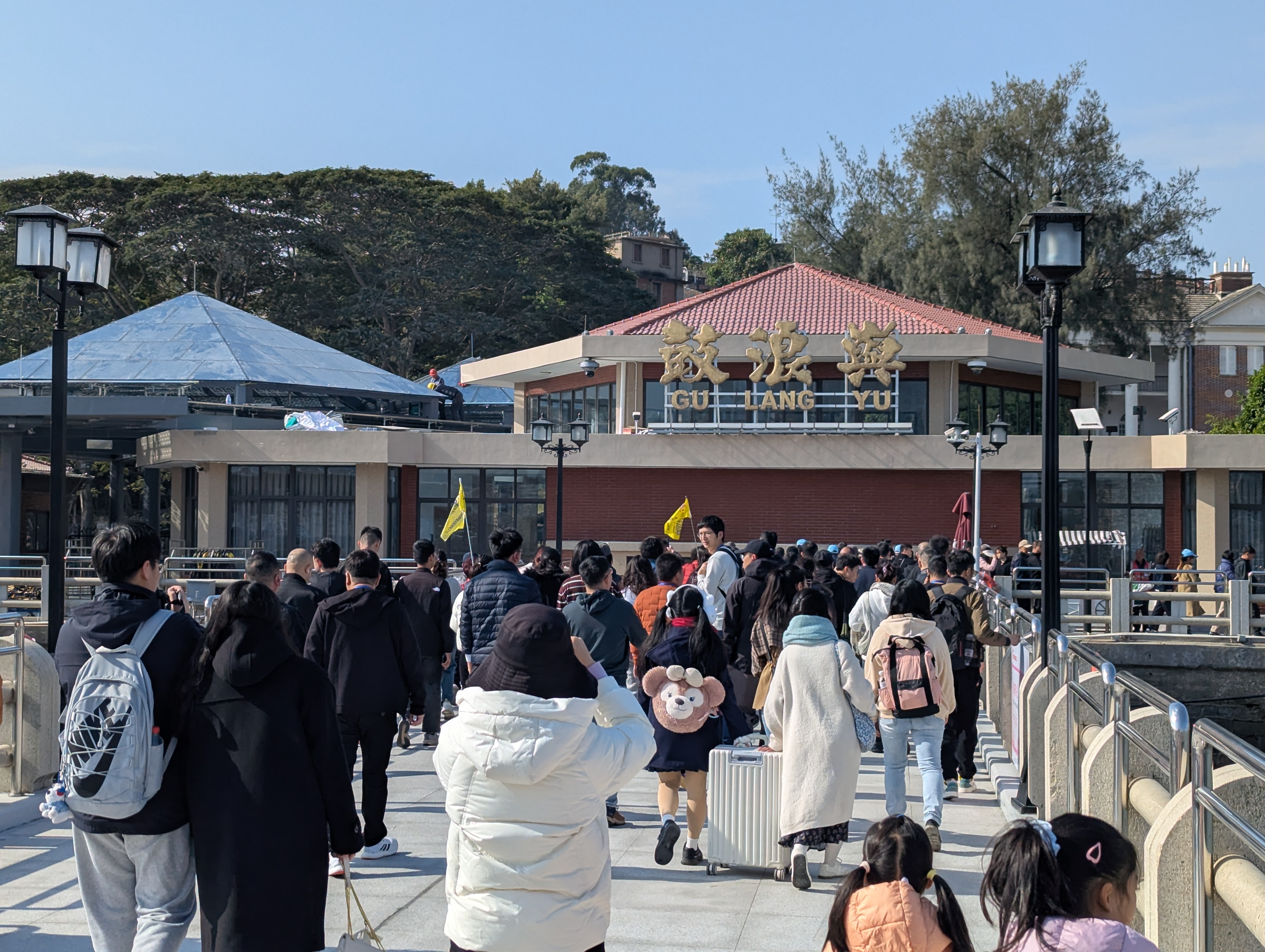
This left us with only one option: party like it’s 1999 and buy tickets in person. Since approximately nobody does this in terminally-online China, the only manned ticket counter at the massive International Cruise Center building that serves all Gulangyu tourists and approximately zero international cruises is hidden on the 3rd floor, tucked away behind cafes and teddy bear shops. Departure boards were entirely in Chinese, but I was able to pick out 三丘田 as my destination and ask for it. The grumpy lady responded with a lengthy burst of rapid-fire Chinese way above my skill level, then repeated it word for word after my tingbudong. Eventually she sighed and scribbled out 9:50 ¥80, 10:10 ¥35; she had been asking me if I wanted the fancy boat or the regular ferry. I opted for the cheaper sanshiwu kuai option and handed over our passports, and after a few more rounds of charades I was in possession of three tickets for departure in just under an hour. Fortunately it was a low-season weekday; I gather multi-hour waits or even selling out entirely is not uncommon.

Then it was security time. Getting on this local ferry required airport-style security: queue up at the correct departure line, validate tickets against passports, put belongings through metal detector, get a half-assed patdown, then wait in a cattle pen. Boarding started 10 min before departure, but everybody queued up 30 min early in a randomly pulsating gaggle, ignoring attempts to form them into orderly queues. Yet another ticket check, down a staircase with speakers yelling XIAOXINTIJI (mind the steps) every 10 seconds, onto a standing room only ferry where an extremely high-pitched announcer proceeded to regale us with endless hype about how everything we were seeing was 中国最X (biggest/longest/oldest/… in China) until, to general amusement, the batteries in her microphone abruptly died and we got to enjoy the sight of her desperately yet unsuccessfully whacking it with her palm to make it work again. Ah, glorious silence!

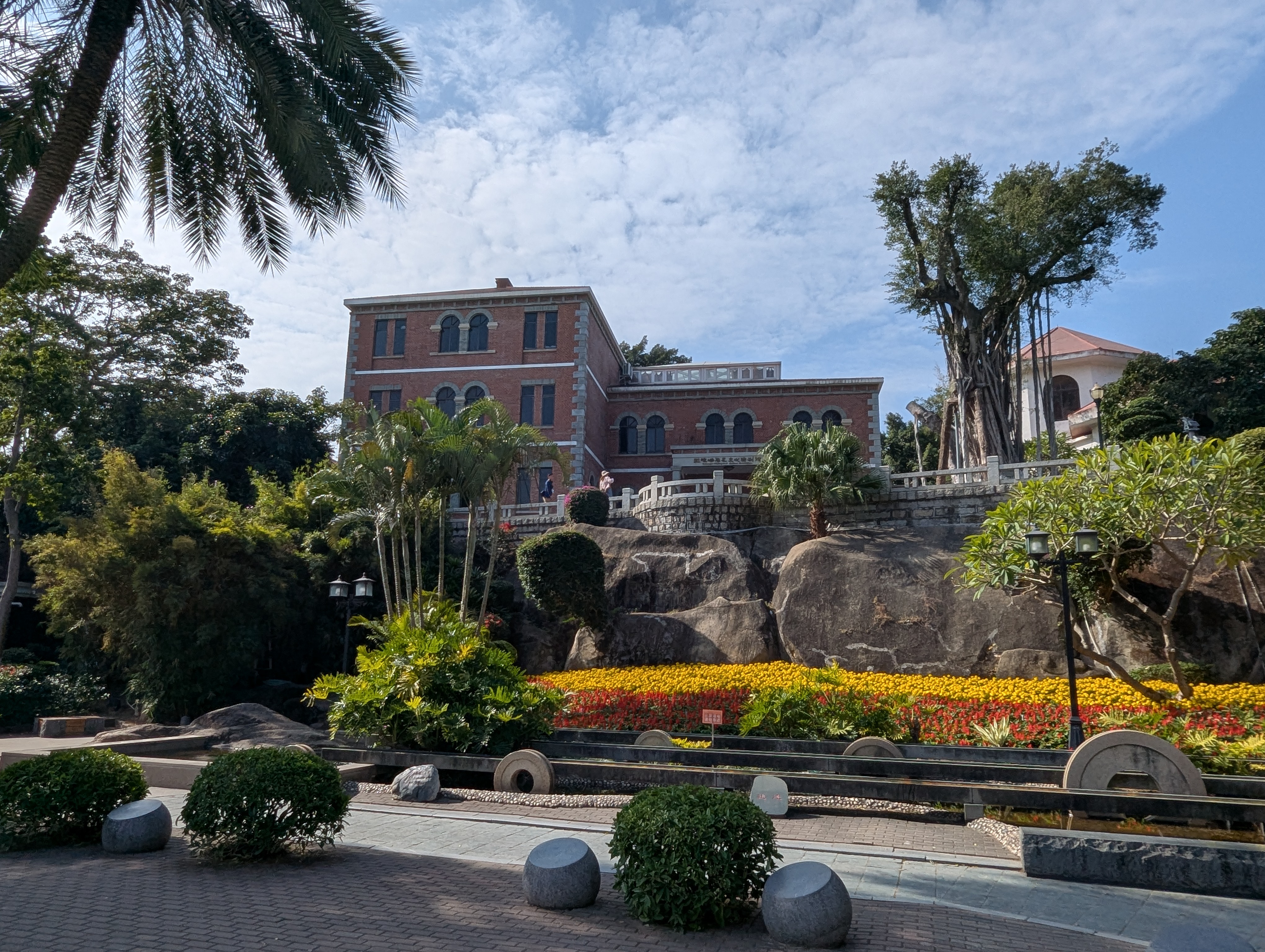
After all this Gulangyu was blessedly peaceful, since even a few steps outside the ferry terminal the crowds died down. We had the beach to ourselves on a sunny January day and neither was there anybody else in Mr Lin’s famous satay noodle joint at 11:30 AM. Getting the ferry back was painless too with no security or queuing rigmarole, we were on our way back in 10 min and this time on the spiffy air-con ferry, with no extra charge.

But a final wrinkle awaited. Since we hadn’t bought any souvenirs from Gulangyu, I wanted to pick up some at the ferry terminal mall, so we didn’t follow the signs for Arrivals and went back to Departures instead. Once we did, there was zero signage about how to go against the flow and it was very unclear where to go hail a Didi. Eventually I spotted a small Chinese-only 网约车 (net-booking-car) sign and followed it to find more signage to a Departure Plaza, only to find our path blocked by construction and no clue where to go next. We detoured via the road and finally were able to hail our car, which like all our Didis in Xiamen was ridiculously cheap by Western standards (¥15, ~US$2) and, since Didi does have an English UI, was very straightforward to navigate. Credit where it’s due.
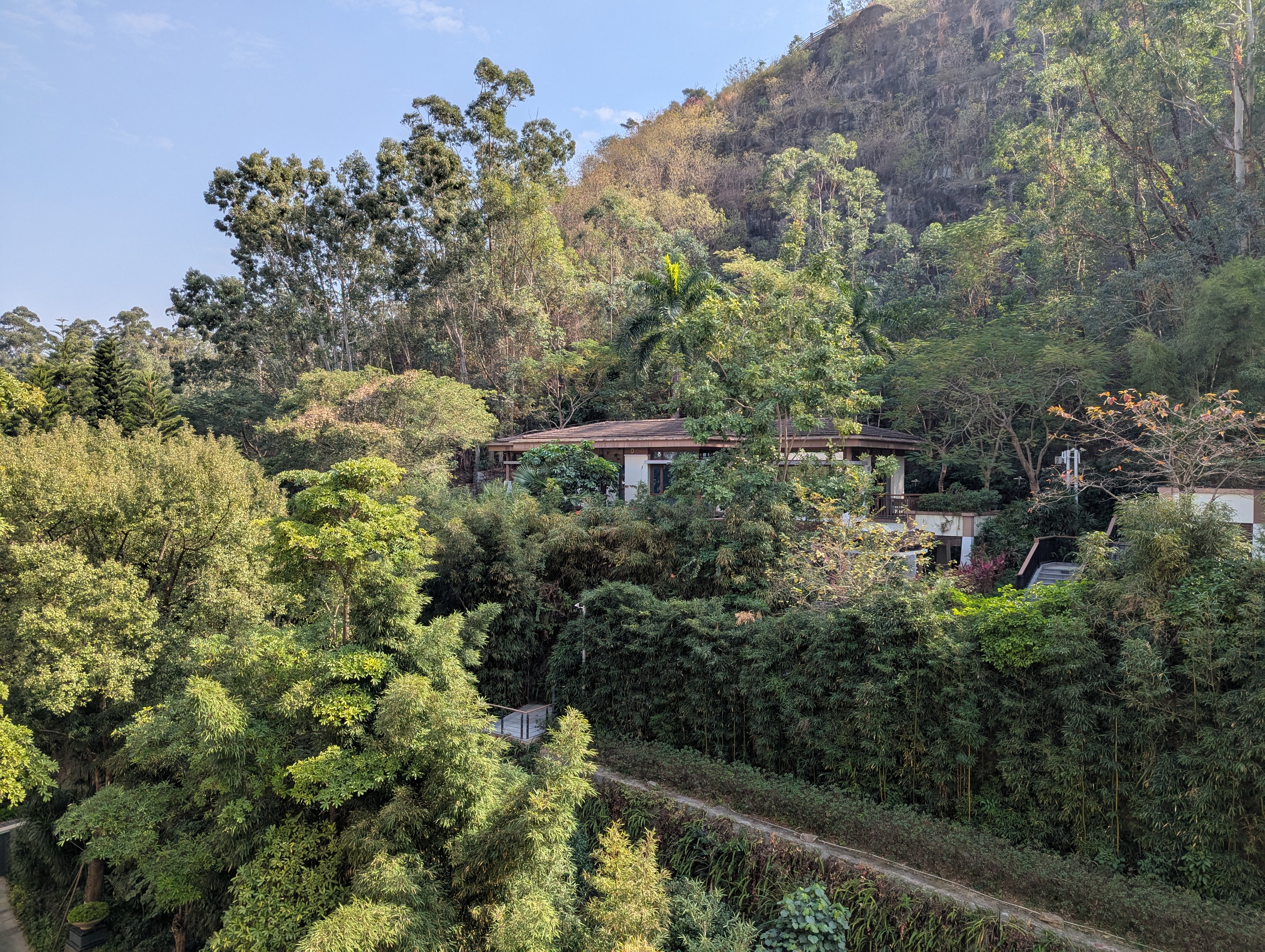
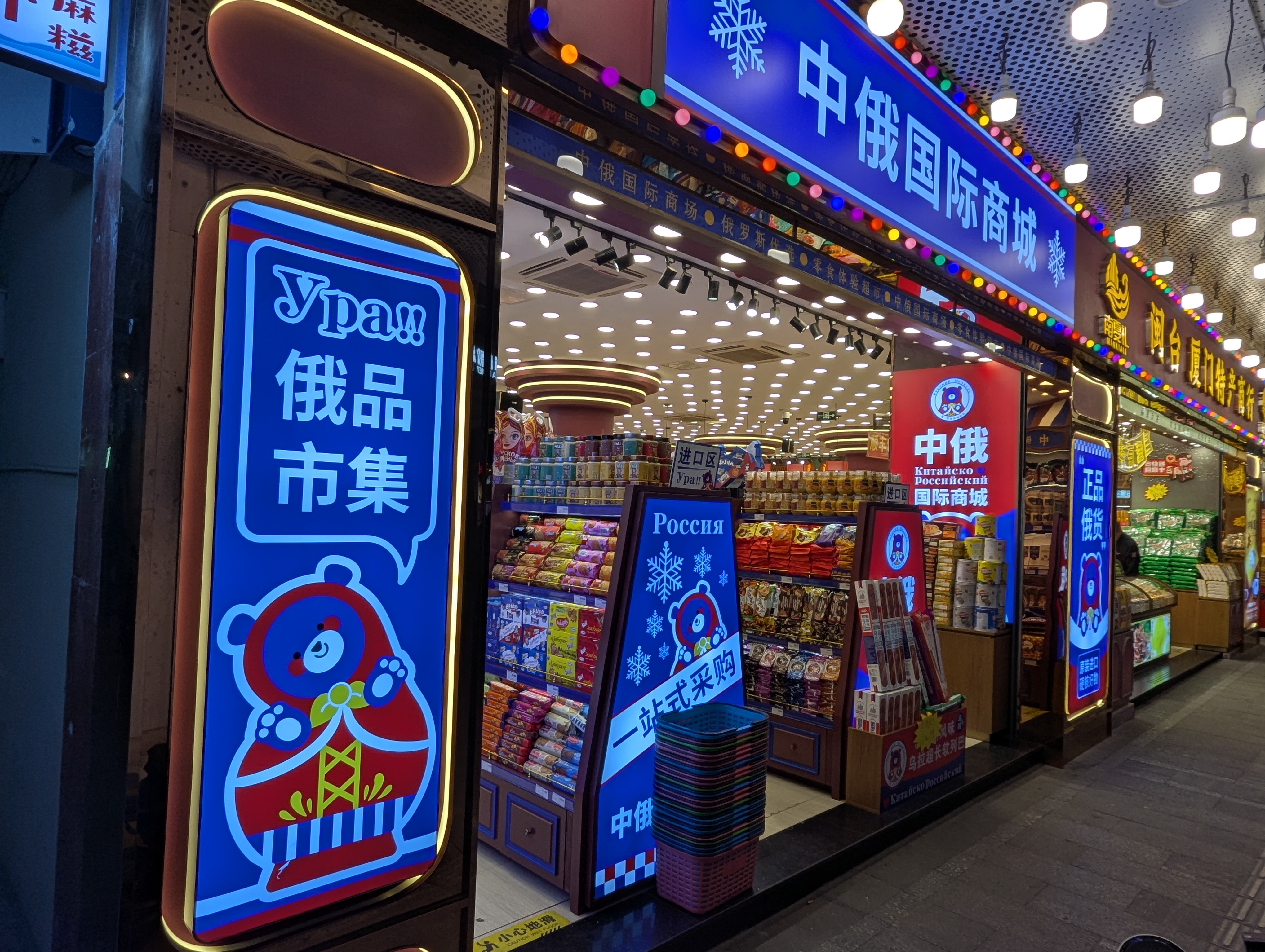
Last and least, a grab bag of small surprises. Xiamen Airlines had boarding announcements in Fujianese (Minnan). Off season, the rather swish Le Meridien hotel in Xianyue Park was quite affordable and, surrounded by green hills, felt a world away despite being right in the city. There was a series of very flashy albeit entirely deserted “Ura!” (Ура!)-branded Chinese-Russian International Shops (中俄国际商场) in central Xiamen. And while both the satay noodles I sampled were a bit of a disappointment, with watery broth that only barely tasted like peanuts, the taro paste fragrant crispy duck (芋泥香酥鸭) was better than any orh nee I’ve had in Singapore.

Taipei 台北

A one hour flight yet a world away, we landed in Taipei’s Songshan city center airport. Immigration was a cinch and soon enough we were in a much more expensive Uber (those $2 rides were now $15 rides), marveling at the bright lights of Xinyi. The air quality wasn’t much better on this side of the strait, but Taiwan was still a breath of fresh air.

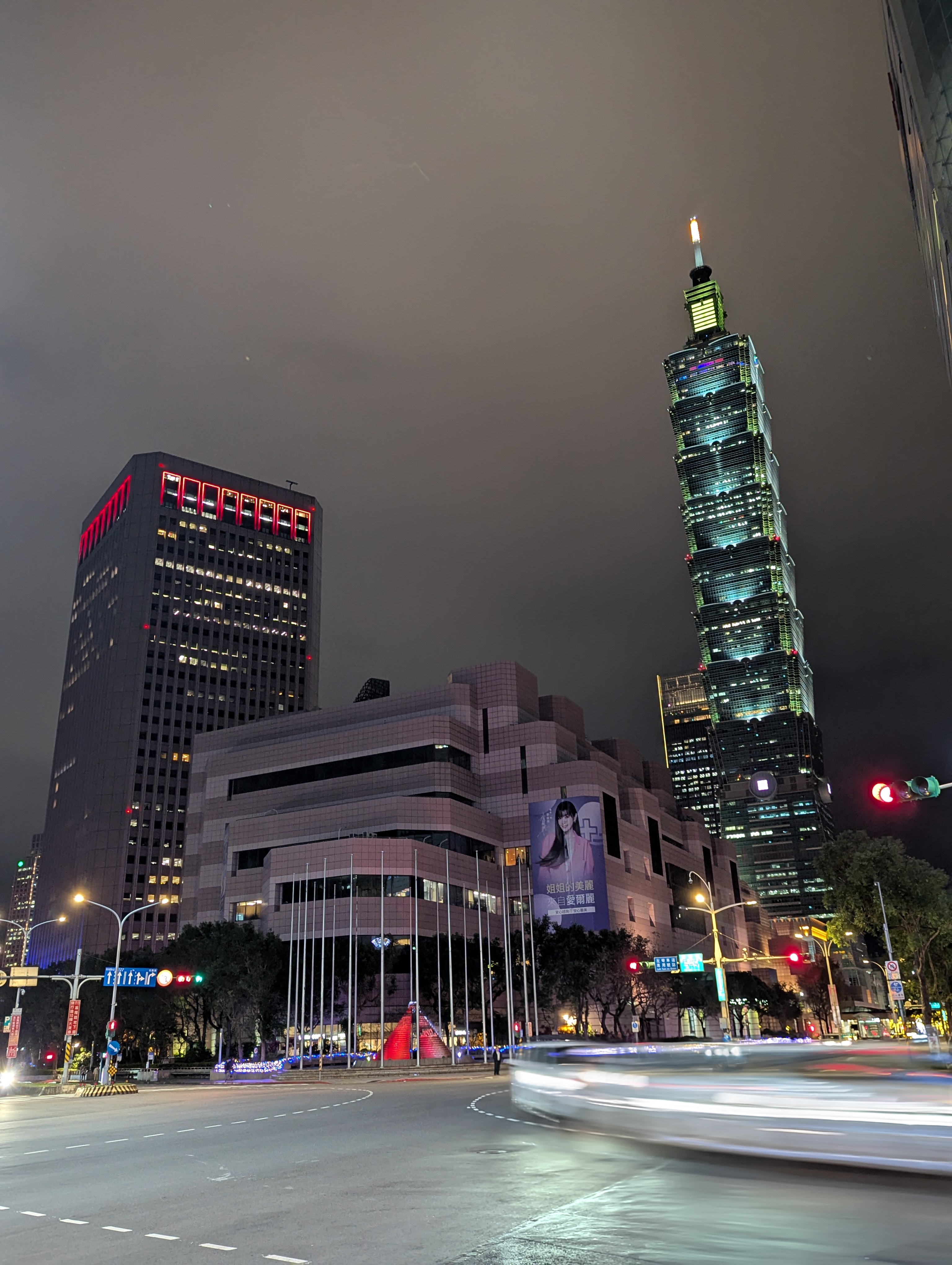
Maybe it’s a holdover from Japanese colonization, maybe it’s simply from not being suffering through the Great Leap Forward and the Cultural Revolution, but Taiwan just felt so much more gracious after the PRC. Out for an early morning walk to get breakfast, I walked past a security guard at a random office building, who gave a friendly salute and smiled. Grabbing some danbing (蛋餅) egg crepes and soymilk at a busy little hole in the wall, the cashier dug up an English menu and settled the bill in fluent English. On my way to exchange money at an office building, the maintenance guy waiting for an elevator with a fully-loaded cart waved me in first. All tiny little things, but they made me feel welcome, instead of feeling like a nuisance like I often do in China.

Partly this is because Taiwan is clearly a high-trust society. There is no security theatre on the Taipei Metro, and people queuing for the Maokong Gondola or a table at Din Tai Fung do so without needing a recorded announcement every 10 seconds or an angry lady with a megaphone yelling at them. You can stroll right into Chiang Kai-Shek’s mausoleum, commemorating a man the Taiwanese themselves have distinctly mixed opinions about, or into the National Palace Museum, hosting the world’s largest treasure trove of Chinese art, and nobody will stop you to inspect your backpack. There are no sketchy touts at Songshan Airport, and I paid street vendors in cash and always got the correct change back down to the last cent.

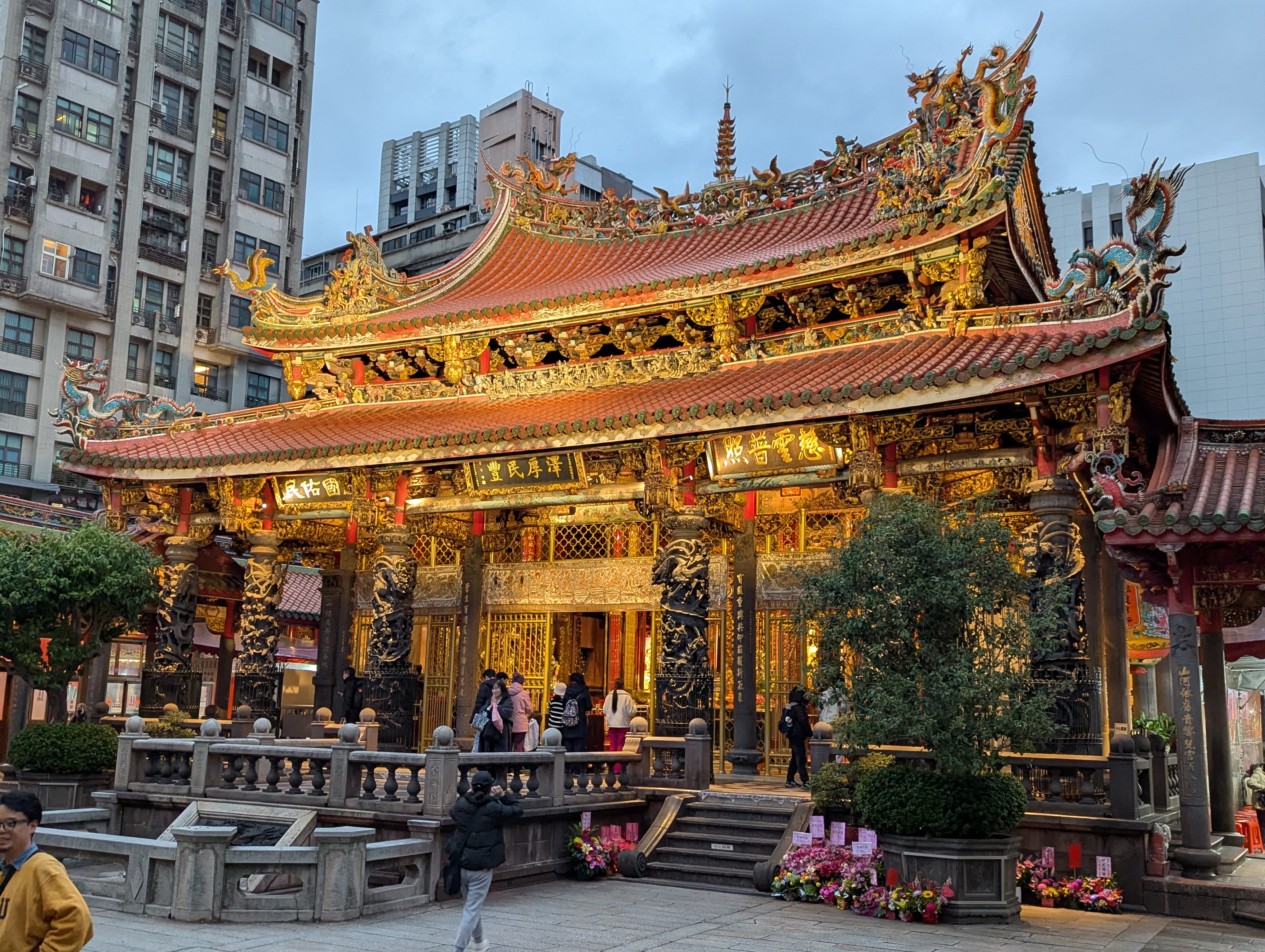
Taipei also feels alive in a way that Xiamen doesn’t. Most buildings are older and more grungy, with that spotty layer of black mold that coats every concrete surface in the subtropics (outside Singapore, where all houses have to be repainted every few years), but they’re also decorated with murals, straight up graffiti and stickers, all totally absent from central Xiamen. The few temples on Gulangyu are Historical Sites marked with brass plaques and no visitors; the countless temples, big and small, of Taipei are well-patronized by all in the neighborhood, and we even ran into a mildly obnoxious if harmless lady in the MRT who invited us to her church and told us that Jesus is a great guy.

Unlike monolithic China, Taiwan also retains some non-Chinese history, with the Japanese era in particular remembered with surprising fondness. The spa town (suburb, really) of Beitou to the north of Taipei has numerous Japanese-style baths like the somewhat scarily named Radium Kagaya, a branch of the famous original in Wakura Onsen, and indeed every major Japanese department store, convenience store, hotel group and restaurant chain seems to have a toehold in Taipei. Even the long-suppressed indigenous population seems to be getting some recognition, with a prominent Ketagalan cultural center in Beitou, and Zhongshan Hall was decorated with Polynesian-looking curlicues that wouldn’t look out of place in a Maori tattoo.

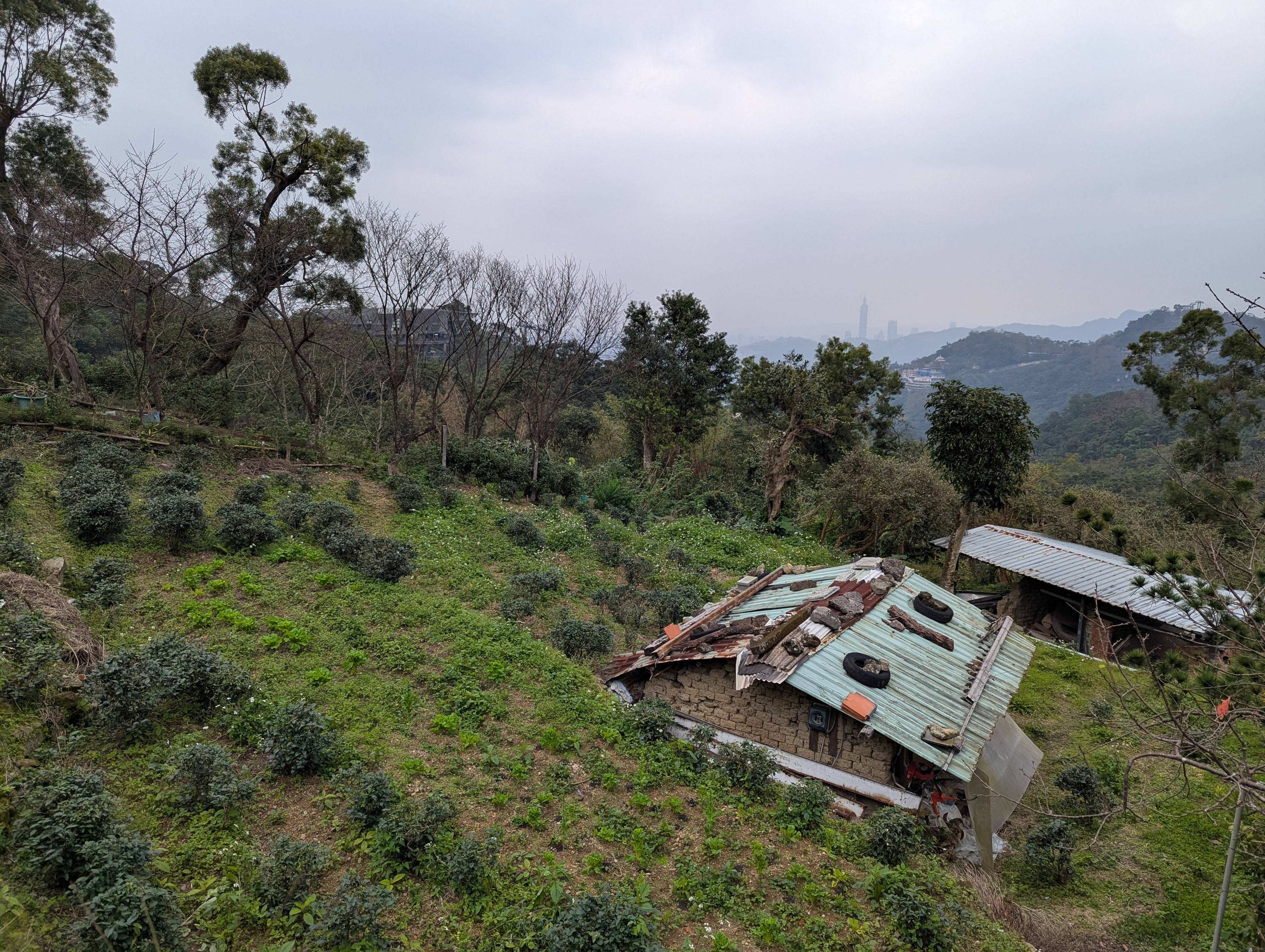
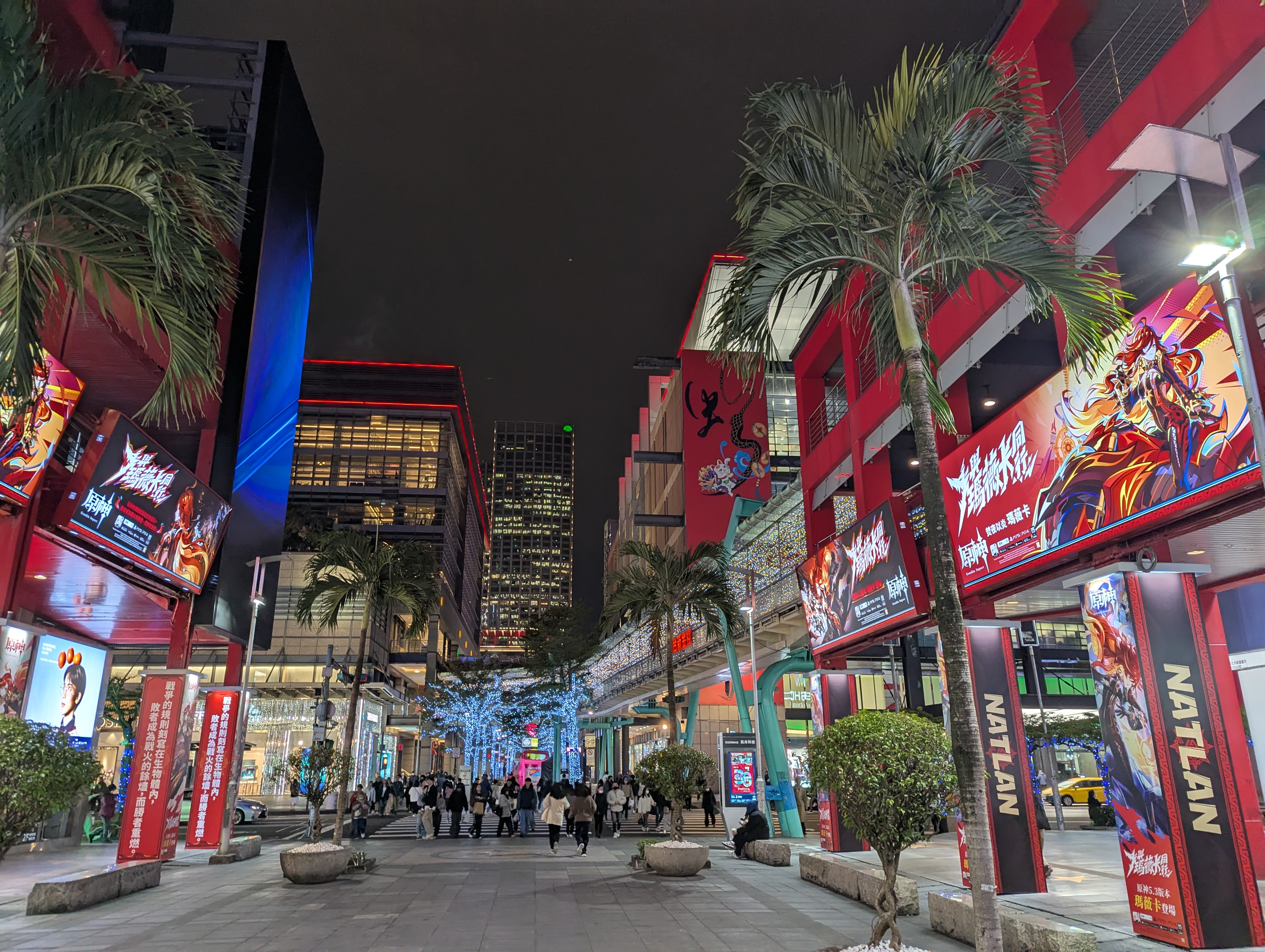
I’m having a hard time pinpointing why, but while Xiamen felt like mainland China with a few more palm trees, Taiwan feels like Southeast Asia, even in midwinter when the climate certainly doesn’t. (The effect was even more pronounced on my last trip in steamy mid-August.) The Taipei Metro was straight out of Singapore, the night markets of Linjiang St could have been in Kuala Lumpur, the tea plantations of Maokong could have been in the Cameron Highlands, the flashy shopping streets of Xinyi could have been in Bonifacio Global City. And there are quite a few actual Southeast Asians in the mix, with nearly a million people from the Philippines, Indonesia and Vietnam forming a visible minority in Taipei and almost 5% of Taiwan’s population. Incredibly, this is a larger absolute number than the total of foreigners living in mainland China, who number around 710,000 out of 1.4 billion (0.05%).

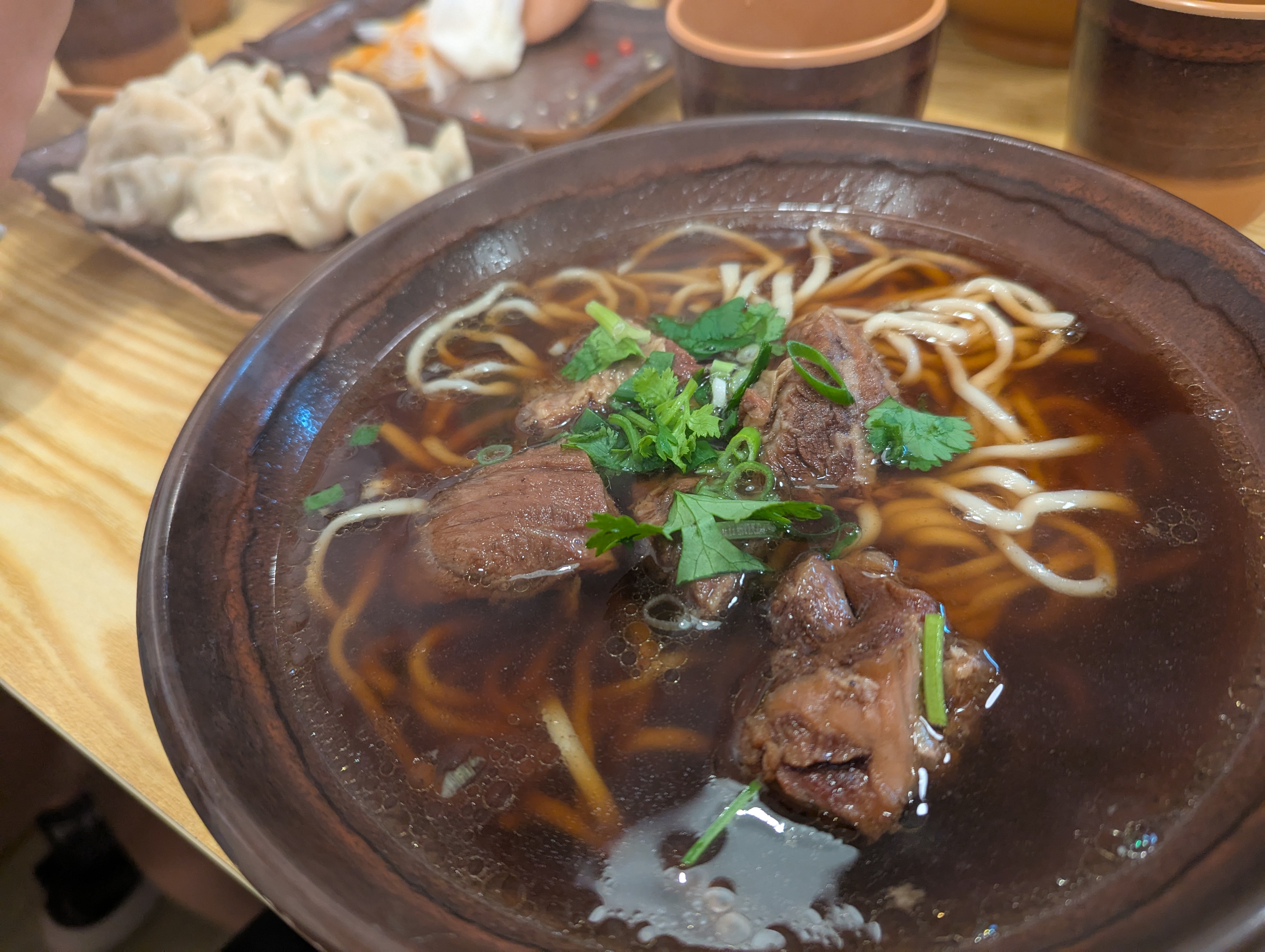
Last but not least, Taiwanese food! Dumpling masters Din Tai Fung, street food from the night markets, luroufan minced pork rice from super friendly little hole in the wall in Beitou, tea oil noodles in Maokong, beef noodles in Ximending, we didn’t have a single bad meal during the week. Even the stinky tofu was good. And the price was right too: 50 TWD (US$2) gets you a basic meal, 500 TWD (US$20) is enough for a feast.

To wrap it up, if you’re a China first-timer or you’re choosing between Xiamen or Taipei, Taiwan wins, hands down. There are still plenty of places on my to-do list for the mainland (Chongqing, Yunnan, Gansu…) and I’ll be back sooner or later, but I just might end up exploring Taiwan a little more first.
34 Province Project: Fujian 福建

Fujian, named after the cities of Fuzhou and Jianzhou and located on the coast around halfway between Shanghai and Hong Kong, is the single most intimidating Chinese province to try to cover from Singapore. Uniquely among the Chinese diasporas of the world, in Singapore Fujianese speakers — or Hokkien, as both the people and the language are known here — form the single largest dialect group, and that’s not even counting other groups like the Hakka (Kejia), Henghua (Putian), Hockchew (Fuzhou) and Hockchia (Fuqing) that hail from Fujian as well.

Yet you can hardly describe Singapore as a Fujianese city, and while plenty of Hokkien terms live on in Singlish, the dialect has long since been overtaken by Mandarin among the local Chinese. Similarly, few restaurants in Singapore explicitly advertise themselves as Hokkien: by and large, Fujianese influences have been blended into Singapore-style “Chinese” food, and only an ever-dwindling group of elderly proprietors, many third generation by now, carry on the torch.

Given the sheer variety on offer, for this episode I’m going to focus on Hokkien, Hokchiu and Henghua flavours, choosing both dishes and restaurants mostly for convenience and personal taste rather than popularity. For Hakka, stay tuned for the Guangdong episode, and you can find a few more Fujian-inspired eats in Taiwan as well.

Hokkien (Fujian) 福建

Fujian cuisine (閩菜 Mǐn cài) is one of China’s Eight Great Traditions, best known for its many soups: “no soup, no go” (不汤不行 bù tāng bùxíng), they say, meaning a meal isn’t complete without one. Soups are, of course, eaten across China, but Fujianese ones are often thickened by starch and called gēng (羹) instead of the usual tang. Many dishes also get a Southeast Asian touch from fish sauce (虾油 xiāyóu, literally “shrimp oil”) and shrimp paste (咸虾 xiánxiā), both ingredients rarely seen in the rest of China.

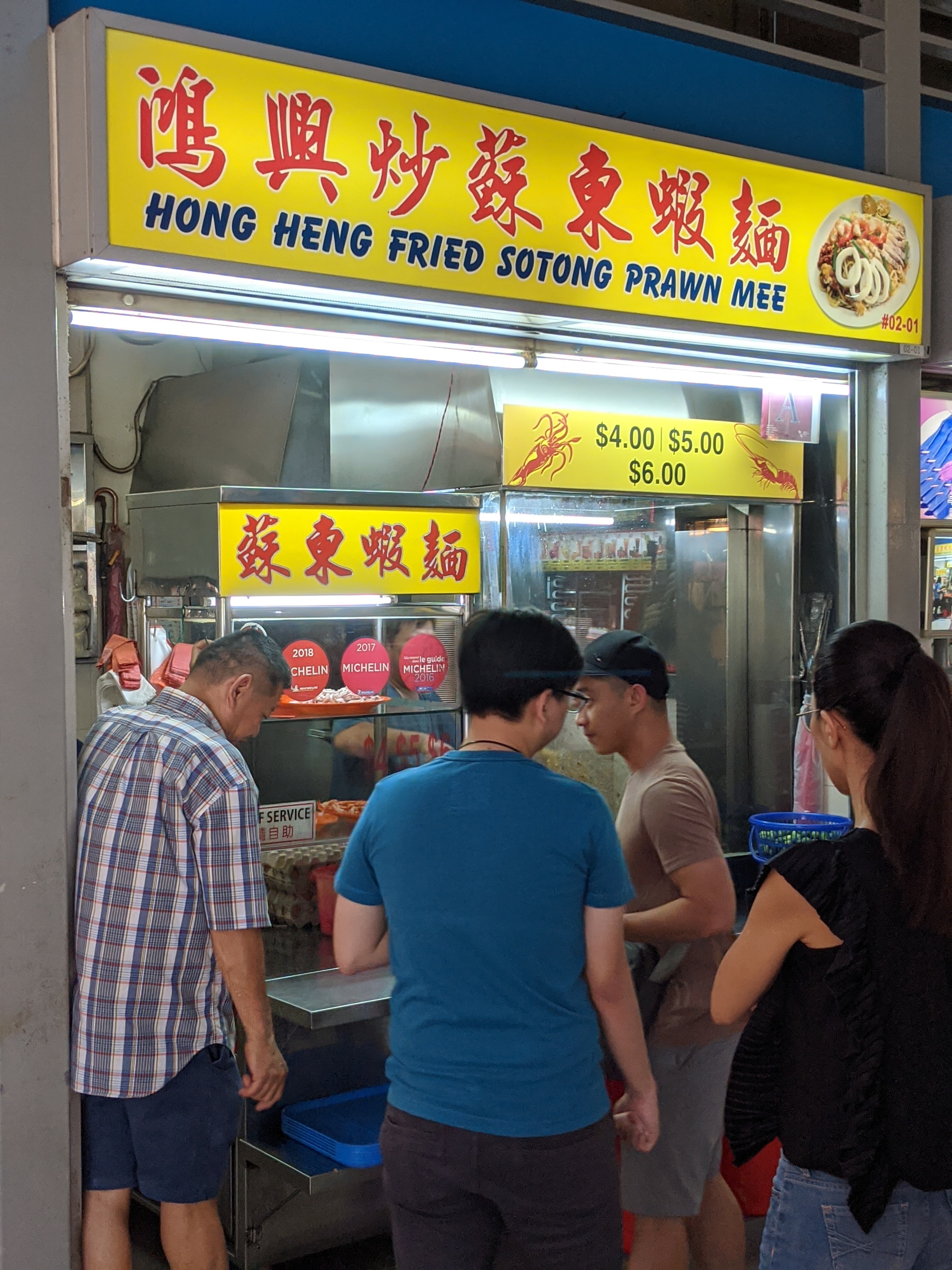
Interestingly — and we’ll see this again in the Hainan episode — the two most famous “Hokkien” dishes in Singapore are local creations largely unknown in Fujian itself. Hokkien mee (noodles) refers to at least three different dishes, which all appear to descend from lor mee (卤面), but in Singapore, it means noodles stir-fried in copious quantities of an aromatic broth made from prawns and pork bones and topped off with fresh prawns, squid, a calamansi lime and a dab of fiery sambal chilli spiked with hae bee hiam (虾米香) prawn paste. I’m not even that much of a prawn fan, but I do love this stuff, and when we moved back to Singapore, one of the first hawker meals we had was at Hong Heng Fried Sotong Prawn Mee (鸿兴炒苏东虾面) in Tiong Bahru, where a long wait and $4 gets you an irresistible Michelin Bib Gourmand worthy umami explosion.

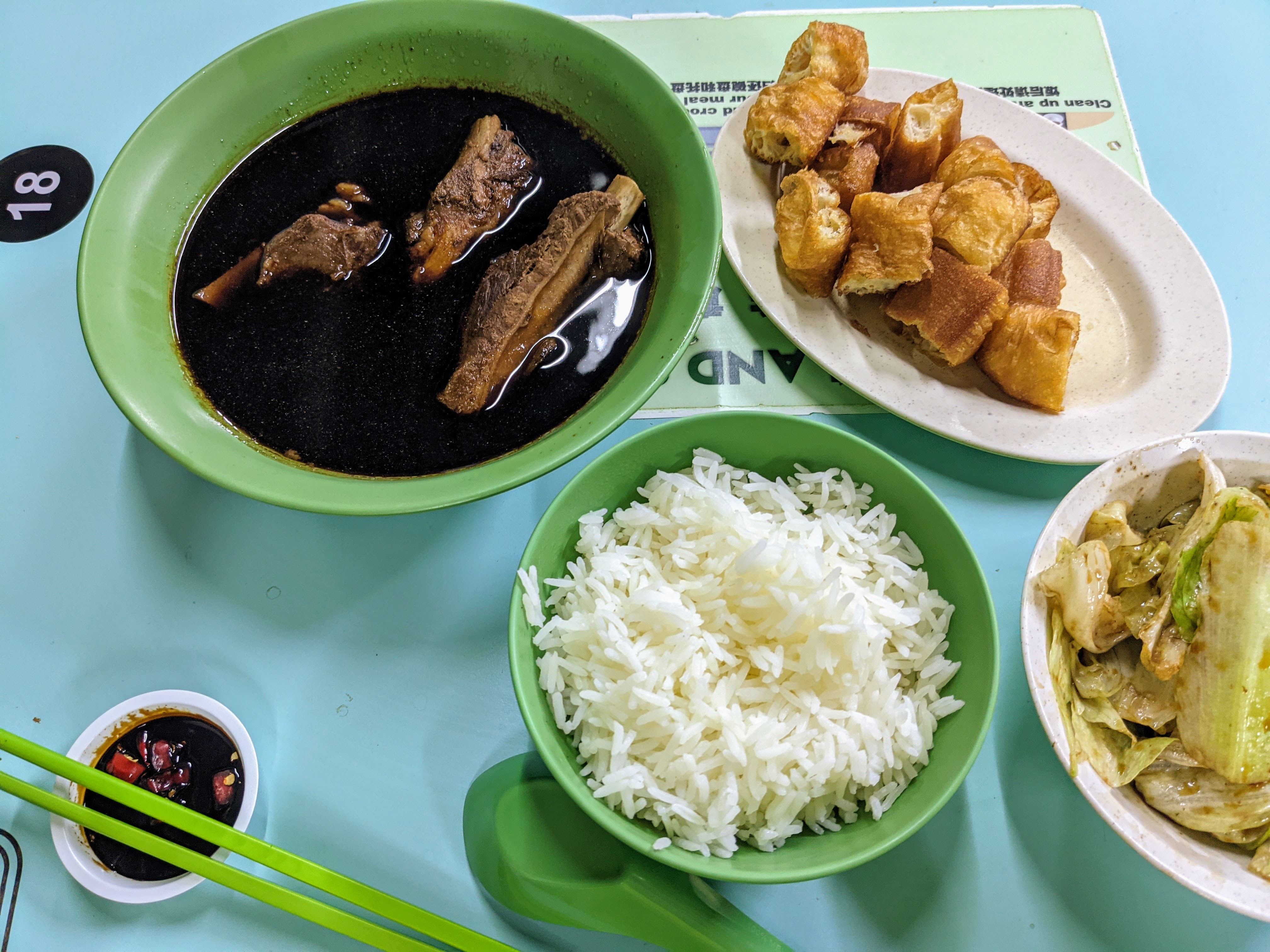
The other classic not-so-Hokkien dish is bak kut teh (肉骨茶 ròugǔchá), or “pork bone tea”, made by stewing pork ribs in a herbal soup. (The tea is an accompaniment, not an ingredient.) By legend, this was invented by Fujianese dock workers in Kuala Lumpur’s port town on Klang, and the original is strongly flavored with Chinese herbs and dark soy sauce. In Singapore, most shops default to the Teochew style, much lighter but peppery, but the Hokkien style is not hard to find either. At the tail end of one of my early morning bike rides, I ended up at the aptly named Morning Bak Kut Tea (朝市肉骨茶 Cháoshì ròugǔchá) at Hong Lim Complex in the shadow of the city centre. The soup here is pitch black but quite sweet, lacking the bitter herbal notes you run into at some shops, and the well-stewed pork was simply superb, meltingly soft and full of flavor. The sides, alas, failed to impress: the you char kway (油炸粿) dough fritters were chewy and stale, not improving much even when dunked in the soup, and my attempt to order stewed pickles (菜尾 choy buai/cài wěi) somehow turned into “fresh vegetable” (生菜 shēngcài), basically iceberg lettuce quickly doused in soup, which tasted about as exciting as that sounds. To add insult to injury, I unaccountably neglected to order the obligatory pot of Iron Goddess of Mercy tea to go with it all. Total damage $8.

One Hokkien dish that has, unusually, made the leap into trendy Asian restaurants worldwide is the pork belly bun, popularized by the Momofuku chain. In Singapore, they’re called kong bak pau (炕肉包) and the undisputed King of Kong Bak Pau is Westlake (西湖小吃 Xīhú Xiǎochī) on Farrer Rd. While named after the famous tourist spot in Hangzhou, the menu consists basically of whatever the chef likes and thus runs the gamut from Hokkien to Cantonese and even some Sichuan fare from his student days in Chengdu. Open since 1974, the yellow and lime green decor is, uhh, eye-catching and the faded newspaper clippings and Japanese signage hint at past days of guidebook glory, but on a Friday night they were still packed.

The justly famed “Braised Pork with Pau” is served DIY style, with pillowy buns, meltingly soft pork belly in a very moreish bean sauce, and a few token sprigs of lettuce and coriander. The regular buns are plenty good in my view, but you can choose to pay double for Iberico pork if you choose. Another classic Hokkien dish on the repertoire here is the ngoh hiang (五香 wǔxiāng), consisting of minced pork and prawn flavored with the five spice powder of the name, wrapped in tofu skin and deep fried until crispy. At Westlake, these are skinnier than usual, served piping hot, and the best I’ve had anywhere. We rounded out the meal with a yam ring, a Cantonese-ish invented-in-Singapore dish with stir-fried goodies in gravy filling out a crispy bird’s nest of mashed taro. At $78 for 4, the price was right, with only one catch: more or less everything was very salty, with the stir-fried veg on the side particularly ludicrous. Drink water, you’ll need it!

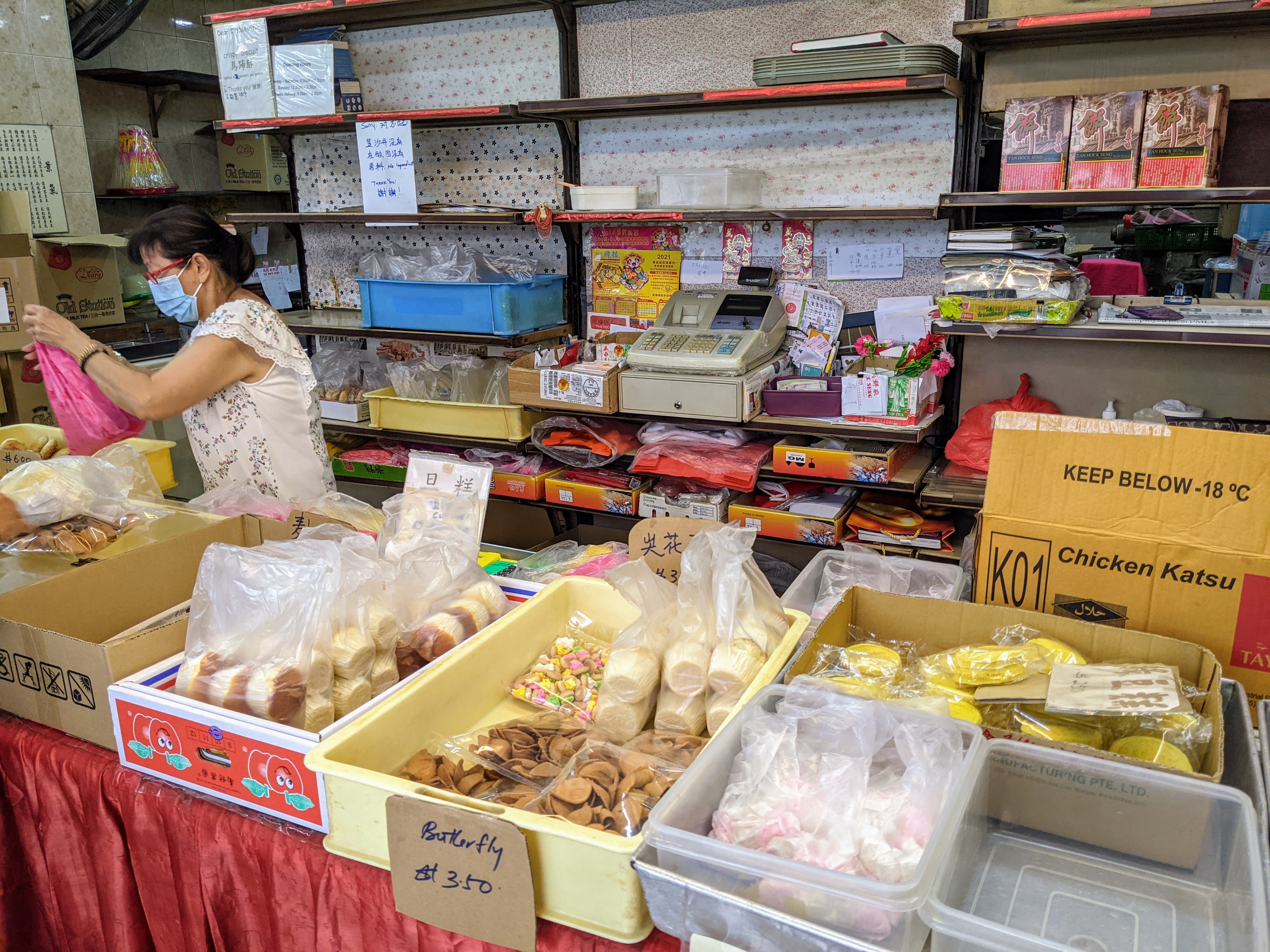
Finally, it was time to tickle my sweet tooth and pay a visit to an old-school Hokkien bakery. Tan Hock Seng (陳福成), incongruously located smack dab in the middle of Singapore’s business district, is located in a small row of shophouses surrounded on all sides by skyscrapers, and even its shophouse neighbours are thoroughly gentrified. In perennial danger of their lease running out, they’ve already announced they intend to close their doors by November 2021, leading to queues as patrons rush to stock up. Their signature is the rather obscure beh teh sor (马蹄酥 mǎtísū, “horse hoof biscuit”), a crunchy, flaky, very dry shell hiding a sweet, sticky, mostly-maltose filling. Cautiously flavorful and definitely best eaten as fast as possible, you’ll want to have some tea to wash them down. $5 for 5 while they’re still around.

Hokchiu (Fuzhou) 福州

Fuzhou is Fujian’s largest city and capital, so you might be excused for thinking they speak Hokkien, but no! Singapore’s Fujianese diaspora came mostly from the southern parts of the province around Amoy (Xiamen), and linguists differentiate their Southern Min (闽南 Mǐn Nán) from Fuzhou’s Eastern Min (闽东 Mǐn Dōng). And if that’s not confusing enough, in Singapore this 50,000-odd community is often known as Hokchiu, from the Hokkien reading of the city’s name. Despite their small numbers, Hokchius pack quite a punch in the South-East Asian Chinese diaspora: the richest men in Malaysia and Indonesia respectively, Robert Kuok and Sudono Salim, are both of Hokchiu descent.

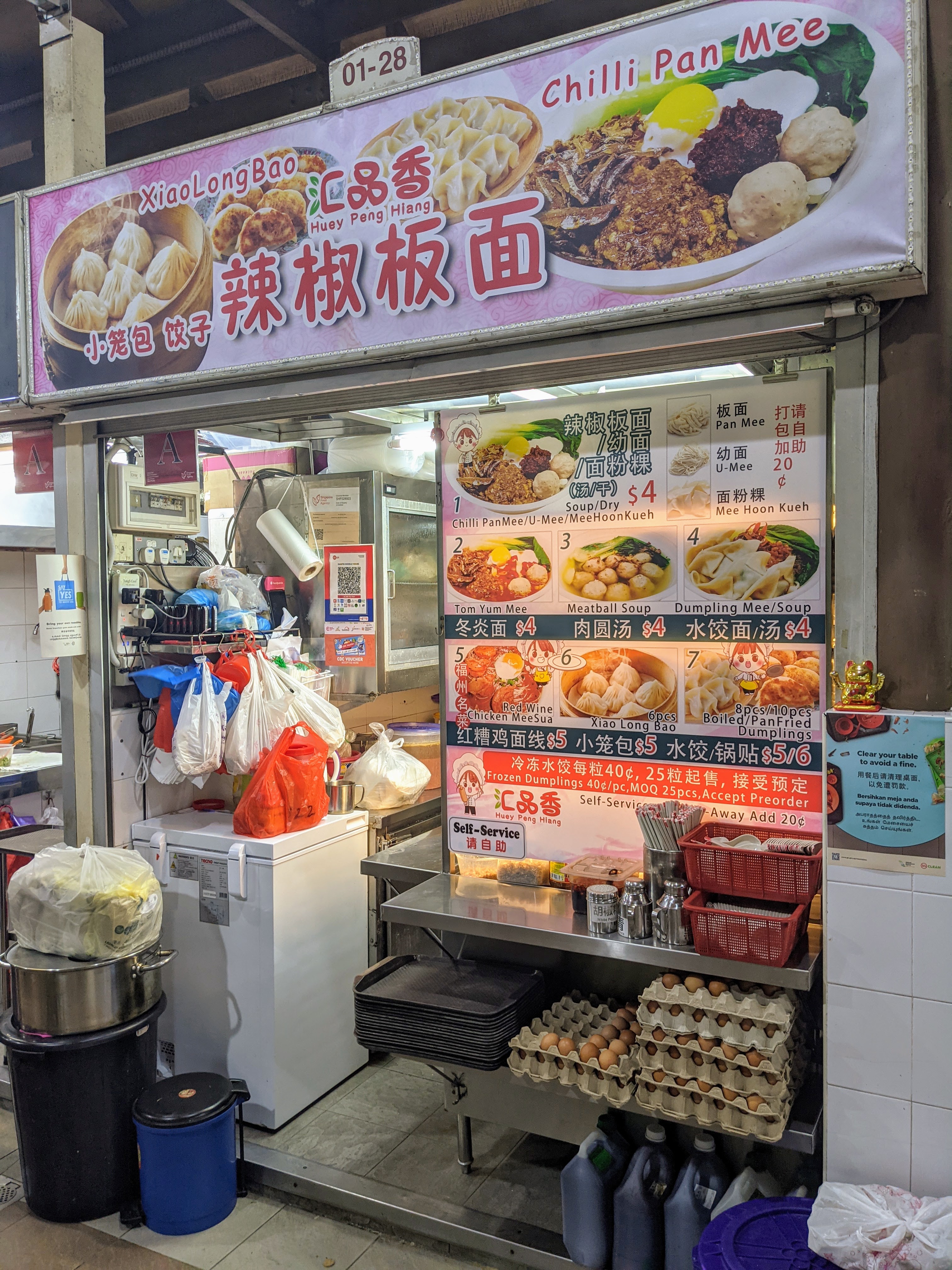
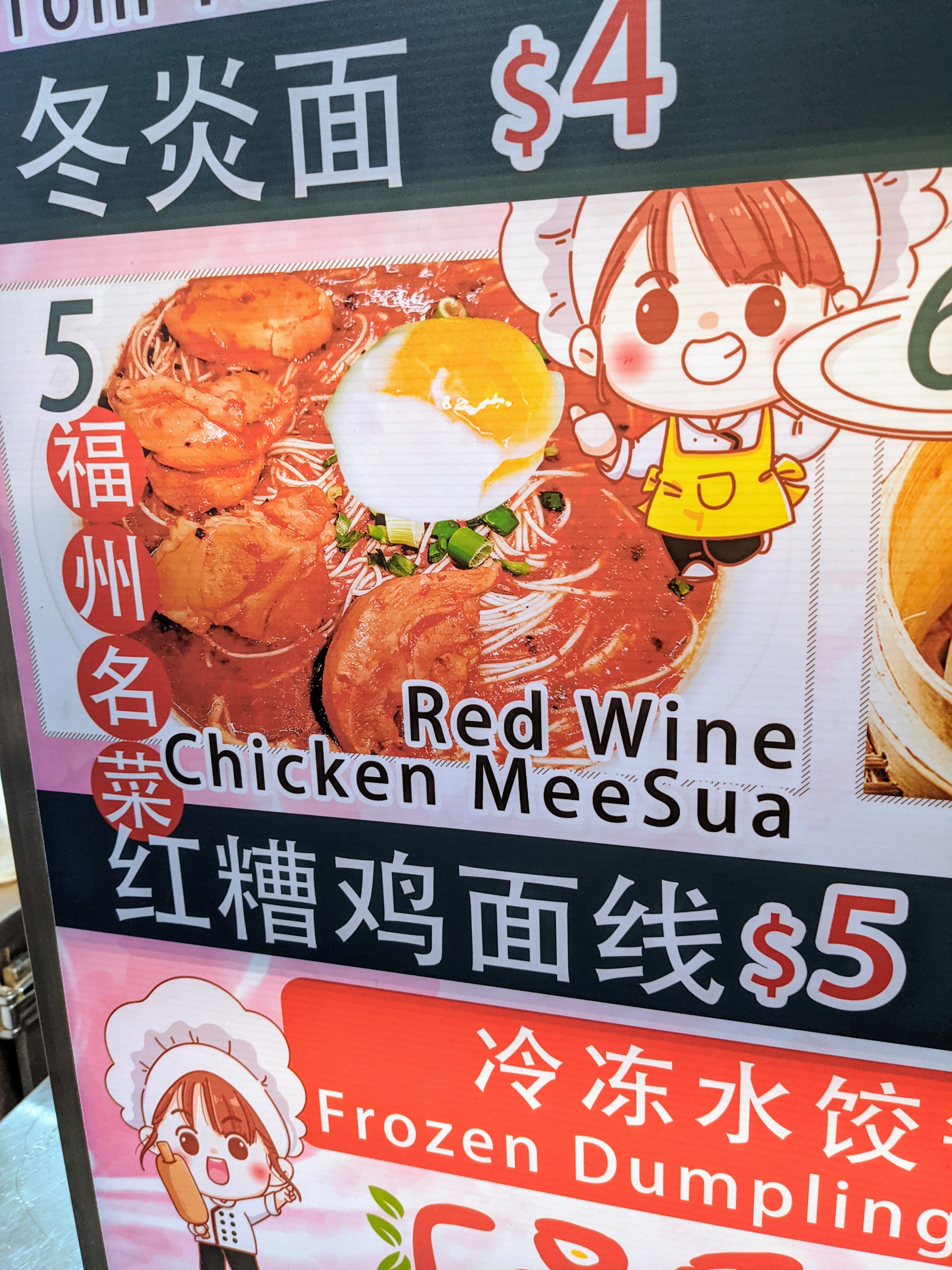
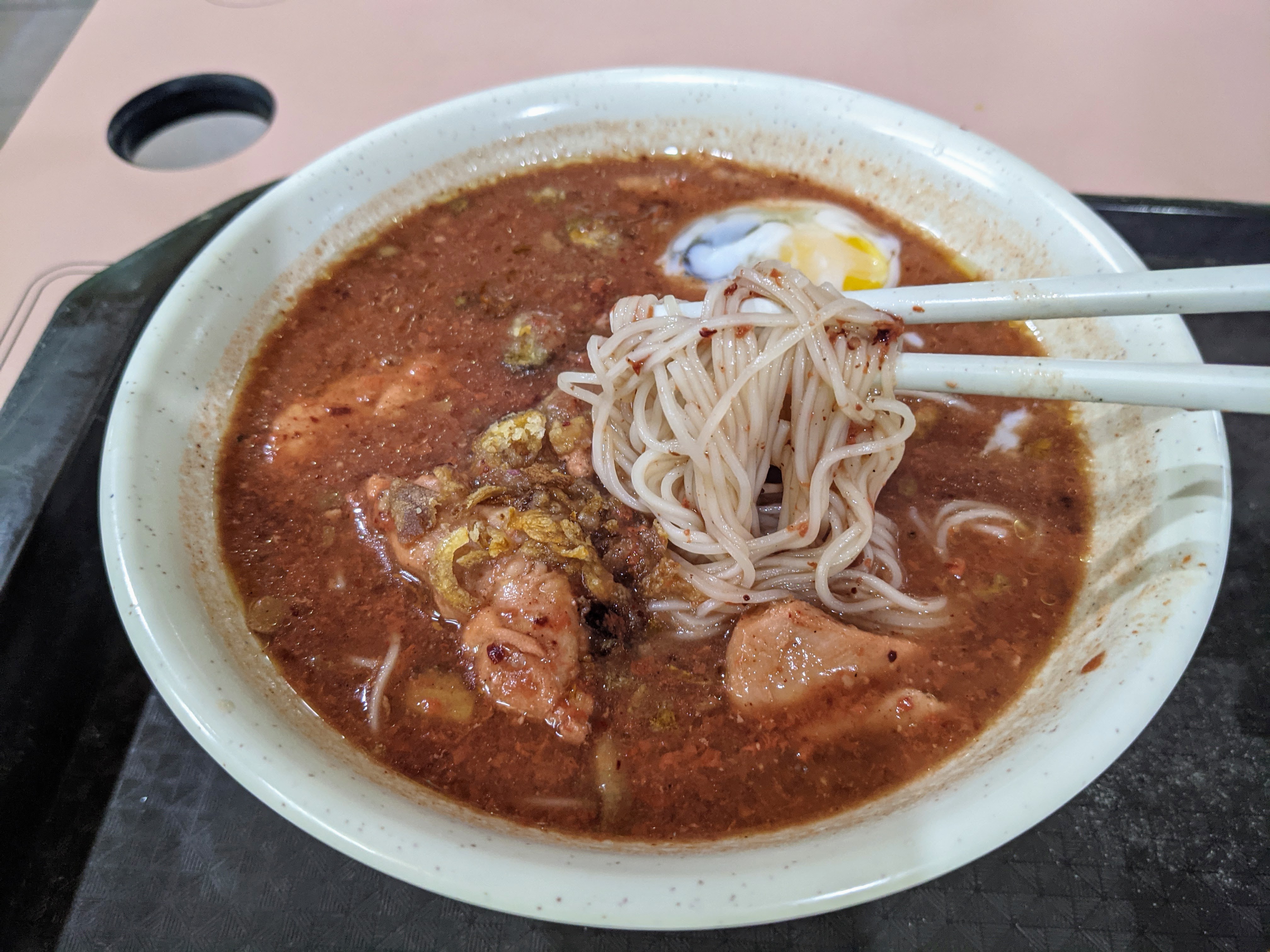
I unexpectedly kicked off my Fuzhou foodie adventure by stumbling upon Huey Peng Hiang (汇品香 Huìpǐnxiāng) in Sembawang Hills Food Centre on my way back from another early morning bike ride. The stall mostly sells chill banmian and dumplings, but tucked away on the menu was red wine chicken mee sua (红糟鸡面线). Flavored with hóngzāo (红糟), the lees (leftovers) of making rice wine intentionally fermented with a specific red mold, the soup looked pretty intimidating but turned out to be delicious, with a rich broth of chicken stock, bits of ginger and slightly sweet miso-like notes. The mee sua are thin wheat noodles that do a good job of sucking up the broth, and there’s a half-boiled egg on top for that extra protein punch. Two cheery anime girl thumbs up for $5, although probably better for lunch or dinner than breakfast.

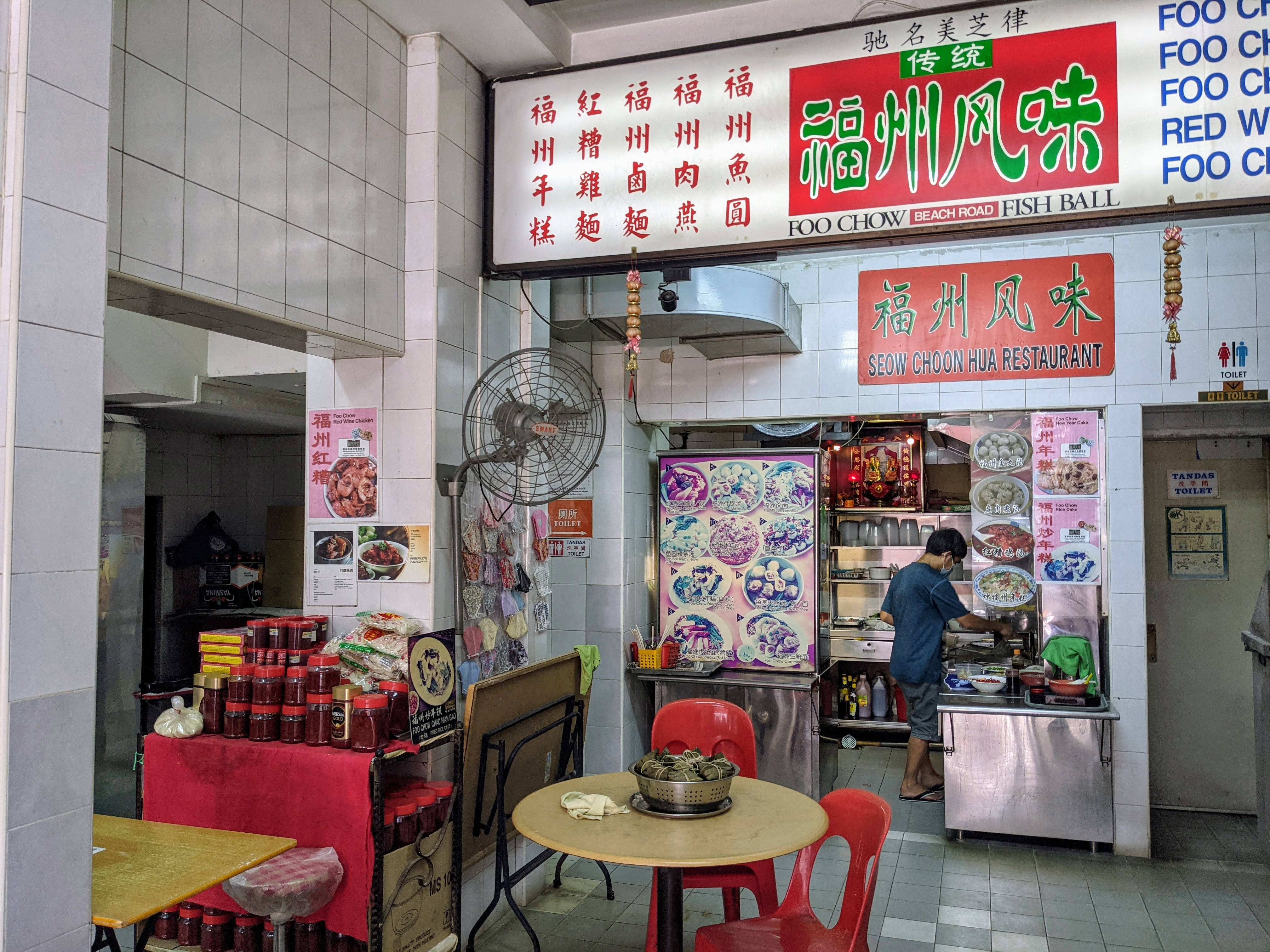
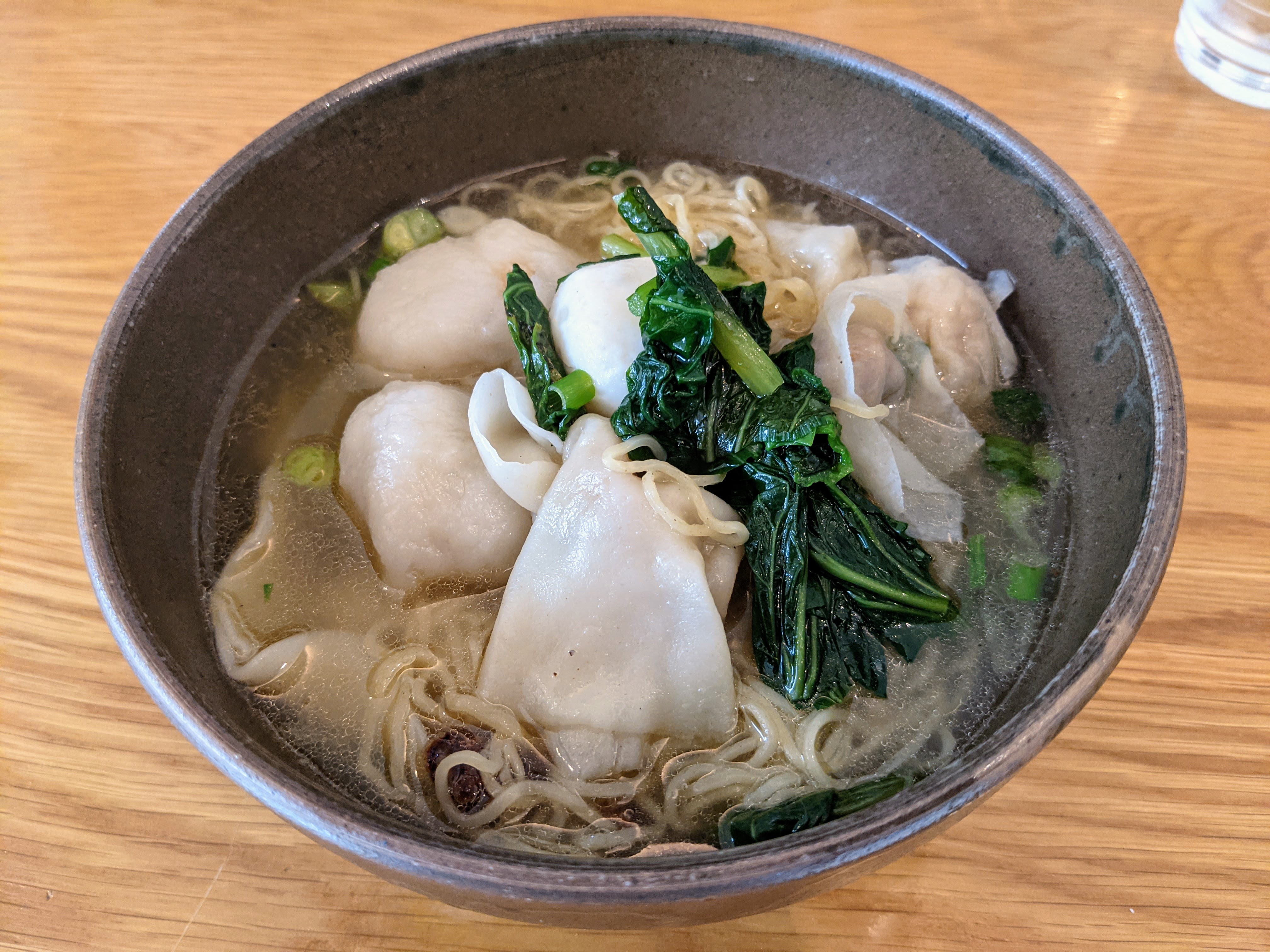
For Fuzhou round 2, I paid a visit to Seow Choon Hua (箫钟华) in Kampong Glam. Notionally a restaurant, this tiled, utilitarian, fan-only space decorated with fading posters is a bit of a time warp from the 1980s, and with no online presence of any kind they must be struggling in the COVID era. The Chinese signboard here proudly proclaims “Fuzhou Flavours” (福州风味), and indeed everything on the menu is a Fuzhou speciality: red wine chicken, stir-fried niangao rice cakes, but what they’re famous for is Fuzhou fishballs (福州鱼丸). Fishballs in the normal Teochew style ubiquitous in Singapore are made from finely ground fish, springy, and have very little taste. In Fuzhou, though, they’re stuffed with tasty minced pork, and unlike the bland mass-produced versions you sometimes see at food courts, Seow Choon Hua makes their own. The end result is a bit lumpy, soft to bite into, and bursting with porky goodness inside. I ordered the $6 Foochow Mixed Soup, which came with tasty stuffed fishballs, a token regular fishball, a few chewy biǎnròuyàn (扁肉燕, “flat meat”) dumplings where the dumpling skin itself is made from 90% pork meat mixed with glutinous rice flour, and a standard-issue wonton dumpling or two. Nothing mindblowing, but made with care and generously portioned, and worth a visit before the clock runs out on this relic from the past.

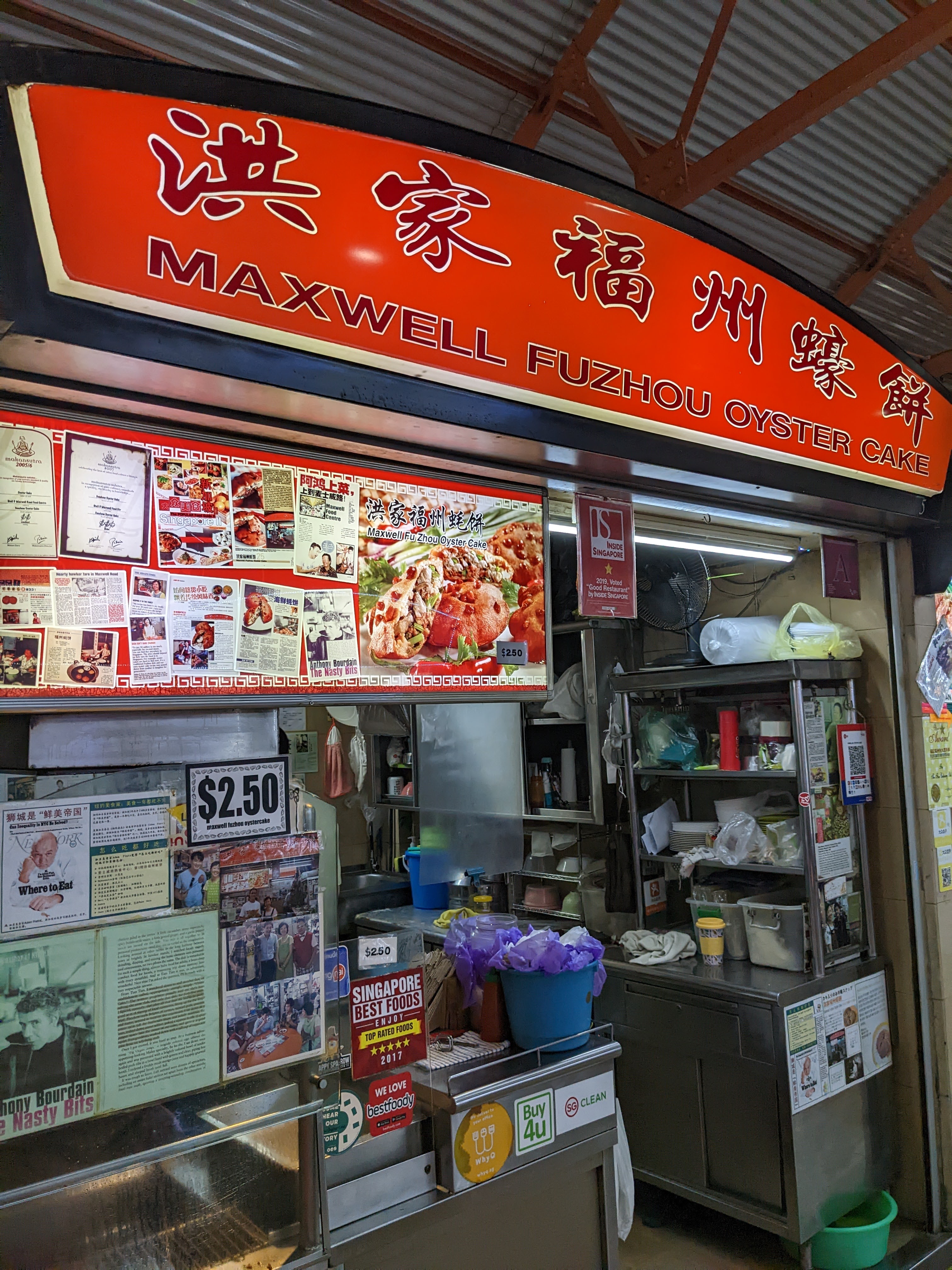
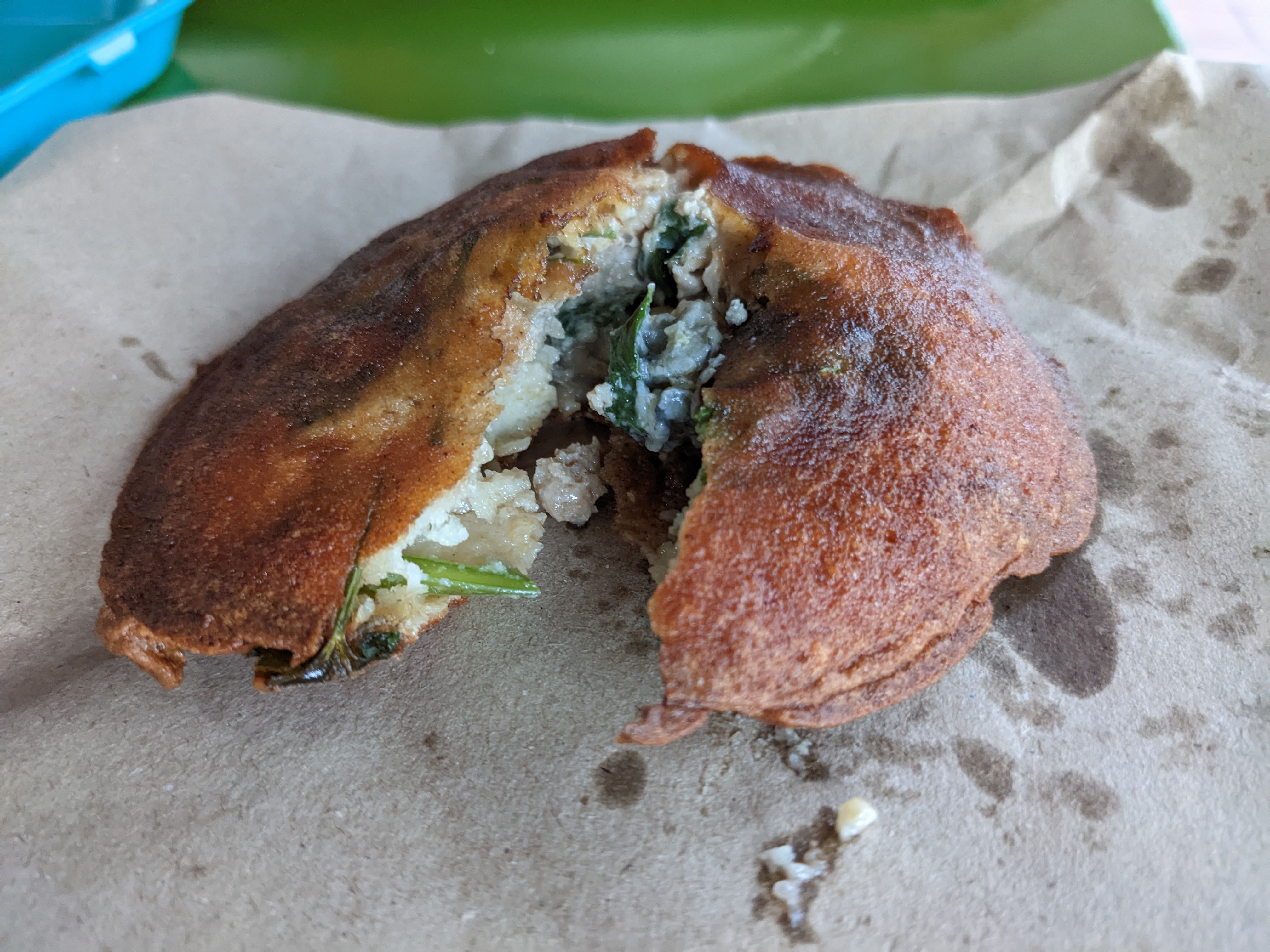
And for round 3, I dropped by Maxwell Fuzhou Oyster Cake at the legendary Maxwell Hawker Centre. I have to say I appreciate the singularity of purpose of this stall: it’s been here for over 40 years, dishing out a menu composed of exactly one dish, oyster cake (蚝饼 háobǐng) at $2.50 a pop. Far rarer than the ubiquitous oyster omelette (蚝煎), a pan-Fujian dish also popular in Taiwan, oyster cake are specifically a Fuzhou dish: deep-fried, UFO shaped patties of small oysters, prawns, minced meat and cilantro. I’m not a huge oyster fan and I don’t particularly like oyster omelette either, but these were really nice! I thought they would be all doughy like Indian vadai donuts, but no, the rice-based dough makes the shell crisp and the inside stays surprisingly juicy and meaty, the overall effect not entirely unlike deep-fried dumplings. Yum! I’m a convert.

Henghua (Xinghua) 兴化 / Putian 莆田

One of the more obscure dialect groups in Singapore is the Henghua (Xinghua in Mandarin), also known as Putian after their erstwhile hometown in northern Fujian (no connection to Vladimir Vladimirovich). Legend says that they, in turn, migrated to Fujian from Henan province, meaning that like the Hakka they’re now migrants twice over. Putian being a coastal town, they’re best known for their seafood dishes, with Chinese razor clams from nearby Duotou known across the country.

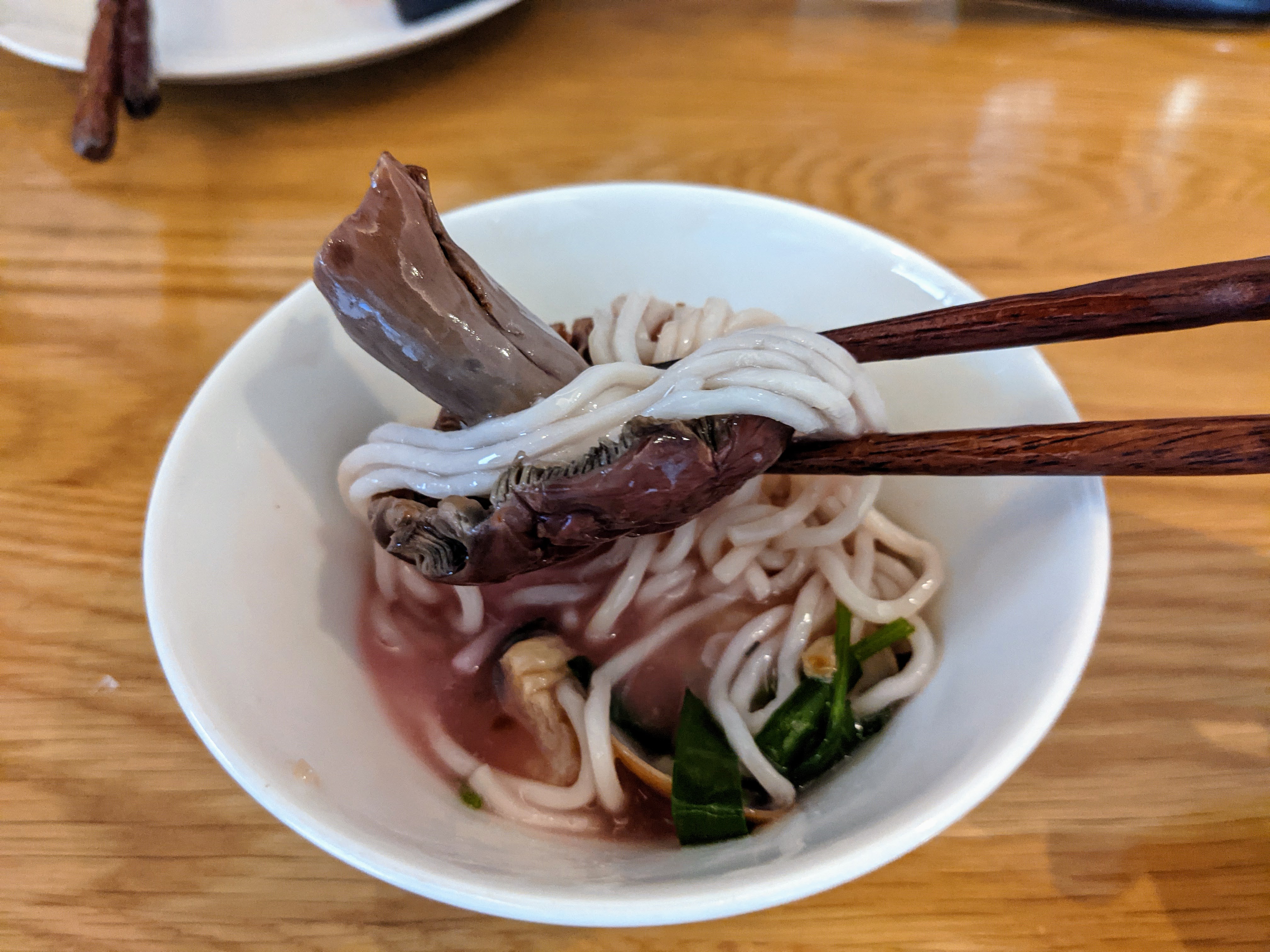
Still, Henghua food would likely languish in obscurity if not for a little coffeeshop called Putien (莆田) in Kitchener Rd that cooked its way to a Michelin star and became a pan-Asian franchise extending all the way back to Fujian itself. Their promise is “Fresh ingredients, original taste”, so with another Sunday lunch in lockdown beckoning it was time to put them to the delivery test. First off the block was bianrou soup, containing Putien’s take on Fuzhou’s meat-skin dumplings, served here in a light seaweed soup not unlike the Korean miyeok-guk. Unlike the usual gloopy, herbal, dark brown Singapore version, the Henghua spin on lor mee was light, packed with clams and mushrooms, and flavored with the red yeast rice we also saw earlier in Fuzhou. The murky pink soup looked pretty unappetizing, bearing a disturbing resemblance to the meat juices sloshing around the bottom of a styrofoam supermarket pack, but once you got over that the taste was shiok, packed with seafood and mushroom umami. Last but definitely not least, Henghua fried bee hoon (兴化炒米粉) was for me the standout: in Singapore, fried bee hoon (thin rice noodles) is the canonical cheap starchy $1 breakfast flavored with soy and a few scraps of cabbage, but this had been cooked in a rich seafood stock and was bursting with more yummy clams, scallops, tofu puffs, eggs, veggies.

All in all, Putien delivered on their promise, the ingredients and preparation was clearly a step above the norm and while there weren’t any tastebud-exploding culinary revelations, it was all very competently done. Check out the Shandong episode for our second visit!

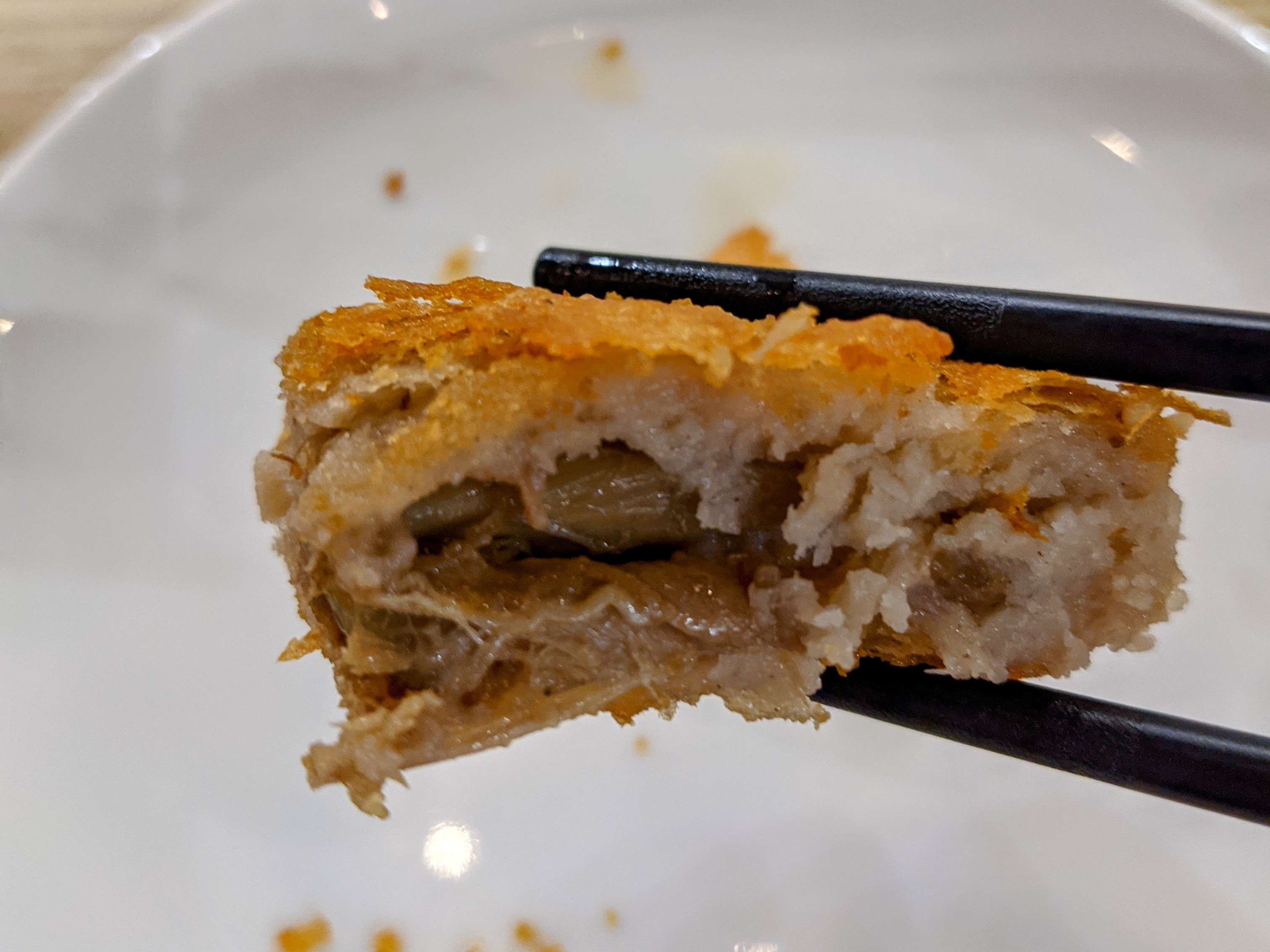
I went back for round two with a quick lunch at Xing Hua (兴化) at Suntec, not to be confused with any of a number of other restaurants called Xinghua Something around Singapore. This seems rather transparently aimed at the same market as Putien, with a similar slick, modern ambiance, menu and pricing. The bian rou soup here was the tastiest of the three I’ve had so far, with larger dumplings with a thin wrapper and meaty pork inside, although I gather Putian’s gluggier version may be more authentic. The Putian Deep-fried Duck with Yam (莆田芋香鸭) was great, flaky and crispy on top with bits of duck in the Teochew-style smooth yam paste. The most interesting dish of the day was the Putian Ca Fen (农家擦粉 nóngjiā cāfěn), literally “farmer-style rubbed noodles”, made with a mix of rice bee hoon noodles and wheat mee sua served in a funky, thickened, mostly pork broth with an aniseed note, studded with bits of prawn, pork meat, intestine and Chinese cabbage. Distinctly un-Instagrammable, and probably better suited to a cold winter day than tropical Singapore, but unusual and tasty just the same. Total damage for three came to $52, but the place looks pretty empty every time I walk past, so get there while you still can. Extra bonus points for the rather striking logo that hides the characters for 兴化 in there if you look carefully.

<<< Shaanxi | Index | Henan >>>